On-site & laboratory services
The right testing.
Quickly arranged.
From a single site test to a complete material testing programme, Hixtra supports construction, civil engineering and geotechnical projects across England and Wales.
Discuss your testing →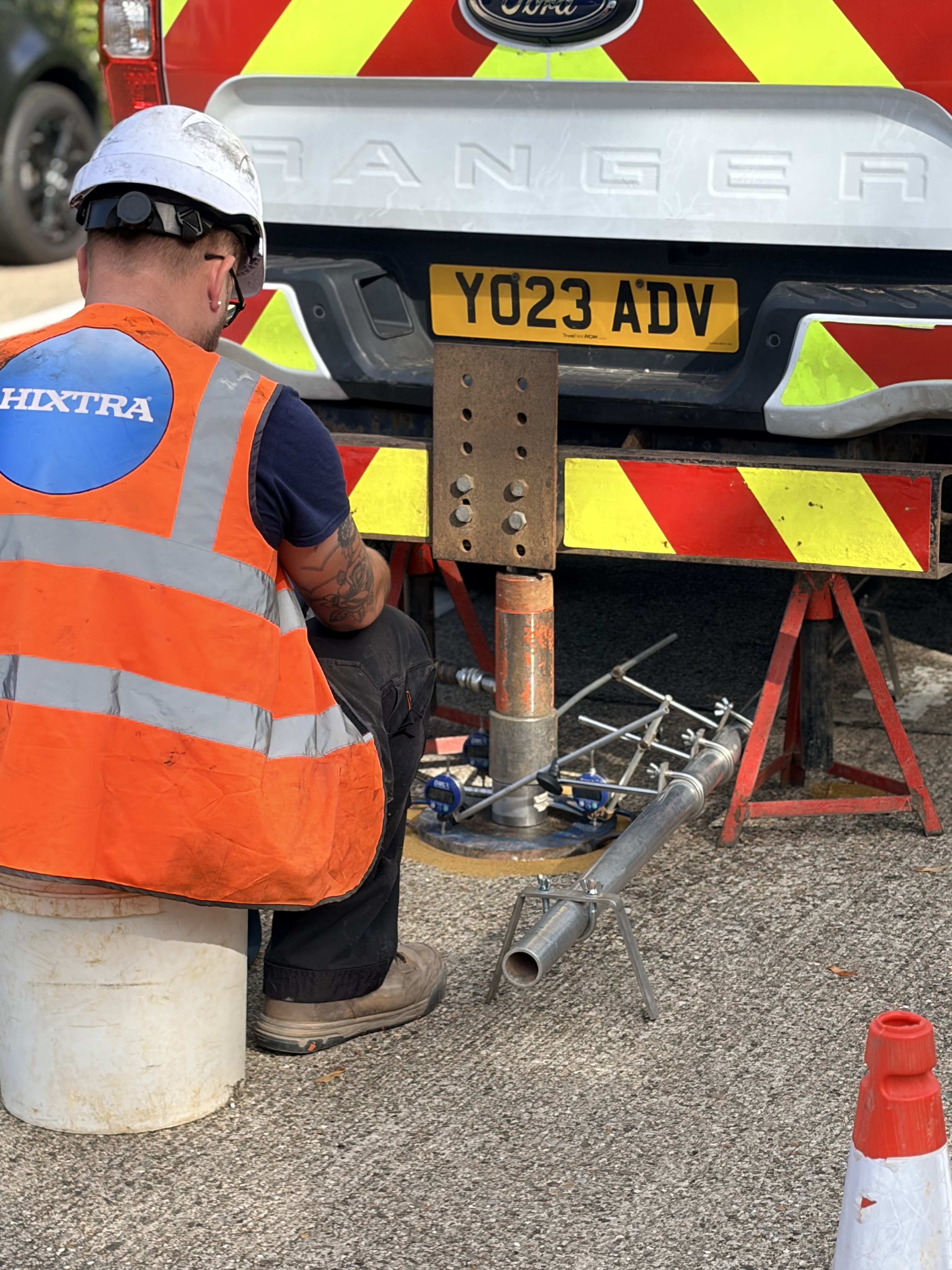
01 · Hixtra services
Ground testing
Plate bearing testing →
Assess ground settlement under an applied load for pavements, working platforms and earthworks.
In-situ CBR testing →
Measure California Bearing Ratio on site using the traditional plunger method.
LWD testing →
Measure the response of formation, subbase and engineered fill using a portable lightweight deflectometer.
DCP testing →
Investigate changes in penetration resistance through shallow pavement and ground layers.
Crane hardstanding testing →
Provide ground load and settlement data to support the assessment of crane hardstandings.
Piling mat testing →
Assess the load and settlement behaviour of working platforms used by piling rigs.
Scaffolding ground testing →
Measure ground response beneath proposed scaffolding supports, including positions with restricted access.

02 · Hixtra services
Earthworks & compaction
Earthworks testing →
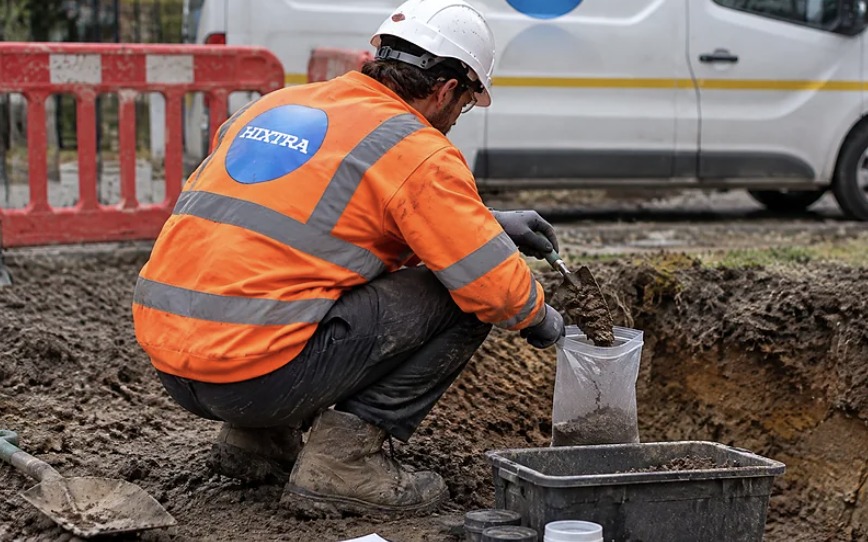
Coordinate laboratory and on-site testing for cut and fill, bunds, engineered layers and stabilisation works.
Compaction testing & monitoring →
Assess placed material against the laboratory reference density required by your project.
On-site density & compaction testing →
Measure density in placed soils and aggregates to support earthworks compaction control.
Non-nuclear earthworks density testing →
Check soil and aggregate density using electromagnetic measurement equipment.
Stabilised soil testing →
Arrange on-site and laboratory testing for soils and fill treated with lime or cement.
Pulverisation testing →
Assess the breakdown of soil lumps during lime or cement stabilisation.
Moisture Condition Value testing →
Use MCV testing to support assessment and control of soil suitability for earthworks.
03 · Hixtra services
Soils & geotechnical
Soil testing →
Assess soils for geotechnical projects, earthworks, stabilisation and engineered fill.
Geotechnical laboratory testing →
Obtain laboratory data to support ground investigations and geotechnical design.
Chalk testing →
Assess the properties of chalk proposed for use as engineered fill.
Laboratory CBR testing →
Measure California Bearing Ratio on prepared laboratory specimens in the specified condition.
Moisture content testing →
Determine water content in soils and aggregates for classification and construction control.
Particle density testing →
Determine the density of the solid particles within soils and aggregates.
Particle size distribution & grading →
Establish the particle size distribution of soils, aggregates and engineered fill.
Plasticity index & Atterberg limits →
Determine liquid limit, plastic limit and plasticity index for fine-grained soils.
Shear strength testing →
Measure soil strength to support geotechnical assessment and engineered fill testing.
Swelling & soaking tests →
Assess the response of soils and stabilised materials to water exposure.
04 · Hixtra services
Aggregates & subbase
Aggregate testing →
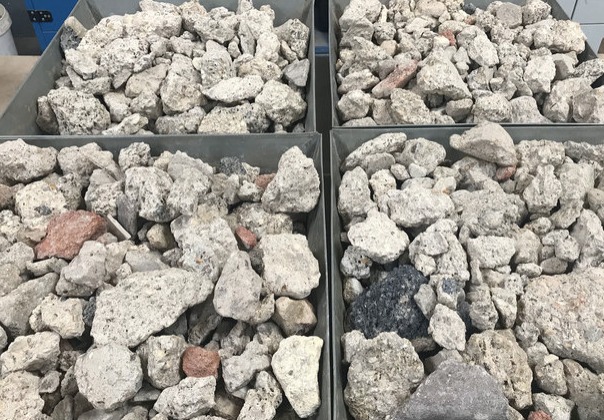
Assess aggregates, crushed concrete and fill materials for construction and geotechnical use.
Los Angeles abrasion testing →
Assess aggregate resistance to fragmentation using the Los Angeles abrasion test.
Recycled aggregate constituent testing →
Identify and quantify the constituent materials within a recycled aggregate sample.
Frost heave testing →
Assess the frost susceptibility of soils and aggregates intended for engineered fill or subbase.
Magnesium sulfate soundness testing →
Assess aggregate resistance to the disruptive effects of repeated salt crystallisation.
Type 1 subbase testing →
Assess Type 1 subbase against the material requirements of your project specification.
05 · Hixtra services
Concrete & coring
Concrete core compressive strength testing →
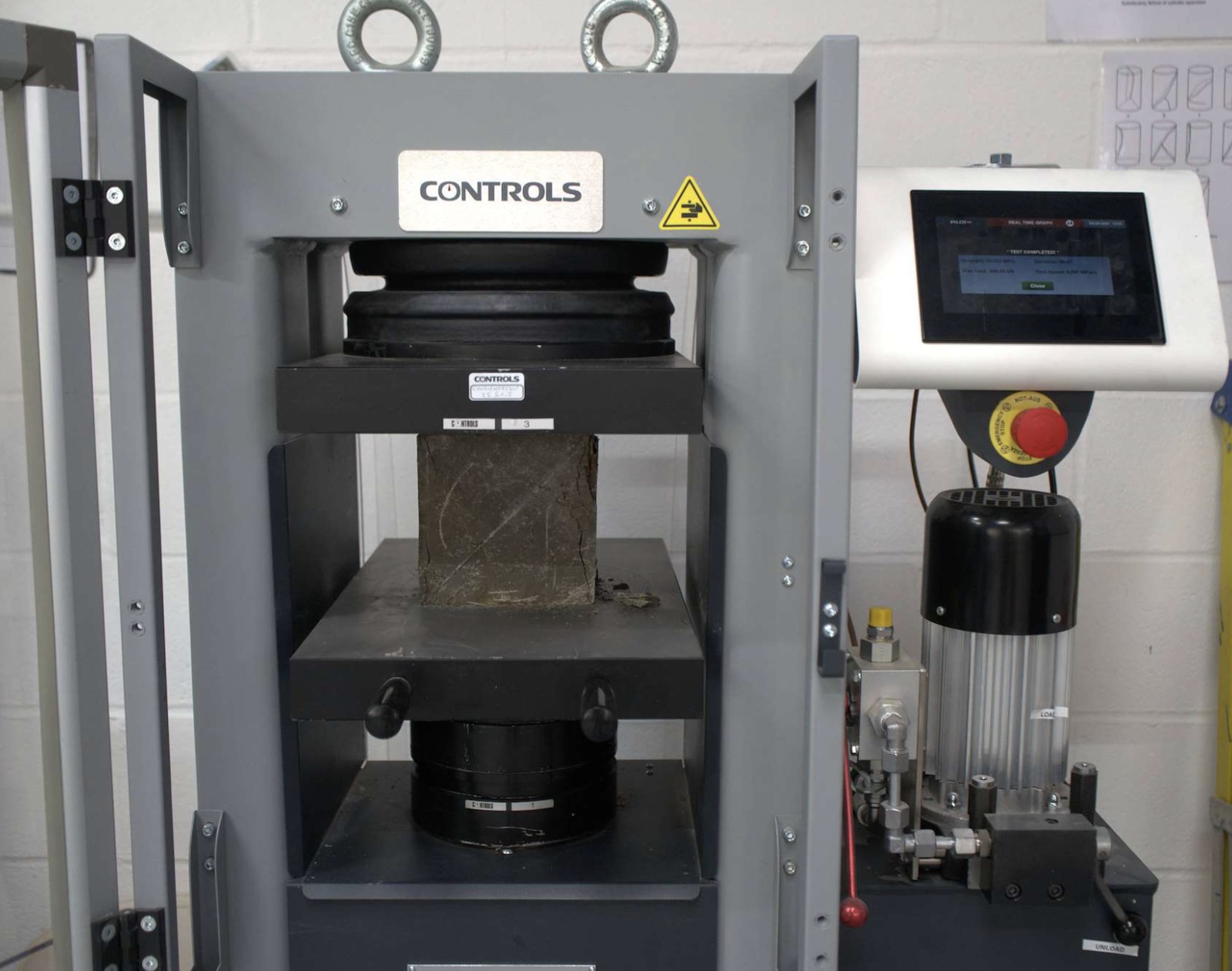
Determine the compressive strength of concrete cores recovered from an existing structure.
Concrete cube compressive strength testing →
Test concrete cubes at the specified ages to support project quality control.
Concrete curing →
Maintain concrete test specimens under controlled conditions before strength testing.
Concrete density testing →
Determine hardened concrete density for comparison, quality control and investigation.
Concrete cube making & curing →
Arrange representative fresh concrete sampling, cube manufacture and initial curing.
Fresh concrete flow testing →
Assess the consistency of high-workability fresh concrete using flow table testing.
Fresh concrete slump testing →
Measure fresh concrete consistency on site before placement.
Diamond core drilling →
Recover cores and create controlled openings to investigate concrete, surfacing and underlying layers.
06 · Hixtra services
Site & project support
Construction materials testing →
Coordinate testing of materials during construction or as part of an investigation.
Soil & aggregate sampling →
Arrange the selection, collection, handling and transport of representative test samples.
Testing for site investigations →
Obtain laboratory and field testing to support geotechnical site investigations.
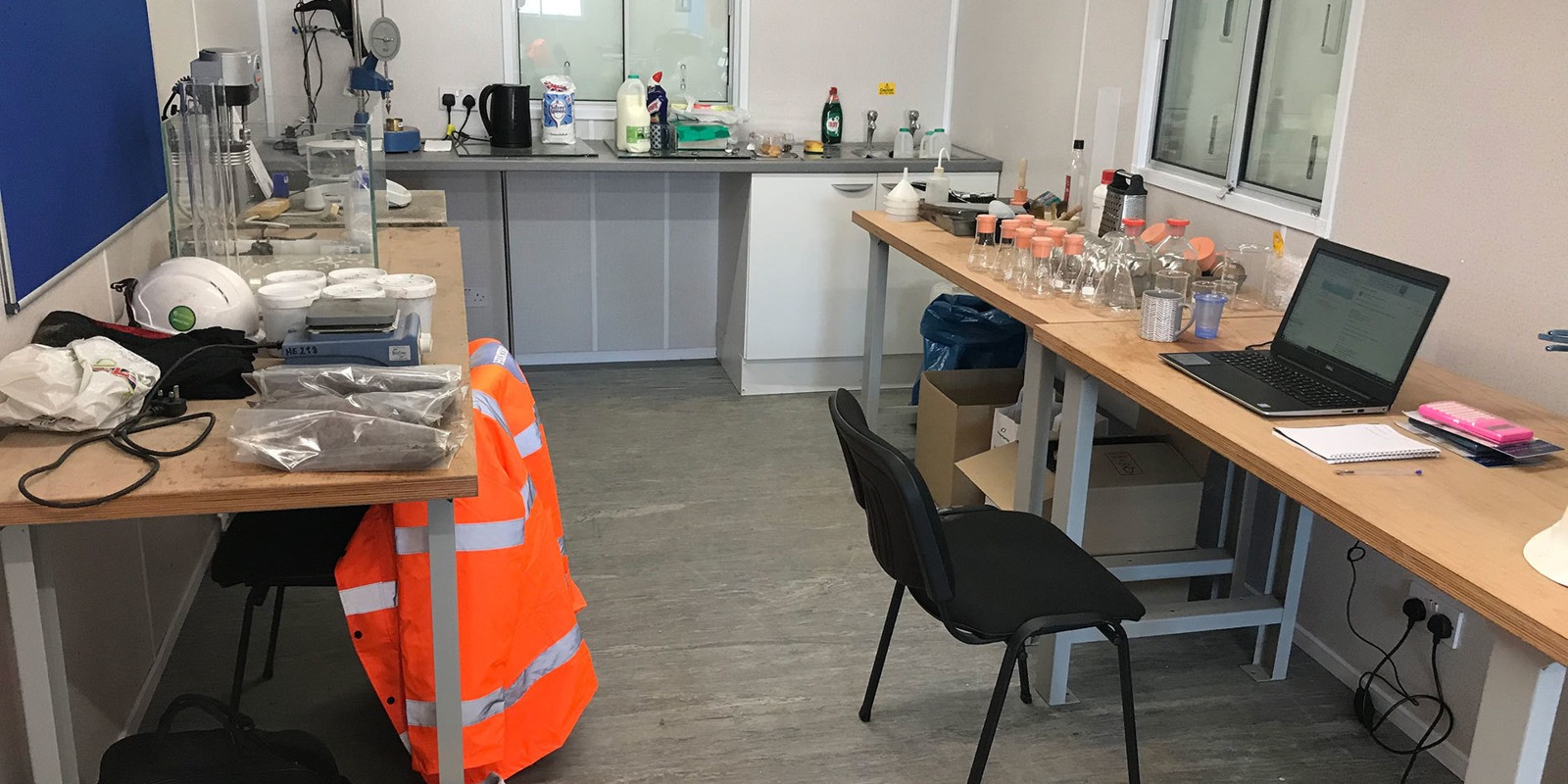
Dedicated site laboratories →
Establish a project-based laboratory for substantial construction and civil engineering programmes.
Choosing a service
Which testing does your project need?
Common questions about scope, sequencing and arranging more than one service under a single booking.
Discuss your testing →I've got a testing schedule that names a dozen different tests. How do I work out which of your services I need?
Match each line of the schedule to a method rather than to a service name, then send us the schedule and we'll map it across. Specifications usually name a standard, commonly a BS 1377 or BS EN method, and that tells you whether the work happens on site or in the laboratory and what sample it needs. One line can also mean a suite: Type 1 subbase, for example, can involve grading, abrasion, soundness, sulfate, plasticity and frost heave testing.
What's the difference between on-site testing and laboratory testing, and when do I need each?
On-site testing measures the material where it lies, in the condition it is in on the day; laboratory testing measures a sample prepared to a defined condition. Plate bearing, in-situ CBR, on-site density and slump testing answer questions about what is actually in the ground or in the truck. Classification, grading, plasticity, laboratory CBR and cube strength need controlled preparation. Compaction control uses both: on-site density results are compared against a maximum dry density established in the laboratory.
Which tests are usually needed before construction starts, and which happen during the works?
Ground bearing and classification testing usually come first, compaction and materials testing run alongside the works, and concrete testing follows the pour. Before construction that typically means CBR, plate bearing or soil classification to inform design. During earthworks and subbase construction it means compaction control, density testing, moisture condition value work and grading checks on imported fill or Type 1. During the pour it means slump or flow testing and cube making, and coring applies to concrete already in place.
How is ground testing different from a full site investigation?
Ground testing measures specific properties at specific positions, whereas a site investigation is the wider exercise of exploring, logging and modelling the ground before design. Our role is the testing part: in-situ methods such as CBR, plate bearing and DCP on site, and laboratory testing of soils and aggregates in support of a geotechnical investigation. The ground model and interpretative reporting are normally produced by the consultant or investigation contractor.
Who usually books the testing: the main contractor, the groundworks subcontractor or the engineer?
All three do, and it varies by project and by contract. Main contractors and groundworks subcontractors most often book ground, compaction and concrete testing because they hold the programme; consulting engineers and developers more often instruct soils and geotechnical laboratory work tied to design or a planning condition. We'll take the instruction from whoever holds it, and copy results to the engineer or client where that has been agreed.
Can you take the samples as well, or do we have to sample the material ourselves?
We can carry out the sampling, and it is a service in its own right because a result is only as good as the sample behind it. The sampling method, container, preservation and transport conditions all have to match the material and the tests scheduled, and the quantity needed is worth agreeing before anything is collected. If your own team is sampling instead, tell us which tests are scheduled and we'll confirm what each one requires.
What is a site laboratory, and when is it worth having one on a project?
A site laboratory is a project-based facility set up on the site itself, with the equipment, systems and personnel matched to the material types and testing volumes of that job. It suits substantial earthworks and civil engineering programmes, where locating agreed tests on site reduces sample transport and gets results back quickly enough to keep decisions moving with the works. On smaller programmes, scheduled site visits with laboratory testing arranged alongside are usually the more sensible arrangement.
Can you advise on which tests to specify if we haven't written the testing schedule yet?
Yes. Tell us what the testing has to demonstrate and to whom, and we'll suggest the methods that normally answer that question, along with the sample quantities and site conditions each one needs. What we won't do is design your earthworks or sign off someone else's specification unseen: where a judgement depends on the material and how the result will be used, we'll set out the options rather than pick for you.
Can more than one test be carried out on the same site visit?
Usually yes, and combining tests on one visit is normally the most efficient way to use a mobilisation. Plate bearing and in-situ CBR positions are often done together, density and compaction testing can be combined across several layers, and fresh concrete sampling, slump testing and cube making are naturally one visit. What limits it is time on site, access between positions and whether a test needs a reaction load or equipment set up separately.
Can you run a whole testing programme rather than booking individual tests?
Yes. Construction materials testing can be coordinated as a programme across the life of the job, with ground testing, earthworks control, soils and aggregate laboratory work and concrete testing booked against your sequence rather than one order at a time. That usually means agreeing the methods, frequencies and reporting arrangements once at the start, then calling visits off as the programme moves. Send the testing schedule and the construction programme and we'll set it up that way.
Do you take on small or one-off jobs, or is there a minimum?
Yes, we take on small and one-off jobs, and a single test at a single position is a normal enquiry rather than an exception. There is no minimum number of tests, though a site visit costs much the same to mobilise whether it covers one position or three, so grouping positions into one visit usually gives better value than splitting them across separate days. Laboratory testing can be arranged for a single sample.
What do you need from us to quote for several services at once?
The same information as for a single test, plus a breakdown by service: site postcode, the tests or materials involved, approximate quantities, preferred dates and the specification or testing schedule if there is one. For several services it helps to separate what happens on site from what happens in the laboratory, give the number of positions or samples for each, and say whether it is one visit or a phased programme. The enquiry form lets you tick more than one service.