Understand your material
Measure the response of formation, subbase and engineered fill using a portable lightweight deflectometer.
Ground testing & bearing capacity
Measure the response of formation, subbase and engineered fill using a portable lightweight deflectometer.
Same-day & next-day testing dates available. Call to check availability for your location and test requirements.

Practical testing. Experienced people. A service built around your project.
Quality, safety & professional standards
UKAS accreditation applies to the tests listed in our accredited schedule.
View our credentials ↗



Experienced people
Technical knowledge, with practical advice.
National coverage
Testing support wherever your project takes you.
A responsive service
Clear arrangements, from enquiry to reporting.
The right testing for your project
Practical advice, experienced testing staff and clear reporting. Measure the response of formation, subbase and engineered fill using a portable lightweight deflectometer.
Speak to the team ↗Where this service helps
The right test helps answer a specific project question. We’ll agree the method and requirements with you before the work begins.
Measure the response of formation, subbase and engineered fill using a portable lightweight deflectometer.
Agree the test method, sample condition and acceptance criteria before the work begins.
Use clear test records to support your project’s material and engineering assessment.
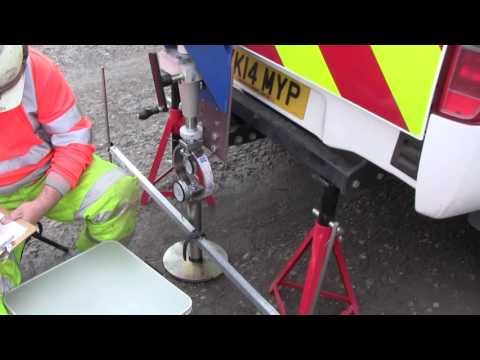
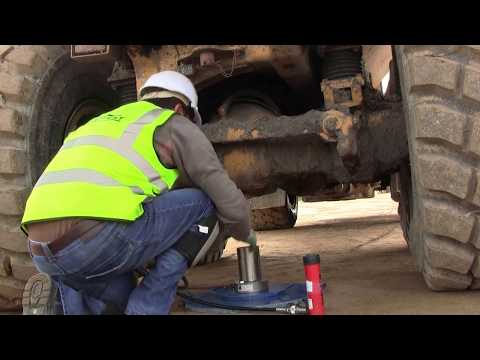
LWD equipment applies a dynamic load and measures the resulting deflection. It does not require a separate heavy reaction load. Any conversion to a derived CBR must be appropriate to the material and agreed for the project; dynamic stiffness and direct CBR are different measurements.

A closer look
LWD equipment applies a dynamic load and measures the resulting deflection. It does not require a separate heavy reaction load. Any conversion to a derived CBR must be appropriate to the material and agreed for the project; dynamic stiffness and direct CBR are different measurements.
UKAS accreditation applies to the particular methods listed in Hixtra’s current schedule, rather than every service. Ask us to confirm the accreditation status of the testing you require.
Hixtra in action
Working with Hixtra
From your first enquiry to your report, you’ll have practical advice on what to book, how to prepare and what happens next.
Share the site location, materials and testing specification. If you are unsure which test you need, we can help.
We agree the scope, access or sample requirements, availability and reporting arrangements before work starts.
Your results are reported for the agreed testing. Our team is on hand if you need to discuss the report.
Testing support across England & Wales
From individual site visits to ongoing testing programmes, we support construction, civil engineering and geotechnical projects across England and Wales.
Check availability for your site ↗Your questions
Practical answers on what this test is for, how to prepare and what you get back.
Ask us about your project →An LWD measures the stiffness of a layer by dropping a known weight onto a plate and recording how far the surface deflects. A 10 kg weight falling onto a 300 mm plate is typical, with a few seating drops to bed the plate followed by measuring drops that are averaged. The result is a dynamic surface modulus, reported in megapascals, calculated from the force applied and the deflection it produced.
There is no single British Standard for the lightweight deflectometer, so testing usually follows the equipment manufacturer's procedure alongside a recognised method such as ASTM E2583. On highway schemes the requirement is set by the specification rather than the test method, with performance testing of pavement foundations covered by Series 800 of the Specification for Highway Works. Tell us what your specification calls for and we will confirm how the test will be run.
The result is a surface modulus in megapascals at each position, which your designer compares against the stiffness the specification requires. Pavement foundation design in CD 225 of the Design Manual for Roads and Bridges sets foundation classes by surface modulus, starting at 50 MPa, and your specification will say which class applies and how it has to be demonstrated. The report lists each position, the individual drops, the mean modulus, the plate size and the drop weight.
The influence depth is shallow, generally between one and one and a half times the plate diameter, so with a 300 mm plate you are assessing roughly the top 300 to 450 mm. That makes it a good check on a placed layer and a poor way of finding out what is happening deeper down. Where the layer is thin, the reading is a composite of that layer and whatever sits beneath it.
It works best on granular and recycled materials, capping, subbase and made ground, where the layer has a genuine elastic response to measure. Soft cohesive soils are the weak point, because clays deform plastically and give little elastic recovery for the equipment to read. Loose or uneven surfaces are also unsuitable, since the plate cannot seat properly. Describe the material to us if you are unsure whether it suits the method.
A CBR can be estimated from a surface modulus, but it is a correlation rather than a measurement and it has to be appropriate to the material. Dynamic stiffness and a direct plunger CBR are different properties, so a converted figure should be labelled as derived in the report and agreed with the designer before it is relied on. Where the specification asks for a CBR percentage, check first that a correlated value will be accepted.
Yes. The surface has to be flat, firm and clean enough for the 300 mm plate to make full contact, so the layer should be compacted and trimmed before we arrive. Loose stone, ruts or a freshly tipped surface stop the plate seating and produce scattered readings, and a thin sand seating layer can be used where the surface is coarse. The test leaves nothing behind, so no reinstatement is needed.
Each position takes only a few minutes, so a large number can be covered in a day and walking between them is usually the limit. That makes the method well suited to checking uniformity across a placed layer, on a grid or at set intervals along a route, rather than proving a single design load. Positions are normally spread across each placed area, with extra readings where compaction looks variable.
Yes. Stiffness falls as a granular layer takes on water, so a layer tested after heavy rain gives a lower modulus than the same layer tested dry. The result describes the layer in the condition it was in on the day, which is why testing is normally done when the layer is at the moisture condition the works will be built on. Standing water or a frozen surface will stop testing.
Choose a plate bearing test when you need settlement under a sustained known load, or when the design has to be proved at the pressure the plant or structure will actually apply. The LWD applies a small dynamic pulse and reaches only the upper few hundred millimetres, so it is not a substitute for a static test on a working platform or crane position. The trade off is a heavy reaction machine and far more time per position.
Hixtra holds UKAS accreditation to ISO/IEC 17025 for the tests listed in its schedule of accreditation, number 8996. Accreditation is specific to the listed methods and scope, so it applies to particular methods rather than to every service. Because the LWD is not covered by a single British Standard, it is worth asking us to confirm the status of the testing and the reporting before you commit to it.
Send the site postcode, the area or number of positions to be tested, the layer involved, your preferred dates and the specification if there is one. Tell us whether a modulus is enough or whether you need a correlated CBR figure, since that has to be agreed in advance. Cost is driven mainly by travel, time on site and the number of visits, as a return trip for each placed layer adds up.
In our customers’ words
Independent feedback from the people we work with.
“Punctual, friendly and professional.”Read the full review ↗
“Perfect service and explained everything step by step.”Read the full review ↗
“Excellent service! Incredibly professional. Thankyou”Read the full review ↗
Customers come back to Hixtra
Read independent feedback from customers who have used our testing services.
4.8 / 5 on Trustpilot
“Punctual, friendly and professional.”
Lee Chippington · September 2026
Read this customer’s review ↗Same-day and next-day testing dates available. Tell us what you need and where, or call to check availability.