Understand your material
Assess aggregate resistance to fragmentation using the Los Angeles abrasion test.
Aggregates & subbase testing
Assess aggregate resistance to fragmentation using the Los Angeles abrasion test.
Same-day & next-day testing dates available. Call to check availability for your location and test requirements.
Practical testing. Experienced people. A service built around your project.
Quality, safety & professional standards
UKAS accreditation applies to the tests listed in our accredited schedule.
View our credentials ↗



Experienced people
Technical knowledge, with practical advice.
National coverage
Testing support wherever your project takes you.
A responsive service
Clear arrangements, from enquiry to reporting.
The right testing for your project
Practical advice, experienced testing staff and clear reporting. Assess aggregate resistance to fragmentation using the Los Angeles abrasion test.
Speak to the team ↗Where this service helps
The right test helps answer a specific project question. We’ll agree the method and requirements with you before the work begins.
Assess aggregate resistance to fragmentation using the Los Angeles abrasion test.
Agree the test method, sample condition and acceptance criteria before the work begins.
Use clear test records to support your project’s material and engineering assessment.
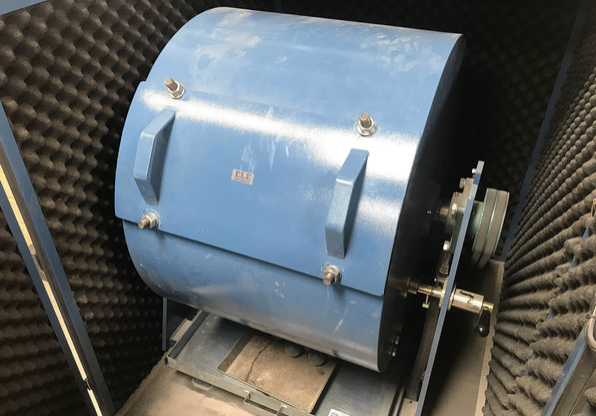
The test subjects a prepared aggregate fraction to controlled mechanical action and measures the resulting breakdown. It is used within material specifications to assess toughness and degradation resistance. Confirm the required size fraction and acceptance criteria when requesting testing.

A closer look
The test subjects a prepared aggregate fraction to controlled mechanical action and measures the resulting breakdown. It is used within material specifications to assess toughness and degradation resistance. Confirm the required size fraction and acceptance criteria when requesting testing.
UKAS accreditation applies to the particular methods listed in Hixtra’s current schedule, rather than every service. Ask us to confirm the accreditation status of the testing you require.
Hixtra in action
Working with Hixtra
From your first enquiry to your report, you’ll have practical advice on what to book, how to prepare and what happens next.
Share the site location, materials and testing specification. If you are unsure which test you need, we can help.
We agree the scope, access or sample requirements, availability and reporting arrangements before work starts.
Your results are reported for the agreed testing. Our team is on hand if you need to discuss the report.
Testing support across England & Wales
From individual site visits to ongoing testing programmes, we support construction, civil engineering and geotechnical projects across England and Wales.
Check availability for your site ↗Your questions
Practical answers on what this test is for, how to prepare and what you get back.
Ask us about your project →It measures how much an aggregate breaks down under repeated impact and grinding, which is taken as a measure of its toughness and resistance to fragmentation. A prepared size fraction is tumbled in a steel drum with a charge of steel balls for a set number of revolutions, then washed and sieved, and the proportion reduced to fine material is the result. It is a laboratory test carried out on a submitted sample.
It is normally carried out to BS EN 1097-2, which covers methods for determining resistance to fragmentation and contains the Los Angeles test alongside an impact method. Specifications usually refer to the resulting category rather than the procedure itself, through a product standard such as BS EN 13242 for unbound and hydraulically bound materials or BS EN 12620 for concrete aggregate. Send the clause and we will confirm what is required.
The Los Angeles coefficient is the percentage of the test portion reduced to finer than 1.6 mm during the test, so a low number is better because less of the aggregate broke down. The standard test uses a 5000 g portion, and the coefficient is the mass lost expressed as a percentage of it. Values in the twenties suggest a tough stone, while values above roughly 40 suggest a material that degrades readily.
The requirement is normally given as a category written LA followed by the maximum coefficient permitted, so LA30 means the measured value must not exceed 30. The category comes from the product standard for the end use, with the tighter ones applying to surfacing and railway ballast rather than general fill. Type 1 unbound mixture in Series 800 of the Specification for Highway Works is commonly specified at category LA50.
It is required wherever a specification sets a resistance to fragmentation category, which is most common for subbase, capping, railway ballast, surfacing aggregate and armourstone. The request usually comes from a quarry or recycling operator proving a source, or from a contractor who has to show that a delivered or site-won material meets the clause. It is also used to compare a proposed substitute material against the one specified.
The reference test uses the 10/14 mm fraction, screened out of the sample you send, with 5000 g of it tumbled against eleven steel balls for 500 revolutions. The standard allows alternative fractions with a different ball charge where a material does not yield enough 10/14. A single-sized or very coarse product may need crushing or a much larger bulk sample, so tell us the grading when you enquire.
Send enough for us to screen out a full 5000 g test portion of the required fraction, which depends entirely on how much of that size your material contains: a well-graded subbase yields far less 10/14 per tonne than a single-sized 10/14 product does. The portion is then washed and oven dried to constant mass, so fines and moisture on the delivered sample do not affect the result. We will confirm the quantity.
Weak or weathered rock is the usual failure: soft limestones, shales, mudstones, weathered sandstone and stone won from the weathered upper part of a face all break down readily under the ball charge. Recycled aggregates can also struggle, particularly crushed concrete carrying weak mortar or material with a high masonry content. Flaky and elongated particles fracture more easily, so a poor shape result often accompanies a poor coefficient.
They measure different failure mechanisms and are not interchangeable. Los Angeles is a dry test of fragmentation under impact and grinding, micro-Deval to BS EN 1097-1 is a wet test of abrasion wear, and magnesium sulfate soundness to BS EN 1367-2 measures breakdown under repeated salt crystallisation as a weathering proxy. Aggregate impact value and ten per cent fines are older British Standard methods still named in some specifications.
The drum runs 500 revolutions at around 31 to 33 revolutions a minute, so the machine time is well under an hour and the programme is dominated by preparation. Screening out the fraction, washing and drying the portion to constant mass, then washing and drying the tested material again all take time, which in practice means a couple of days rather than a couple of hours. We confirm expected timing before booking.
Hixtra holds UKAS accreditation to ISO/IEC 17025 for the tests listed in its schedule of accreditation, number 8996. Accreditation is specific to the listed methods and scope, rather than to every service. If the result has to be issued as an accredited test for a client submission or a material approval, ask us to confirm the current status of this method before the sample is sent.
Send the material type and source, the grading or top size, the category your specification requires, the number of samples and when you need the results. Tell us whether grading, soundness or shape testing is wanted on the same material, since running them together on one sample is usually more efficient than separate submissions. Cost is driven by sample numbers, preparation effort and whether we collect the sample or you deliver it.
In our customers’ words
Independent feedback from the people we work with.
“Punctual, friendly and professional.”Read the full review ↗
“Perfect service and explained everything step by step.”Read the full review ↗
“Excellent service! Incredibly professional. Thankyou”Read the full review ↗
Customers come back to Hixtra
Read independent feedback from customers who have used our testing services.
4.8 / 5 on Trustpilot
“Punctual, friendly and professional.”
Lee Chippington · September 2026
Read this customer’s review ↗Same-day and next-day testing dates available. Tell us what you need and where, or call to check availability.