Understand your material
Arrange on-site and laboratory testing for soils and fill treated with lime or cement.
Earthworks, compaction & stabilisation
Arrange on-site and laboratory testing for soils and fill treated with lime or cement.
Same-day & next-day testing dates available. Call to check availability for your location and test requirements.
Practical testing. Experienced people. A service built around your project.
Quality, safety & professional standards
UKAS accreditation applies to the tests listed in our accredited schedule.
View our credentials ↗



Experienced people
Technical knowledge, with practical advice.
National coverage
Testing support wherever your project takes you.
A responsive service
Clear arrangements, from enquiry to reporting.
The right testing for your project
Practical advice, experienced testing staff and clear reporting. Arrange on-site and laboratory testing for soils and fill treated with lime or cement.
Speak to the team ↗Where this service helps
The right test helps answer a specific project question. We’ll agree the method and requirements with you before the work begins.
Arrange on-site and laboratory testing for soils and fill treated with lime or cement.
Agree the test method, sample condition and acceptance criteria before the work begins.
Use clear test records to support your project’s material and engineering assessment.
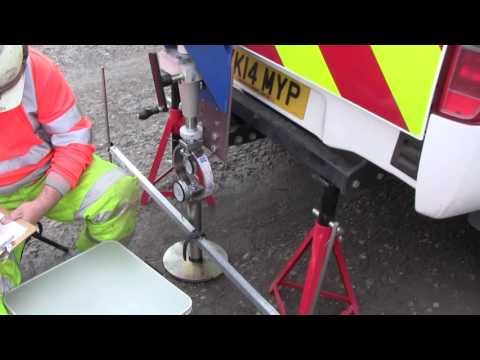
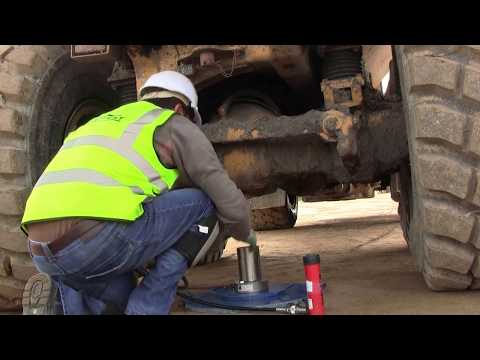
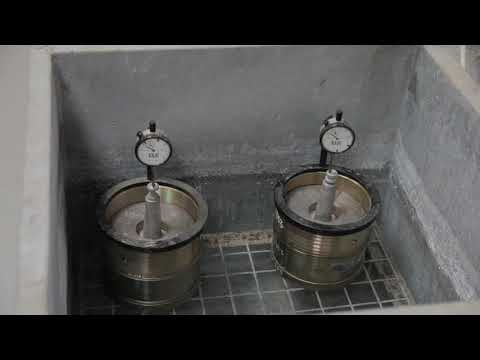
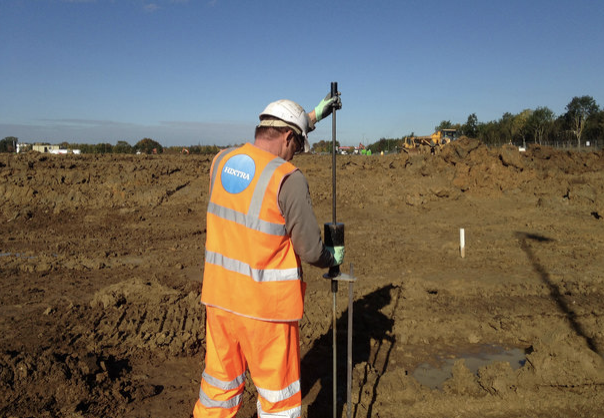
Hixtra supports classification, compaction and mix assessment alongside site tests such as moisture, density, MCV and pulverisation. Testing can be arranged through planned visits or a dedicated site laboratory for larger programmes.

A closer look
Hixtra supports classification, compaction and mix assessment alongside site tests such as moisture, density, MCV and pulverisation. Testing can be arranged through planned visits or a dedicated site laboratory for larger programmes.
UKAS accreditation applies to the particular methods listed in Hixtra’s current schedule, rather than every service. Ask us to confirm the accreditation status of the testing you require.
Hixtra in action
Working with Hixtra
From your first enquiry to your report, you’ll have practical advice on what to book, how to prepare and what happens next.
Share the site location, materials and testing specification. If you are unsure which test you need, we can help.
We agree the scope, access or sample requirements, availability and reporting arrangements before work starts.
Your results are reported for the agreed testing. Our team is on hand if you need to discuss the report.
Testing support across England & Wales
From individual site visits to ongoing testing programmes, we support construction, civil engineering and geotechnical projects across England and Wales.
Check availability for your site ↗Your questions
Practical answers on what this test is for, how to prepare and what you get back.
Ask us about your project →It splits into three stages: testing the untreated soil, designing and proving the mix, then controlling and accepting the work on site. Before treatment you need classification, moisture content, plasticity, grading and a chemical suite covering sulfate, sulfide and organic matter. The mix design follows, and site control then covers binder spread rate, pulverisation, moisture content or MCV, in-situ density and finally strength or CBR on cured specimens.
The design is built from trial mixes of your own soil at several binder contents, prepared, compacted, cured and tested in the laboratory. A compaction test establishes the maximum dry density and optimum moisture content for each treated mix, specimens are then cured under controlled conditions and tested for unconfined compressive strength or CBR, with swelling checks added where sulfate is present. The design binder content is the one that meets the specified performance with a margin.
It establishes how much lime the soil absorbs before any lasting cementing reaction begins, determined by adding increasing lime doses and tracking the pH of the mixture. Clay minerals take up lime for modification first, so a design that ignores that demand will be under-dosed. The ICL result, usually determined to the method in BS 1924, is the baseline the trial mixes are built on rather than the final design content.
Because sulfate, lime or cement and water together can form expansive minerals that swell long after the layer has been built and accepted. The damage shows as heave, cracking and loss of level weeks or months later, by which point the pavement or structure above is in the way. Sulfides such as pyrite are the bigger trap, since they sit harmlessly in the ground until oxidised and then generate fresh sulfate.
The usual suite is water-soluble sulfate, acid-soluble sulfate and total potential sulfate, the last of which accounts for sulfide minerals that may oxidise later. Where results are elevated, a swelling or soaking test is normally added to the mix design, such as the accelerated swelling test in BS EN 13286-49 or linear swelling measured with CBR to BS EN 13286-47. The outcome may be a different binder, a longer mellowing period or a decision not to stabilise that material.
Mellowing is the pause between the first mixing pass and final mixing, which lets quicklime slake fully and moisture redistribute so the clay breaks down. Series 600 of the Specification for Highway Works commonly sets this at not less than 24 hours and not more than 72 hours for lime. Moisture and pulverisation are normally checked after mellowing and before final compaction, because that is when the material has to meet the requirement.
Site control usually covers binder spread rate, mixing depth, pulverisation, moisture content or MCV and in-situ density as each layer is compacted. These have to be quick, because the mixing train, the roller and the testing all move together and a result that arrives an hour late is of no use to anyone. Heavy rain between passes changes the moisture condition and often means re-testing before compaction is allowed to continue.
Cement-treated material has a short window, commonly around two hours from the addition of the binder, after which compacting it breaks bonds that have already formed. Lime-treated soil is more forgiving once it has mellowed, and slag-based binders give longer again. The window is set by the binder and the specification, which is why the tests around compaction have to be planned against it rather than fitted in afterwards.
It depends what the layer is. Capping is usually accepted on CBR after curing, while a bound subbase is normally accepted on unconfined compressive strength. Specimens are made from the mixed material, cured for the period the specification sets and tested at the stated age, commonly 7 or 28 days. A soaked CBR or an immersion strength check is added where durability under water has to be demonstrated.
Planned visits suit a shorter job with a fixed programme; a site laboratory earns its place when stabilisation is running daily and results are controlling the plant. On a continuous earthworks contract, doing the moisture, MCV, pulverisation and density work on site takes travel and sample transport off the critical path. Tell us the length of the programme and the daily output and we will advise which makes sense.
That has to be answered test by test rather than as a whole programme. Hixtra holds UKAS accreditation to ISO/IEC 17025 for the tests listed in its schedule of accreditation, number 8996. Accreditation is specific to the listed methods and scope. Send us the testing schedule for the stabilisation works and ask us to confirm whether the tests you need are covered, so the position is clear before work starts.
Send the site postcode, the specification or testing schedule, the soil types involved, the binder being used and the area or volume to be treated. It also helps to know whether the mix design work is already done or needs including, the expected daily output and the start date. Quantities and the number of site visits move the cost far more than any single test does.
In our customers’ words
Independent feedback from the people we work with.
“Punctual, friendly and professional.”Read the full review ↗
“Perfect service and explained everything step by step.”Read the full review ↗
“Excellent service! Incredibly professional. Thankyou”Read the full review ↗
Customers come back to Hixtra
Read independent feedback from customers who have used our testing services.
4.8 / 5 on Trustpilot
“Punctual, friendly and professional.”
Lee Chippington · September 2026
Read this customer’s review ↗Same-day and next-day testing dates available. Tell us what you need and where, or call to check availability.