Understand your material
Measure ground response beneath proposed scaffolding supports, including positions with restricted access.
Ground testing & bearing capacity
Measure ground response beneath proposed scaffolding supports, including positions with restricted access.
Same-day & next-day testing dates available. Call to check availability for your location and test requirements.
Practical testing. Experienced people. A service built around your project.
Quality, safety & professional standards
UKAS accreditation applies to the tests listed in our accredited schedule.
View our credentials ↗



Experienced people
Technical knowledge, with practical advice.
National coverage
Testing support wherever your project takes you.
A responsive service
Clear arrangements, from enquiry to reporting.
The right testing for your project
Practical advice, experienced testing staff and clear reporting. Measure ground response beneath proposed scaffolding supports, including positions with restricted access.
Speak to the team ↗Where this service helps
The right test helps answer a specific project question. We’ll agree the method and requirements with you before the work begins.
Measure ground response beneath proposed scaffolding supports, including positions with restricted access.
Agree the test method, sample condition and acceptance criteria before the work begins.
Use clear test records to support your project’s material and engineering assessment.
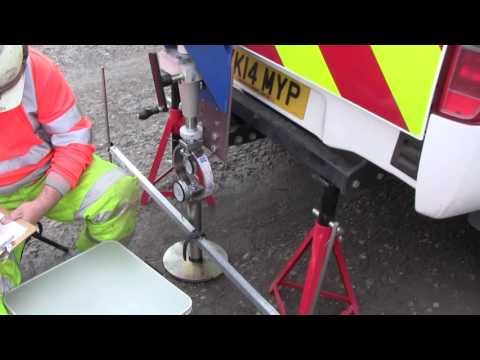
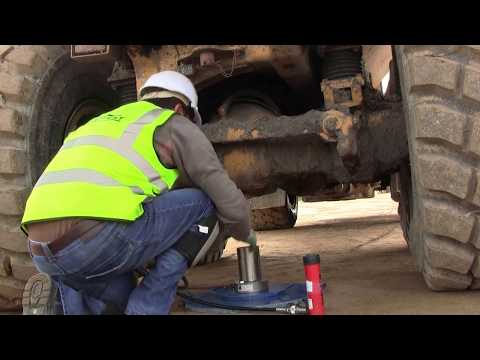
Hixtra has developed a portable reaction system for testing in tight locations where conventional construction plant cannot reach. Send access details and the specified loads so we can confirm the equipment and test arrangement before attending.

A closer look
Hixtra has developed a portable reaction system for testing in tight locations where conventional construction plant cannot reach. Send access details and the specified loads so we can confirm the equipment and test arrangement before attending.
UKAS accreditation applies to the particular methods listed in Hixtra’s current schedule, rather than every service. Ask us to confirm the accreditation status of the testing you require.
Hixtra in action
Working with Hixtra
From your first enquiry to your report, you’ll have practical advice on what to book, how to prepare and what happens next.
Share the site location, materials and testing specification. If you are unsure which test you need, we can help.
We agree the scope, access or sample requirements, availability and reporting arrangements before work starts.
Your results are reported for the agreed testing. Our team is on hand if you need to discuss the report.
Testing support across England & Wales
From individual site visits to ongoing testing programmes, we support construction, civil engineering and geotechnical projects across England and Wales.
Check availability for your site ↗Your questions
Practical answers on what this test is for, how to prepare and what you get back.
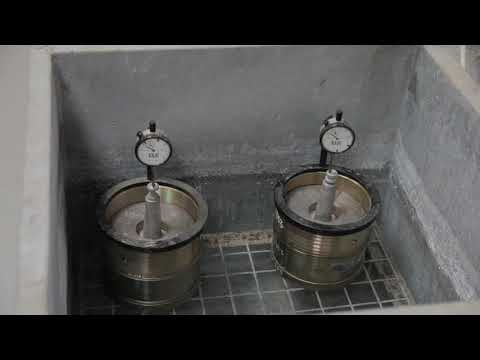
Ask us about your project →It measures how much the ground settles under an applied pressure at the positions where the scaffold standards will bear. The test is normally a plate bearing test: a plate is loaded in stages against a reaction and settlement recorded at each increment, commonly in accordance with BS 1377-9. The result describes the ground's response at that position, which the designer checks against the loads coming down through the base plates and sole boards.
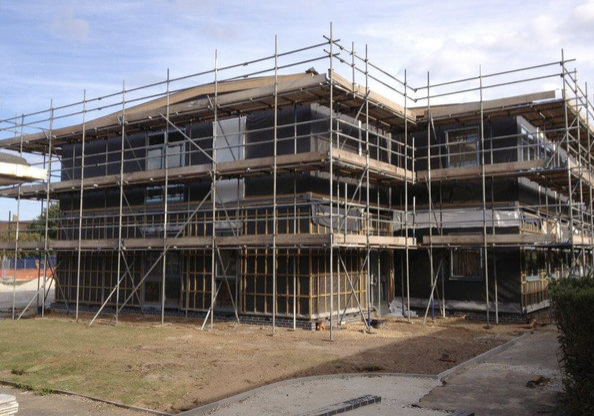
Because a scaffold design assumes a bearing capacity at the base, and on many sites there is nothing to confirm it. Standard configurations such as TG20 compliant scaffolds carry foundation and bearing assumptions; where the supporting surface is soft, made up, unknown or otherwise unusual, the scaffold sits outside those assumptions and needs a bespoke design with real ground data behind it. Testing replaces a cautious guess with a measured figure.
No, we provide measured ground data at the positions you nominate and nothing beyond that. The scaffold design, the base details and the decision on whether the ground is adequate stay with the scaffold designer or temporary works engineer. That split is normal under temporary works procedures such as BS 5975, where the designer and the temporary works coordinator own the design and its checking, and test data is one of the inputs to it.
Yes, we have developed a portable reaction system for testing in tight locations where conventional construction plant cannot reach, which covers many of the positions scaffold designers actually need: courtyards, rear gardens, light wells, alleyways and inside buildings. Each position still needs to be reasonably level and clear of standing water, vegetation and obstructions, with a working area around the equipment. Door and gate widths, steps, level changes and weight limits all decide which arrangement we bring.
Often yes, but the position needs checking against records before the visit rather than on the day. Pavement vaults, cellars, basement slabs, retaining walls and shallow services all change how the ground responds under load, and a position directly over a void may not give a meaningful result at all. Record drawings and a service search usually settle it, and the designer may prefer to move a position rather than test it.
Yes, though positions in the footway or carriageway usually need a permit and pedestrian or traffic management, arranged by whoever controls the works. That is normally the scaffolding contractor or principal contractor rather than us, and it is worth starting early because it often takes longer to organise than the testing itself. Flag any highway position when the work is being priced, because it affects both the visit and the reinstatement.
The scaffold designer sets the number and location, based on the scaffold layout, the leg loads and how variable the ground looks. Positions are normally chosen at the most heavily loaded standards and anywhere the ground changes: made ground, soft landscaping, recent excavation backfill or the point where a hard surface meets open ground. Several positions in one visit is normal where access allows, and each is referenced to your drawing in the report.
Each position is reported as applied pressure against measured settlement, usually as a load-settlement curve, with the plate diameter, the loading sequence and the position reference recorded alongside it. From that the designer can take a modulus, a settlement at the working pressure or a bearing value to compare against the leg loads. Turning a measurement into an allowable bearing pressure means applying a factor of safety, which is the designer's decision rather than ours.
The designer decides what to do, and the usual answer is to spread the load rather than abandon the position. Larger sole boards, timber or steel spreaders, a concrete pad, additional standards to reduce the load per leg or local ground improvement are all common responses. We can retest after remedial works so the design is based on the ground as it will be when the scaffold is standing on it.
Only where the test has to be carried out on the ground beneath a hard surface, and where we do break out we backfill and compact the position on completion. Testing on a slab, paving or tarmac is sometimes exactly what the designer wants, so confirm which is intended before the visit. Permanent reinstatement of a finished or highway surface is normally the responsibility of the contractor who owns it.
Hixtra holds UKAS accreditation to ISO/IEC 17025 for the tests listed in its schedule of accreditation, number 8996. Accreditation is specific to the listed methods and scope, so it attaches to particular methods rather than to a service as a whole, and the report states the status of each result. Ask us to confirm whether the test you need is covered, and tell us if the design check requires an accredited result.
Send the site postcode, the scaffold design or the leg loads if you have them, the number and location of test positions, access details and your preferred dates. On this type of work access is usually the largest single cost driver, alongside the number of positions, travel, any breaking out and reinstatement and permits or traffic management. Photographs of the route to each position are genuinely useful.
In our customers’ words
Independent feedback from the people we work with.
“Punctual, friendly and professional.”Read the full review ↗
“Perfect service and explained everything step by step.”Read the full review ↗
“Excellent service! Incredibly professional. Thankyou”Read the full review ↗
Customers come back to Hixtra
Read independent feedback from customers who have used our testing services.
4.8 / 5 on Trustpilot
“Punctual, friendly and professional.”
Lee Chippington · September 2026
Read this customer’s review ↗Same-day and next-day testing dates available. Tell us what you need and where, or call to check availability.