Understand your material
Obtain laboratory data to support ground investigations and geotechnical design.
Soils & geotechnical laboratory testing
Obtain laboratory data to support ground investigations and geotechnical design.
Same-day & next-day testing dates available. Call to check availability for your location and test requirements.
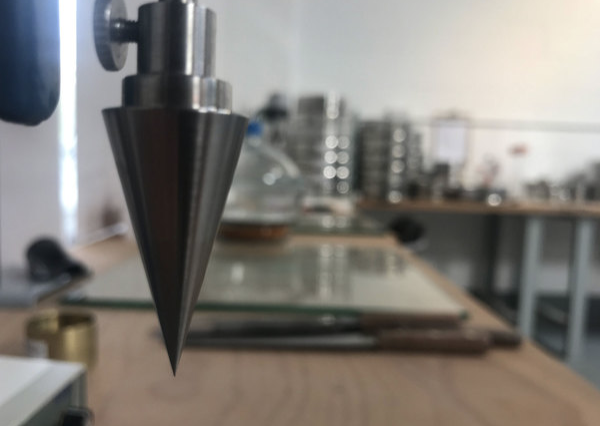
Practical testing. Experienced people. A service built around your project.
Quality, safety & professional standards
UKAS accreditation applies to the tests listed in our accredited schedule.
View our credentials ↗



Experienced people
Technical knowledge, with practical advice.
National coverage
Testing support wherever your project takes you.
A responsive service
Clear arrangements, from enquiry to reporting.
The right testing for your project
Practical advice, experienced testing staff and clear reporting. Obtain laboratory data to support ground investigations and geotechnical design.
Speak to the team ↗Where this service helps
The right test helps answer a specific project question. We’ll agree the method and requirements with you before the work begins.
Obtain laboratory data to support ground investigations and geotechnical design.
Agree the test method, sample condition and acceptance criteria before the work begins.
Use clear test records to support your project’s material and engineering assessment.
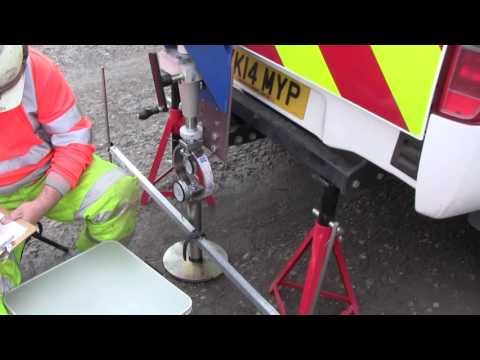
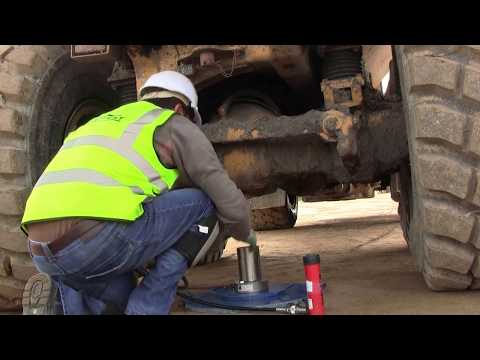
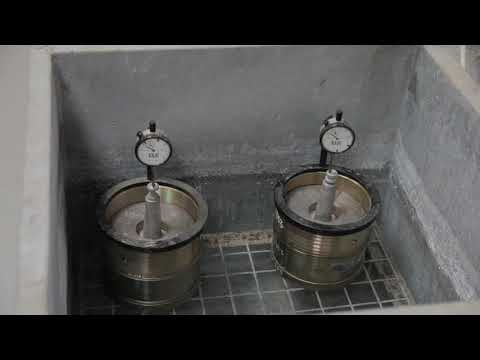
Our laboratory carries out routine classification alongside compaction and strength testing. Share the investigation schedule and sample information so the required water content, plasticity, particle density, grading, CBR or triaxial work can be coordinated.

A closer look
Our laboratory carries out routine classification alongside compaction and strength testing. Share the investigation schedule and sample information so the required water content, plasticity, particle density, grading, CBR or triaxial work can be coordinated.
UKAS accreditation applies to the particular methods listed in Hixtra’s current schedule, rather than every service. Ask us to confirm the accreditation status of the testing you require.
Hixtra in action
Working with Hixtra
From your first enquiry to your report, you’ll have practical advice on what to book, how to prepare and what happens next.
Share the site location, materials and testing specification. If you are unsure which test you need, we can help.
We agree the scope, access or sample requirements, availability and reporting arrangements before work starts.
Your results are reported for the agreed testing. Our team is on hand if you need to discuss the report.
Testing support across England & Wales
From individual site visits to ongoing testing programmes, we support construction, civil engineering and geotechnical projects across England and Wales.
Check availability for your site ↗Your questions
Practical answers on what this test is for, how to prepare and what you get back.
Ask us about your project →It covers the same classification tests plus the measured parameters a design needs: shear strength, consolidation, permeability, particle density and compaction behaviour. The difference is what the numbers are for. Earthworks testing asks whether a material is acceptable against a specification, geotechnical testing asks what values a designer can safely assign to a stratum for a bearing capacity, settlement or stability calculation. The same test can serve both, but the sampling and scheduling differ.
Because the two standards overlap and the schedule is covering itself. The BS EN ISO 17892 series was adopted in the UK for water content, density, grading, oedometer, triaxial, direct shear, permeability and the Atterberg limits, and where a 17892 method exists it normally takes precedence over the equivalent British Standard clause. BS 1377 still carries compaction, CBR, MCV, the chemical tests and the in-situ methods. We work to whichever your specification names.
It measures how much a cohesive soil compresses under load and how quickly that compression happens, which is what a settlement calculation needs. The specimen is confined in a ring and loaded in stages, each stage held until primary consolidation is complete, so the test gives both the magnitude of settlement and its rate. It needs an undisturbed specimen, because a remoulded one has already lost the structure the result depends on.
Yes. The method follows how permeable the soil is: constant head suits free draining granular material, falling head suits lower permeability soils, and very low permeability clays are normally tested in a triaxial or hydraulic cell under back pressure. A laboratory test measures one small specimen in one direction, so it can read lower than the mass permeability of the ground, which matters if the figure feeds a drainage or dewatering design.
Yes. Chemical and electro-chemical testing on soils, typically pH, water soluble and acid soluble sulfate and organic matter, is usually specified to BS 1377-3, and it is what an aggressive ground assessment to BRE Special Digest 1 is built on. Those results feed the design sulfate and ACEC classification that sets the concrete specification for buried elements. Groundwater samples are often needed alongside the soil, so check what the specification asks for.
The results are factual data, and the designer selects characteristic values from them, which Eurocode 7 describes as a cautious estimate of the value governing the limit state rather than a simple average. That is why a spread of results across a stratum is more useful than one number, and why every result has to stay tied to its exact sample, depth and test condition. Results can also be issued as an AGS data file.
They answer different halves of the same question. Field testing gives a near continuous profile that shows where the ground changes and how variable it is, but usually through correlations rather than a directly measured parameter. Laboratory testing gives measured values at discrete depths on identified material. Most ground models use the field work to decide where to test and the laboratory results to put numbers on the strata that matter.
Some variation is normal, because soil is not uniform and no two specimens are identical even from the same bag. Preparation choices matter as much as the testing itself: how a sample is subdivided, how long it was air dried, which compaction method was used and the rate a test is run at all move the answer. That is why methods are defined so tightly, and why a result only means anything with its conditions reported beside it.
Because the soil sets the pace, not the laboratory. A consolidation stage has to run until primary consolidation is complete before the next load goes on, and an effective stress triaxial has to saturate, consolidate and then shear slowly enough for pore pressure to stay in equilibrium through the specimen. Rushing either gives a number that is simply wrong. Low permeability clays are the slowest, and we confirm expected timings before the work is booked.
We produce factual test reports: the method, the conditions the test was run under and the measured result, with no interpretation of what it means for your design. An interpretative report goes further, selecting design parameters, assessing the ground model and making recommendations, and that is your geotechnical adviser's work rather than a testing laboratory's. The separation is deliberate, so the factual data stays independent of the conclusions drawn from it. We are happy to discuss a result with you.
Hixtra holds UKAS accreditation to ISO/IEC 17025 for the tests listed in its schedule of accreditation, number 8996. Accreditation is specific to the listed methods and scope, so it is settled method by method rather than by service, and each report states the status of the result on it. Send the list of methods from your schedule and we'll confirm which of them are covered before anything is instructed.
Start from the design questions rather than the sample list, and test the strata those questions depend on. Schedule the classification work first and widely, then target the slower strength, consolidation and permeability tests at the horizons that matter once the strata are confirmed. Send the logs, the site postcode, sample numbers and your reporting date, and we'll comment on the draft schedule before it goes to price.
In our customers’ words
Independent feedback from the people we work with.
“Punctual, friendly and professional.”Read the full review ↗
“Perfect service and explained everything step by step.”Read the full review ↗
“Excellent service! Incredibly professional. Thankyou”Read the full review ↗
Customers come back to Hixtra
Read independent feedback from customers who have used our testing services.
4.8 / 5 on Trustpilot
“Punctual, friendly and professional.”
Lee Chippington · September 2026
Read this customer’s review ↗Same-day and next-day testing dates available. Tell us what you need and where, or call to check availability.