Understand your material
Arrange representative fresh concrete sampling, cube manufacture and initial curing.
Concrete testing & coring
Arrange representative fresh concrete sampling, cube manufacture and initial curing.
Same-day & next-day testing dates available. Call to check availability for your location and test requirements.
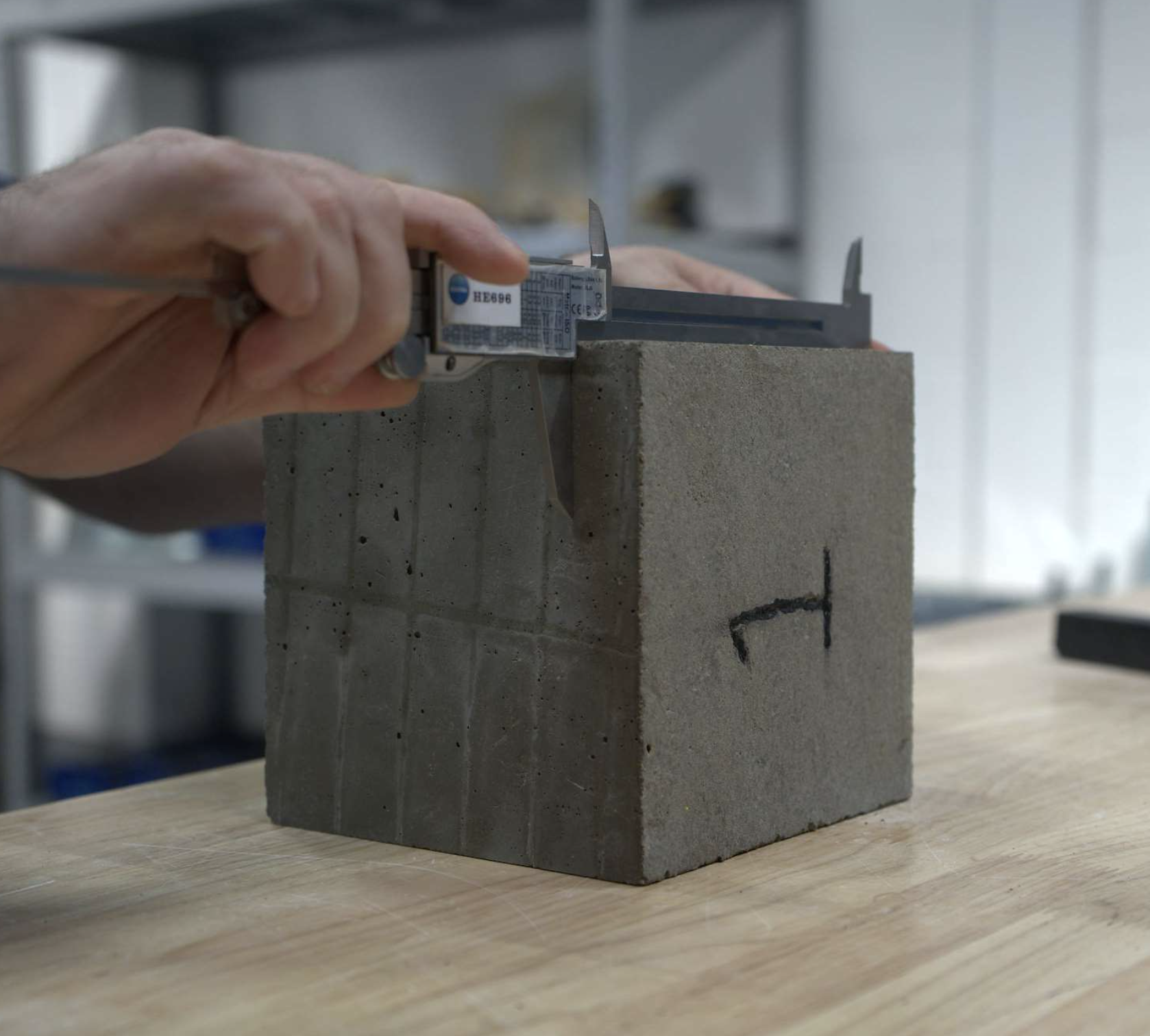
Practical testing. Experienced people. A service built around your project.
Quality, safety & professional standards
UKAS accreditation applies to the tests listed in our accredited schedule.
View our credentials ↗



Experienced people
Technical knowledge, with practical advice.
National coverage
Testing support wherever your project takes you.
A responsive service
Clear arrangements, from enquiry to reporting.
The right testing for your project
Practical advice, experienced testing staff and clear reporting. Arrange representative fresh concrete sampling, cube manufacture and initial curing.
Speak to the team ↗Where this service helps
The right test helps answer a specific project question. We’ll agree the method and requirements with you before the work begins.
Arrange representative fresh concrete sampling, cube manufacture and initial curing.
Agree the test method, sample condition and acceptance criteria before the work begins.
Use clear test records to support your project’s material and engineering assessment.
Our technicians use maintained moulds and the required compaction procedure to prepare specimens. Correct initial storage, identification and subsequent curing are important to the validity of strength results. Confirm pour times, sampling frequency and testing ages in advance.
Sampling, cube making and initial curing on site are offered within roughly one hour’s drive of the Milton Keynes laboratory. Young specimens have to be moved into controlled curing before a long journey can affect them, which is what sets the limit. If your site falls outside that area, we can still test cubes that your team or another laboratory has made and cured.

A closer look
Our technicians use maintained moulds and the required compaction procedure to prepare specimens. Correct initial storage, identification and subsequent curing are important to the validity of strength results. Confirm pour times, sampling frequency and testing ages in advance.
UKAS accreditation applies to the particular methods listed in Hixtra’s current schedule, rather than every service. Ask us to confirm the accreditation status of the testing you require.
Hixtra in action
Working with Hixtra
From your first enquiry to your report, you’ll have practical advice on what to book, how to prepare and what happens next.
Share the site location, materials and testing specification. If you are unsure which test you need, we can help.
We agree the scope, access or sample requirements, availability and reporting arrangements before work starts.
Your results are reported for the agreed testing. Our team is on hand if you need to discuss the report.
Testing support across England & Wales
From individual site visits to ongoing testing programmes, we support construction, civil engineering and geotechnical projects across England and Wales.
Check availability for your site ↗Your questions
Practical answers on what this test is for, how to prepare and what you get back.
Ask us about your project →We attend the pour, take a representative sample of the fresh concrete, fill and compact the moulds, finish and mark the specimens, then set them up for initial curing before they are collected. The sample is taken as increments through the discharge and remixed before any mould is filled, usually to BS EN 12350-1. Everything from that point on affects the strength result, which is why the moulding and the first day of curing are done to a set method.
From several increments taken through the discharge of the load, not from the first or the last concrete out of the drum. The increments go into buckets, are remixed on a clean non-absorbent surface and the moulds are filled from that. A quick spot sample taken from one point is only good enough for an early workability check, not for making cubes, because the specimens have to represent the load the result will be attributed to.
Specimens are normally made and cured to BS EN 12390-2, with the sample taken to BS EN 12350-1 and the mould and specimen requirements coming from BS EN 12390-1. Your specification may also set the sampling rate and the test ages, usually through BS EN 206 and BS 8500 or the contract documents. Where a project names a different method we follow the specification, and any departure from the standard method is recorded and reported.
The mould is filled in layers, each layer compacted with a steel tamping bar before the next goes in, and the sides are then tapped until the large air bubbles stop rising. A 100 mm mould is normally filled in two layers with at least 25 strokes per layer, and a 150 mm mould in three layers with at least 35. The surface is struck off level with the top of the mould and the specimen is marked so it can be traced back to the sample.
Normally at least two for each test age, so a 7 and 28 day requirement means four cubes from one sample. Some specifications ask for a spare to be held back in case a result needs checking or a later age is called for, which is worth doing on a pour you cannot repeat. How many samples you need across the pour is a separate question, set by the specification. Tell us the ages and the number of samples and we'll bring the moulds to suit.
Usually overnight, and in any case not less than about 16 hours and not more than three days. During that time they stay level and undisturbed at close to 20 °C, covered so they cannot dry out and protected from shock, vibration and site traffic. They are then demoulded and moved into curing water held at 20 ± 2 °C, or a curing chamber at the same temperature and high humidity, until the test age.
We agree an alternative before the pour rather than leave the cubes to take their chances. An insulated curing box works on smaller jobs where a steady temperature can be held, and on some sites the specimens are collected after their initial period in the mould and brought straight into controlled curing. What is not acceptable is leaving cubes uncovered in the open, in direct sun or where they can freeze. Whatever is used, the conditions are recorded and reported with the result.
Yes, and frost during the first night can ruin a set of cubes for good. Strength gain slows sharply as the temperature falls, and a specimen that freezes before it has set is damaged in a way later curing cannot correct. That shows up as a low result and looks like a concrete failure when it is really a curing failure. Cubes need an insulated or heated position, a cover and a maximum and minimum thermometer kept alongside them.
After the initial period in the mould, on an agreed collection round rather than straight off the back of the pour. Cubes are not moved before they are strong enough to handle, so a same-evening collection is not normally possible. They travel protected from drying, knocks and frost, and they go into controlled curing as soon as they reach the laboratory. Each specimen arrives with its reference, casting date and required test ages, so nothing has to be reconstructed later.
Yes, and we will test them, but the report will state that the specimens were made by others and record the conditioning history as supplied. A cube result only means as much as the making and curing behind it allow, so if the sampling, compaction or early storage is not to the standard method the figure may not represent the concrete. Send the casting dates, references, required ages and how the cubes were stored. If site-made cubes are being used for conformity, check that your specification allows it.
Hixtra holds UKAS accreditation to ISO/IEC 17025 for the tests listed in its schedule of accreditation, number 8996. Accreditation is specific to the listed methods and scope, so it covers particular methods rather than every service we offer. Ask us to confirm whether the work you need is covered before you book, and the report will show the status of each result. It is worth doing that early, because some specifications want the sampling and specimen manufacture covered as well as the strength test.
Cost is driven mainly by the number of site visits rather than the number of cubes, so pours split across several days cost more than the same volume in one. Travel to site, waiting time between loads, out-of-hours and weekend pours, the number of samples per visit and the curing and collection arrangements all feed into it. Send your site postcode, the concrete specification, the pour dates and volumes, the sampling frequency and the test ages, and we'll price it.
In our customers’ words
Independent feedback from the people we work with.
“Punctual, friendly and professional.”Read the full review ↗
“Perfect service and explained everything step by step.”Read the full review ↗
“Excellent service! Incredibly professional. Thankyou”Read the full review ↗
Customers come back to Hixtra
Read independent feedback from customers who have used our testing services.
4.8 / 5 on Trustpilot
“Punctual, friendly and professional.”
Lee Chippington · September 2026
Read this customer’s review ↗Same-day and next-day testing dates available. Tell us what you need and where, or call to check availability.