Understand your material
Measure soil strength to support geotechnical assessment and engineered fill testing.
Soils & geotechnical laboratory testing
Measure soil strength to support geotechnical assessment and engineered fill testing.
Same-day & next-day testing dates available. Call to check availability for your location and test requirements.
Practical testing. Experienced people. A service built around your project.
Quality, safety & professional standards
UKAS accreditation applies to the tests listed in our accredited schedule.
View our credentials ↗



Experienced people
Technical knowledge, with practical advice.
National coverage
Testing support wherever your project takes you.
A responsive service
Clear arrangements, from enquiry to reporting.
The right testing for your project
Practical advice, experienced testing staff and clear reporting. Measure soil strength to support geotechnical assessment and engineered fill testing.
Speak to the team ↗Where this service helps
The right test helps answer a specific project question. We’ll agree the method and requirements with you before the work begins.
Measure soil strength to support geotechnical assessment and engineered fill testing.
Agree the test method, sample condition and acceptance criteria before the work begins.
Use clear test records to support your project’s material and engineering assessment.
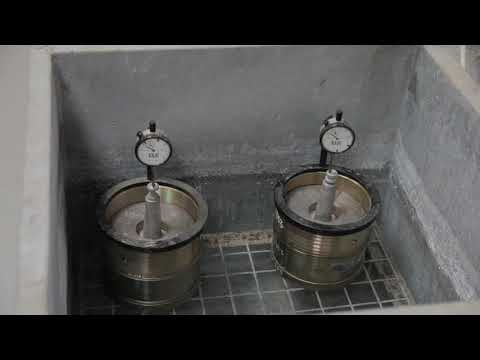
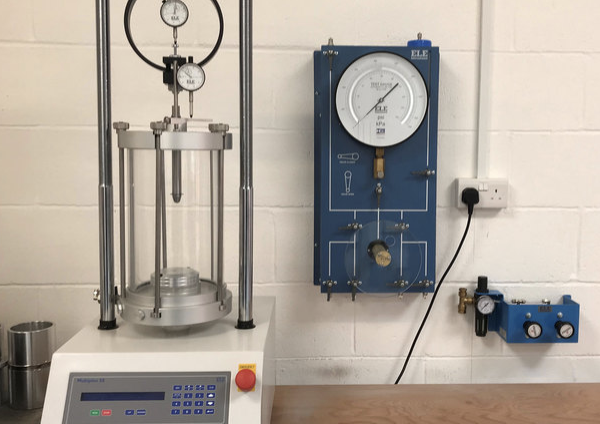
Hixtra carries out unconsolidated undrained triaxial testing on suitable cylindrical specimens, including recompacted specimens where specified. The agreed sample condition and method are essential to interpretation. Discuss requirements for multi-stage testing or related site measurements with us.

A closer look
Hixtra carries out unconsolidated undrained triaxial testing on suitable cylindrical specimens, including recompacted specimens where specified. The agreed sample condition and method are essential to interpretation. Discuss requirements for multi-stage testing or related site measurements with us.
UKAS accreditation applies to the particular methods listed in Hixtra’s current schedule, rather than every service. Ask us to confirm the accreditation status of the testing you require.
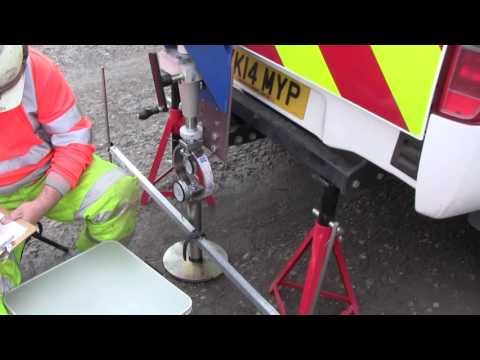
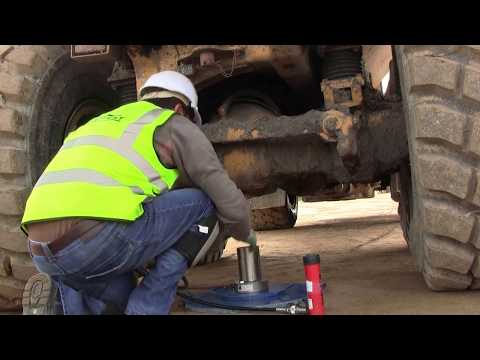
Hixtra in action
Working with Hixtra
From your first enquiry to your report, you’ll have practical advice on what to book, how to prepare and what happens next.
Share the site location, materials and testing specification. If you are unsure which test you need, we can help.
We agree the scope, access or sample requirements, availability and reporting arrangements before work starts.
Your results are reported for the agreed testing. Our team is on hand if you need to discuss the report.
Testing support across England & Wales
From individual site visits to ongoing testing programmes, we support construction, civil engineering and geotechnical projects across England and Wales.
Check availability for your site ↗Your questions
Practical answers on what this test is for, how to prepare and what you get back.
Ask us about your project →It measures the resistance a soil offers before it shears, which is the strength figure a geotechnical designer works from. Depending on the method, the result is either an undrained shear strength, cu, or the effective stress parameters cohesion and angle of friction, c' and phi'. Those values feed slope stability, retaining wall and bearing capacity calculations. Which of them you need depends on what the design is checking.
It depends on the soil and on whether the design needs short-term or long-term strength. A shear box suits granular soils and strength along a defined plane, and is the usual route to a residual value. Triaxial testing suits cohesive soils and is the only route to effective stress parameters. A laboratory vane gives a quick undrained strength in soft clay, and unconfined compression suits firm intact cohesive material.
Undrained strength describes the soil immediately after loading, before pore water has had time to drain away, while drained strength describes it once those pore pressures have dissipated. Short-term cases such as a temporary cut face or a rapidly built embankment are normally checked undrained. Long-term slope stability and retaining wall design normally need effective stress parameters from consolidated triaxial testing. Plenty of designs check both conditions.
They are the two parameters that describe how a soil's shear strength changes with the stress acting on it: cohesion is the strength available at zero normal stress, and the friction angle is how much further strength is gained as that stress increases. Designers put the pair into slope stability analyses, earth pressure calculations for retaining and embedded walls, and bearing capacity checks for foundations.
Shear strength testing is now usually carried out to the BS EN ISO 17892 series: part 7 for unconfined compression, part 8 for the unconsolidated undrained triaxial test, part 9 for consolidated triaxial tests on saturated soils and part 10 for direct shear. These superseded the equivalent clauses of BS 1377 parts 7 and 8, which some specifications still name. The laboratory vane sits in BS 1377-2.
Because the result only describes the soil in the condition the specimen was in, and disturbance during sampling destroys the structure that gives a cohesive soil much of its strength. Triaxial, unconfined compression and laboratory vane testing all need intact tube samples, typically 100 mm diameter, kept sealed, the right way up and tested before they dry. Granular soils that cannot be sampled intact are recompacted to an agreed condition instead.
As a guide, a triaxial set needs an intact tube sample with enough undisturbed length to cut three specimens, a 60 mm shear box needs only a kilogram or two of material, and a 300 mm large shear box needs around 35 kg. Coarse soils need more of everything. Confirm quantities, containers and delivery arrangements with us before you sample, because a sample that arrives short cannot be made to go further.
An unconsolidated undrained triaxial set, a shear box on a granular soil or a laboratory vane can be turned round reasonably quickly, but effective stress triaxial testing cannot. Each specimen has to be saturated, consolidated and then sheared slowly enough for pore pressures to stay in equilibrium, so a low permeability clay can take one to two weeks per stage. We confirm the expected timing before the work is booked.
You need more than one point on the failure envelope, so those parameters come either from a set of three specimens tested at different confining pressures or from a multistage test on a single specimen. A set of three is generally preferred where there is enough intact material, because multistage relies on one specimen surviving successive stages. The report gives each specimen's result alongside the derived parameters and the failure plot.
The usual causes are sample disturbance and the condition of the specimen rather than the test itself. Cohesive samples lose strength if tubes are knocked, stored badly, allowed to dry or left too long before testing, and a recompacted specimen only reflects the density and moisture content it was prepared at. Fissures and laminations matter too, since a small specimen may miss or exaggerate them. Send the borehole records with the samples.
Hixtra holds UKAS accreditation to ISO/IEC 17025 for the tests listed in its schedule of accreditation, number 8996. Accreditation is specific to the listed methods and scope, rather than to every service. Shear strength covers several distinct methods, specimen sizes and sample conditions, so ask us to confirm the status of the particular test you need before it is scheduled.
Tell us what you are holding and what the design needs. Send the site postcode, the soil type, the tests and specimen sizes required, how many samples are involved and your preferred dates, with the specification or testing schedule if there is one. Tell us whether the design needs total stress or effective stress parameters, because that changes the programme considerably. Cost is driven mainly by specimen numbers, sample preparation and how long a consolidated test occupies a cell.
In our customers’ words
Independent feedback from the people we work with.
“Punctual, friendly and professional.”Read the full review ↗
“Perfect service and explained everything step by step.”Read the full review ↗
“Excellent service! Incredibly professional. Thankyou”Read the full review ↗
Customers come back to Hixtra
Read independent feedback from customers who have used our testing services.
4.8 / 5 on Trustpilot
“Punctual, friendly and professional.”
Lee Chippington · September 2026
Read this customer’s review ↗Same-day and next-day testing dates available. Tell us what you need and where, or call to check availability.