Understand your material
Assess the consistency of high-workability fresh concrete using flow table testing.
Concrete testing & coring
Assess the consistency of high-workability fresh concrete using flow table testing.
Same-day & next-day testing dates available. Call to check availability for your location and test requirements.
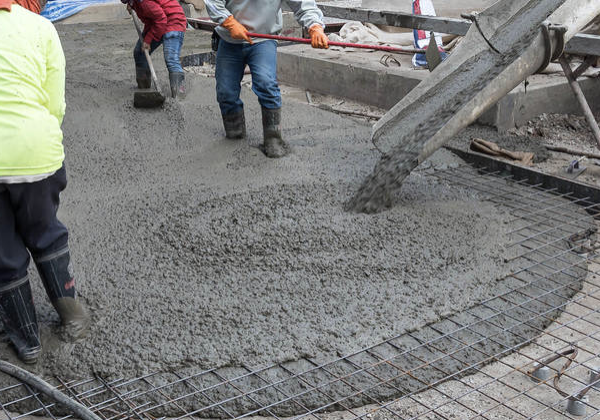
Practical testing. Experienced people. A service built around your project.
Quality, safety & professional standards
UKAS accreditation applies to the tests listed in our accredited schedule.
View our credentials ↗



Experienced people
Technical knowledge, with practical advice.
National coverage
Testing support wherever your project takes you.
A responsive service
Clear arrangements, from enquiry to reporting.
The right testing for your project
Practical advice, experienced testing staff and clear reporting. Assess the consistency of high-workability fresh concrete using flow table testing.
Speak to the team ↗Where this service helps
The right test helps answer a specific project question. We’ll agree the method and requirements with you before the work begins.
Assess the consistency of high-workability fresh concrete using flow table testing.
Agree the test method, sample condition and acceptance criteria before the work begins.
Use clear test records to support your project’s material and engineering assessment.
A sample is prepared in a mould on the flow table. After the mould is removed, the prescribed table action is applied and the resulting spread is measured. The selected consistency method and acceptance limits should match the concrete specification.
Flow table testing forms part of our fresh concrete attendance, which runs within about one hour’s drive of Milton Keynes. Fresh specimens do not keep, and cubes taken on the same visit need controlled curing before they are too old to represent the pour. Laboratory testing of hardened cubes and cores is available throughout England and Wales.

A closer look
A sample is prepared in a mould on the flow table. After the mould is removed, the prescribed table action is applied and the resulting spread is measured. The selected consistency method and acceptance limits should match the concrete specification.
UKAS accreditation applies to the particular methods listed in Hixtra’s current schedule, rather than every service. Ask us to confirm the accreditation status of the testing you require.
Hixtra in action
Working with Hixtra
From your first enquiry to your report, you’ll have practical advice on what to book, how to prepare and what happens next.
Share the site location, materials and testing specification. If you are unsure which test you need, we can help.
We agree the scope, access or sample requirements, availability and reporting arrangements before work starts.
Your results are reported for the agreed testing. Our team is on hand if you need to discuss the report.
Testing support across England & Wales
From individual site visits to ongoing testing programmes, we support construction, civil engineering and geotechnical projects across England and Wales.
Check availability for your site ↗Your questions
Practical answers on what this test is for, how to prepare and what you get back.
Ask us about your project →It measures the consistence of fresh concrete as a spread diameter: the concrete is jolted on a hinged table and the width it spreads to is the flow value in millimetres. It does the same job as a slump test, but over a more workable range where slump has stopped discriminating usefully. Flow describes how the concrete handles, not how strong it will be, and the result is compared with the flow class or target in your specification.
When the concrete is too workable for slump to say anything useful, or when your specification sets a flow class rather than a slump class. Slump loses sensitivity above about 210 mm, so free-flowing and heavily plasticised mixes all come back looking much the same. The flow table covers that range. If the concrete is genuinely self-compacting, neither test applies and the slump-flow method is used instead.
A cone-shaped mould 200 mm high, 200 mm across the base and 130 mm across the top is filled on a 700 mm square hinged table in two layers, each tamped ten times, then struck off and, after a pause of about 30 seconds, lifted clear. The upper leaf of the table is raised to its stop and dropped 15 times, which spreads the concrete out. Two diameters at right angles are then measured and averaged to give the flow value, recorded to the nearest 10 mm.
Usually BS EN 12350-5, with the sample taken to BS EN 12350-1 and the flow classes and tolerances coming from BS EN 206, BS 8500 or the project specification. The method is not intended for concrete with aggregate above 63 mm, and it is only sensitive across flow values of roughly 340 to 620 mm. Where your specification names a different consistence method we work to that, and the report states the method used.
They are the bands used to specify consistence by flow: F1 is 340 mm or less, F2 is 350 to 410 mm, F3 is 420 to 480 mm, F4 is 490 to 550 mm, F5 is 560 to 620 mm and F6 is 630 mm or more. Most flow-specified concrete sits in F4 or F5. F1 and F6 fall outside the range the test discriminates well in, so a requirement at those extremes is usually better served by another method.
No, they are different methods: both report a spread in millimetres, but the flow table test compacts the concrete into its own cone and then jolts it on a table, while the slump-flow test uses the ordinary slump cone on a flat plate with no compaction and no jolting. Slump-flow is normally carried out to BS EN 12350-8, often with a t500 flow time recorded alongside it. Booking the wrong one gives a result that cannot be compared with your acceptance limits.
Not in itself, because high workability achieved with a plasticiser or superplasticiser does not reduce strength, as the water content has not changed. High workability achieved by adding water is a different matter: it lowers strength and affects durability. That is why a flow result is read alongside the delivery ticket and any record of water or admixture added after batching. A high flow with visible bleeding or segregation is the one to be suspicious of.
Mostly time and temperature: superplasticised mixes hold their workability for a defined window and then lose it quickly, so a load that sits in the queue can arrive well below the flow it left the plant with. Concrete temperature, ambient conditions, dry aggregates and the admixture type all shorten or extend that window. Consistence is specified and tested at the point of delivery for exactly this reason, so the test is timed around discharge rather than around arrival on site.
We record it, because the shape of the spread and what happens at its edge say as much as the number does. A ring of paste running ahead of the aggregate, coarse aggregate heaped in the centre or free water at the rim all point to a mix that is flowing because it is wet rather than because it is well designed. The flow value is still reported, with the observation alongside it, so the number is not read on its own.
That is between you and the concrete producer, and where it is done it should be the producer's decision and dose, recorded on the delivery ticket. The load then has to be remixed properly, usually several minutes at mixing speed, before a new sample is taken. We will test the concrete again and report both results with the times, so the record shows what was tested and when. Whether the re-dosed load is acceptable stays with you and your engineer.
Hixtra holds UKAS accreditation to ISO/IEC 17025 for the tests listed in its schedule of accreditation, number 8996. Accreditation is specific to the listed methods and scope, so it covers the methods named in that schedule rather than everything we do. Ask us to confirm whether the consistence method your specification calls for is covered, and the report will state the status of each result. Worth checking early where accredited results are needed for consistence as well as strength.
Your site postcode, the concrete specification or the consistence clause from it, the pour dates and volumes, the expected number of loads and how often testing is required. Tell us whether cubes or other fresh concrete tests are needed on the same visit, because most of the cost is the visit rather than the individual test. Out-of-hours pours, long waits between loads and work spread over several addresses all affect the price.
In our customers’ words
Independent feedback from the people we work with.
“Punctual, friendly and professional.”Read the full review ↗
“Perfect service and explained everything step by step.”Read the full review ↗
“Excellent service! Incredibly professional. Thankyou”Read the full review ↗
Customers come back to Hixtra
Read independent feedback from customers who have used our testing services.
4.8 / 5 on Trustpilot
“Punctual, friendly and professional.”
Lee Chippington · September 2026
Read this customer’s review ↗Same-day and next-day testing dates available. Tell us what you need and where, or call to check availability.