Understand your material
Assess aggregates, crushed concrete and fill materials for construction and geotechnical use.
Aggregates & subbase testing
Assess aggregates, crushed concrete and fill materials for construction and geotechnical use.
Same-day & next-day testing dates available. Call to check availability for your location and test requirements.
Practical testing. Experienced people. A service built around your project.
Quality, safety & professional standards
UKAS accreditation applies to the tests listed in our accredited schedule.
View our credentials ↗



Experienced people
Technical knowledge, with practical advice.
National coverage
Testing support wherever your project takes you.
A responsive service
Clear arrangements, from enquiry to reporting.
The right testing for your project
Practical advice, experienced testing staff and clear reporting. Assess aggregates, crushed concrete and fill materials for construction and geotechnical use.
Speak to the team ↗Where this service helps
The right test helps answer a specific project question. We’ll agree the method and requirements with you before the work begins.
Assess aggregates, crushed concrete and fill materials for construction and geotechnical use.
Agree the test method, sample condition and acceptance criteria before the work begins.
Use clear test records to support your project’s material and engineering assessment.
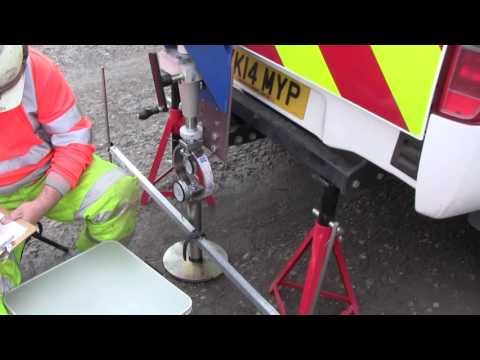
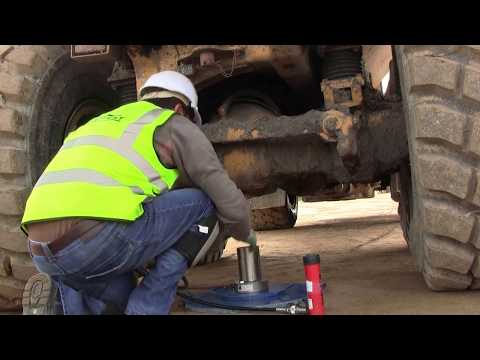
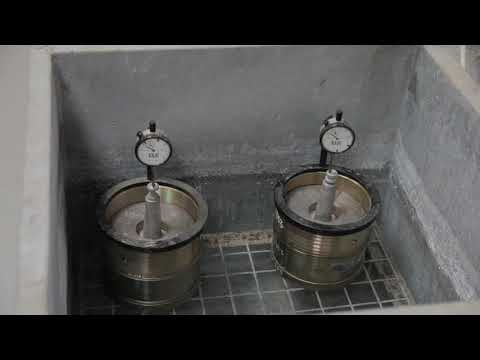
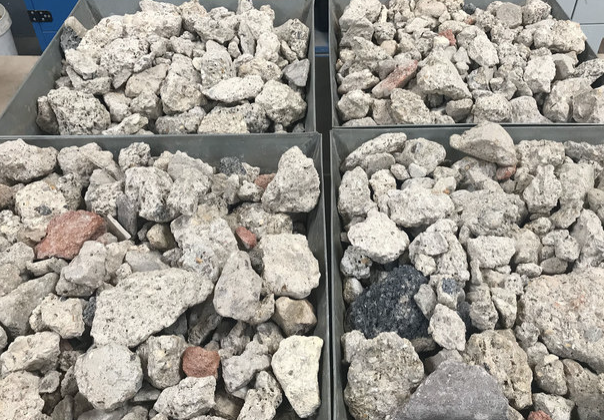
Testing can cover grading, abrasion, constituent particles, soundness, frost heave and other specified properties. Hixtra can coordinate representative sampling, laboratory analysis and site compaction monitoring as part of a complete material assessment.

A closer look
Testing can cover grading, abrasion, constituent particles, soundness, frost heave and other specified properties. Hixtra can coordinate representative sampling, laboratory analysis and site compaction monitoring as part of a complete material assessment.
UKAS accreditation applies to the particular methods listed in Hixtra’s current schedule, rather than every service. Ask us to confirm the accreditation status of the testing you require.
Hixtra in action
Working with Hixtra
From your first enquiry to your report, you’ll have practical advice on what to book, how to prepare and what happens next.
Share the site location, materials and testing specification. If you are unsure which test you need, we can help.
We agree the scope, access or sample requirements, availability and reporting arrangements before work starts.
Your results are reported for the agreed testing. Our team is on hand if you need to discuss the report.
Testing support across England & Wales
From individual site visits to ongoing testing programmes, we support construction, civil engineering and geotechnical projects across England and Wales.
Check availability for your site ↗Your questions
Practical answers on what this test is for, how to prepare and what you get back.
Ask us about your project →A typical suite covers grading, particle shape, fines content, water absorption, particle density, resistance to fragmentation and soundness or freeze-thaw where durability has to be proved. Which of those you actually need is set by the product standard and the end use, not by the material itself. A producer proving a new source generally needs the full set, while a contractor checking a delivered stockpile usually needs far fewer.
Aggregate testing is usually carried out to the BS EN series. The 933 parts cover geometrical properties such as grading and particle shape, the 1097 parts cover mechanical and physical properties including particle density, water absorption and resistance to fragmentation, while the 1367 parts cover soundness and freeze-thaw and the 1744 parts cover chemical properties. Sampling and sample reduction follow BS EN 932.
A producer proving a source generally needs the full property set the relevant product standard calls up, repeated often enough to show the source is consistent rather than tested once. That usually means grading, shape, fines quality, density and water absorption, plus the durability properties for the end use. The categories a source can declare are then carried through into what customers can specify from it.
Grading is the particle size distribution plotted against the envelope in the specification, and it governs how the material compacts, drains and locks together. A curve outside the envelope usually means the stockpile will not behave predictably: too many fines hold water and go soft under plant, too few leave it loose and open. A single failing sample may reflect segregation in the stockpile rather than the source, so where it came from matters.
Because two materials with the same grading can behave very differently depending on particle shape and on what the fines actually are. Flakiness and shape index identify elongated or flaky particles that fracture under compaction, while the sand equivalent and methylene blue tests separate harmless rock dust from clay that will soften the material once it is wet. Specifications for subbase and concrete aggregate commonly set categories for both.
Water absorption measures how much water the aggregate takes into its pores, normally reported over 24 hours, and particle density is the density of the particles themselves. Concrete mix design needs both to get the free water content and batch quantities right, and a high absorption often flags a porous, less durable stone. Both are also used to convert between mass and volume when working out how much material a layer takes.
Ask for whichever your specification names, because they measure different mechanisms. The Los Angeles test measures resistance to fragmentation under mechanical action, magnesium sulfate soundness measures breakdown under repeated salt crystallisation as a proxy for weathering, and freeze-thaw measures loss after freezing cycles. Soundness and freeze-thaw run as cycles over several days, so they take considerably longer than a Los Angeles test and need planning into the programme.
Yes. Alongside the usual physical and durability properties it needs a constituent classification, so the proportions of concrete, masonry, bituminous material, glass and foreign matter can be checked against the limits for the intended use. Recycled material also varies far more from load to load than a quarried source, so specifications normally set a higher testing frequency and a sampling regime to match.
No. Marking and the declaration of performance are the producer's responsibility under the construction products regime, and they rest on a factory production control system assessed by an approved or notified body rather than on individual test results. Test reports support that system and demonstrate a delivered material against a specification, but they do not replace it. CE marking continues to be recognised in Great Britain alongside UKCA marking.
The sample has to represent the material as a whole, which normally means combining several increments taken from different points rather than one scoop off the face of a stockpile, then reducing it by the BS EN 932 methods. Quantity depends on the tests, since a grading needs far less than a fragmentation or soundness test on a coarse fraction. Tell us the tests and the top size and we will confirm how much to send.
Hixtra holds UKAS accreditation to ISO/IEC 17025 for the tests listed in its schedule of accreditation, number 8996. Accreditation is specific to the listed methods and scope, rather than to every service. An aggregate suite can contain a dozen separate methods, so send us the list of tests you need and we will confirm the status of each one before anything is booked.
Send the material type and source, the end use or product standard it has to meet, the list of tests or the specification clause, the number of samples and your programme dates. Say whether you need sampling as well as laboratory testing. Cost is driven by the number of tests and samples, sample preparation, any site attendance for sampling and whether the slower durability tests are in the schedule.
In our customers’ words
Independent feedback from the people we work with.
“Punctual, friendly and professional.”Read the full review ↗
“Perfect service and explained everything step by step.”Read the full review ↗
“Excellent service! Incredibly professional. Thankyou”Read the full review ↗
Customers come back to Hixtra
Read independent feedback from customers who have used our testing services.
4.8 / 5 on Trustpilot
“Punctual, friendly and professional.”
Lee Chippington · September 2026
Read this customer’s review ↗Same-day and next-day testing dates available. Tell us what you need and where, or call to check availability.