Understand your material
Maintain concrete test specimens under controlled conditions before strength testing.
Concrete testing & coring
Maintain concrete test specimens under controlled conditions before strength testing.
Same-day & next-day testing dates available. Call to check availability for your location and test requirements.
Practical testing. Experienced people. A service built around your project.
Quality, safety & professional standards
UKAS accreditation applies to the tests listed in our accredited schedule.
View our credentials ↗



Experienced people
Technical knowledge, with practical advice.
National coverage
Testing support wherever your project takes you.
A responsive service
Clear arrangements, from enquiry to reporting.
The right testing for your project
Practical advice, experienced testing staff and clear reporting. Maintain concrete test specimens under controlled conditions before strength testing.
Speak to the team ↗Where this service helps
The right test helps answer a specific project question. We’ll agree the method and requirements with you before the work begins.
Maintain concrete test specimens under controlled conditions before strength testing.
Agree the test method, sample condition and acceptance criteria before the work begins.
Use clear test records to support your project’s material and engineering assessment.
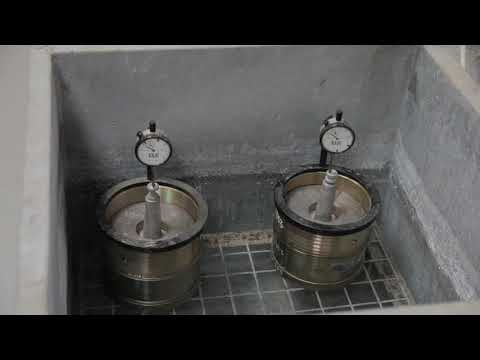
Hixtra uses controlled laboratory facilities and water baths for specimen curing. The required conditions and testing ages should be agreed with the testing programme. Reliable identification and handling help preserve the connection between each specimen and the concrete placed on site.

A closer look
Hixtra uses controlled laboratory facilities and water baths for specimen curing. The required conditions and testing ages should be agreed with the testing programme. Reliable identification and handling help preserve the connection between each specimen and the concrete placed on site.
UKAS accreditation applies to the particular methods listed in Hixtra’s current schedule, rather than every service. Ask us to confirm the accreditation status of the testing you require.
Hixtra in action
Working with Hixtra
From your first enquiry to your report, you’ll have practical advice on what to book, how to prepare and what happens next.
Share the site location, materials and testing specification. If you are unsure which test you need, we can help.
We agree the scope, access or sample requirements, availability and reporting arrangements before work starts.
Your results are reported for the agreed testing. Our team is on hand if you need to discuss the report.
Testing support across England & Wales
From individual site visits to ongoing testing programmes, we support construction, civil engineering and geotechnical projects across England and Wales.
Check availability for your site ↗Your questions
Practical answers on what this test is for, how to prepare and what you get back.
Ask us about your project →This service is the curing of test specimens, not the curing of concrete placed in the structure. Cubes and other specimens are held under the controlled temperature and moisture conditions the standard requires, so that their strength reflects the concrete they were made from rather than the weather on site. Curing the concrete in the works, using membranes, covers or ponding, is the contractor's responsibility and is a separate matter from specimen conditioning.
Specimens are booked in against your references, checked over and transferred into controlled curing until their test age. Their condition on arrival is recorded, since it bears on what the result can later be said to represent. Cubes that arrive still in their moulds are struck and marked so the identification survives immersion. The booking-in record ties each specimen to its cast date, the pour it represents and the ages you have asked for, and follows it through to the report.
Specimens are cured in water at 20 ± 2 °C, or in a chamber held at the same temperature and a relative humidity above 95%, both of which BS EN 12390-2 accepts. Water curing is the reference method, so it is the one that stands if a result is ever disputed. We use controlled laboratory facilities and water baths, with the bath temperature monitored rather than assumed, and specimens stay immersed until they are taken out for test.
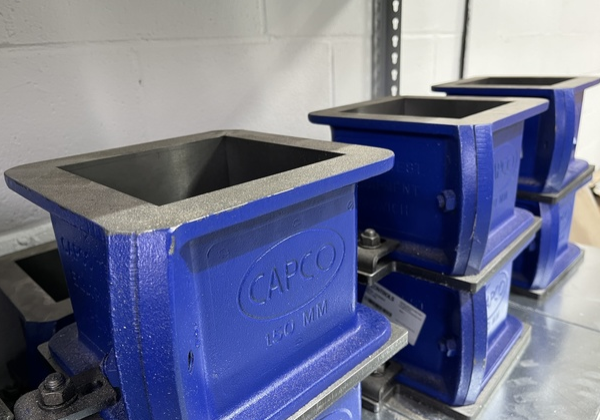
Cylinders, beams, cores and mortar or grout prisms can all be held under controlled conditions alongside cubes. What differs between them is the conditioning the test method calls for, since a beam for flexural strength and a core waiting on a compression test are not treated the same way as a conformity cube. The regime is set from the test the specimens are destined for, so that needs to be known when they are booked in.
Temperature drives the rate at which cement hydrates, so a few degrees either way changes the strength a specimen reaches at a given age. Cubes cured warm gain strength faster and can read high at 7 days, while cold curing holds the result back, and a specimen that has been allowed to freeze may never recover. The whole point is to compare like with like against a specified strength, so the conditioning has to be the same every time.
The common problems are specimens moved before the concrete is strong enough to handle, knocks and vibration in the back of a van, drying out in the sun and freezing in an unheated vehicle overnight. All of these change the specimen rather than the concrete, and all of them show in the result. Specimens should travel supported, damp and covered, with the paperwork alongside them giving references, cast dates and the test ages required.
Specimens are held in controlled curing until the testing ages you have agreed, which for most projects means 7 and 28 days, and longer where a 56 or 90 day result is specified. There is no practical difficulty in holding cubes to extended ages, provided those ages are known at booking-in so the curing and the test dates can be planned. Ages agreed at the start are easier to work around than ones added late.
Yes, and it is usually worth doing. An extra pair of cubes from a sample costs very little at the time and gives you something to fall back on if a 28-day result comes back low or a query arises later. Spare specimens stay in controlled curing until you release them, and can be tested at a later age or used for a density determination. Tell us at booking-in which cubes are reserves so they are not tested automatically.
Yes, and it is a normal arrangement where the initial curing has to happen on site before anyone can collect them. Once the cubes reach us they go into controlled curing for the rest of their life, and the transfer date is recorded. What we can report is the conditioning we controlled, together with whatever you can tell us about the period before that. Where the site curing fell outside the standard, the deviation is stated.
Yes, where the specification calls for it. Temperature-matched curing, where specimens are held at the temperature the element itself is experiencing, is sometimes used to judge when formwork can be struck or a slab can take load. It answers a different question from standard curing and the two are not interchangeable, so the result should not be compared with a conformity cube. Send the specification and we will confirm what can be arranged.
Hixtra holds UKAS accreditation to ISO/IEC 17025 for the tests listed in its schedule of accreditation, number 8996, and accreditation is specific to the listed methods and scope. Curing is part of the preparation for a strength test rather than a test in its own right, so the question is usually whether the strength test the specimens are being cured for sits within the schedule. Ask us to confirm before the programme starts.
Tell us the site postcode, the number of specimens, the pour dates, the testing ages required and whether you need collection or will deliver. The specification or testing schedule helps, particularly where curing conditions or additional ages are named. Cost depends on the number of specimens, how long they are held, the number of collections and whether we are also making the cubes on site. We confirm dates and reporting arrangements before the work starts.
In our customers’ words
Independent feedback from the people we work with.
“Punctual, friendly and professional.”Read the full review ↗
“Perfect service and explained everything step by step.”Read the full review ↗
“Excellent service! Incredibly professional. Thankyou”Read the full review ↗
Customers come back to Hixtra
Read independent feedback from customers who have used our testing services.
4.8 / 5 on Trustpilot
“Punctual, friendly and professional.”
Lee Chippington · September 2026
Read this customer’s review ↗Same-day and next-day testing dates available. Tell us what you need and where, or call to check availability.