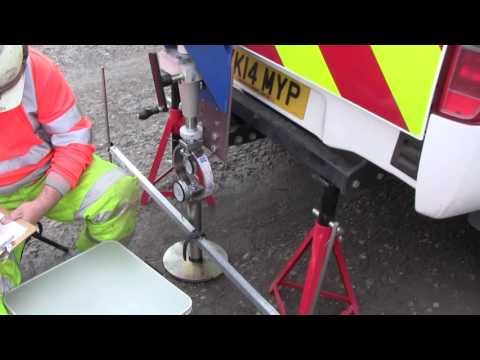
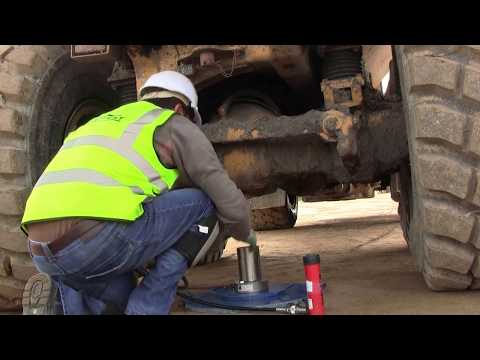
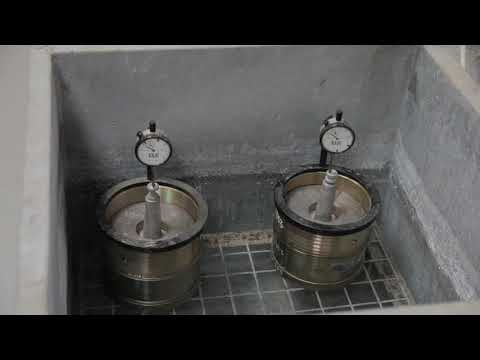
Understand your material
Assess Type 1 subbase against the material requirements of your project specification.
Aggregates & subbase testing
Assess Type 1 subbase against the material requirements of your project specification.
Same-day & next-day testing dates available. Call to check availability for your location and test requirements.
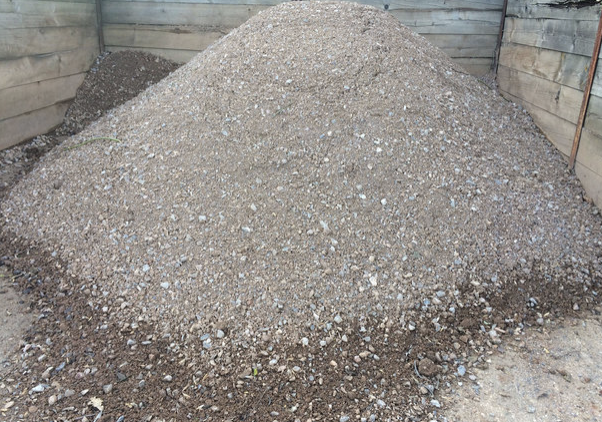
Practical testing. Experienced people. A service built around your project.
Quality, safety & professional standards
UKAS accreditation applies to the tests listed in our accredited schedule.
View our credentials ↗



Experienced people
Technical knowledge, with practical advice.
National coverage
Testing support wherever your project takes you.
A responsive service
Clear arrangements, from enquiry to reporting.
The right testing for your project
Practical advice, experienced testing staff and clear reporting. Assess Type 1 subbase against the material requirements of your project specification.
Speak to the team ↗Where this service helps
The right test helps answer a specific project question. We’ll agree the method and requirements with you before the work begins.
Assess Type 1 subbase against the material requirements of your project specification.
Agree the test method, sample condition and acceptance criteria before the work begins.
Use clear test records to support your project’s material and engineering assessment.
Hixtra can coordinate grading, abrasion, soundness, sulfate, plasticity and frost heave testing as required. Recycled material can also require constituent classification. Send the specification and material source so we can confirm the appropriate suite and sampling needs.

A closer look
Hixtra can coordinate grading, abrasion, soundness, sulfate, plasticity and frost heave testing as required. Recycled material can also require constituent classification. Send the specification and material source so we can confirm the appropriate suite and sampling needs.
UKAS accreditation applies to the particular methods listed in Hixtra’s current schedule, rather than every service. Ask us to confirm the accreditation status of the testing you require.
Hixtra in action
Working with Hixtra
From your first enquiry to your report, you’ll have practical advice on what to book, how to prepare and what happens next.
Share the site location, materials and testing specification. If you are unsure which test you need, we can help.
We agree the scope, access or sample requirements, availability and reporting arrangements before work starts.
Your results are reported for the agreed testing. Our team is on hand if you need to discuss the report.
Testing support across England & Wales
From individual site visits to ongoing testing programmes, we support construction, civil engineering and geotechnical projects across England and Wales.
Check availability for your site ↗Your questions
Practical answers on what this test is for, how to prepare and what you get back.
Ask us about your project →Typically particle size grading, resistance to fragmentation by the Los Angeles test, magnesium sulfate soundness, plasticity of the fines, water-soluble sulfate content and, where the material sits near the surface, frost heave. Recycled material adds a constituent classification test to establish what the aggregate is made of. The exact list comes from your specification, and not every project calls for every test in it.
From Series 800 of the Specification for Highway Works, where Clause 803 covers Type 1 unbound mixture and Clause 801 sets the general requirements for unbound mixtures, including frost susceptibility and sulfate limits. Most non-highway projects borrow the same clauses, which is why an estate road and a trunk road often end up with the same test list. Where your contract specification differs, it takes precedence.
Type 1 is normally a 0/31.5 mm unbound mixture, with a 0/20 mm grading also permitted, and Series 800 sets upper and lower limits that the particle size distribution has to sit inside. A material outside the envelope is a non-conformance against that clause. Too many fines and it holds water and loses stability, too few and it will not compact or interlock properly. Whether it can be blended, rescreened or accepted under an agreed concession is a matter for the engineer, not the laboratory.
Yes. The specification permits crushed rock, crushed slag, crushed concrete, recycled aggregates and well burnt non-plastic shale, so a recycled Type 1 is perfectly legitimate provided it meets the same requirements. The difference is that recycled material also has to be classified for its constituents, with limits on the proportions allowed, typically no more than 1% other material such as wood, plastic and metal, up to 50% bituminous material and up to 25% glass.
Only where it will sit within 450 mm of the designed final surface, which on most road and paved constructions it does. The Specification for Highway Works requires material in that zone to be non-frost-susceptible, with a mean heave of 15 mm or less when tested to the named method. It is by some distance the slowest test in the suite, so where it applies it needs to be started early.
Series 800 sets category limits for resistance to fragmentation and for resistance to freezing and thawing. For Type 1 these are commonly LA50 for the Los Angeles coefficient and MS35 for magnesium sulfate soundness, meaning the material must not lose more than those percentages in the respective tests. Both are properties of the source rather than of the layer, so a result from the same quarry face often remains valid between deliveries.
Yes. The fraction passing the 0.425 mm sieve has to be non-plastic, determined by the plasticity methods in BS 1377-2, because plastic fines soften when wet and cost the layer its stability. Water-soluble sulfate is a separate requirement, and it bites where the unbound material sits close to concrete, cement bound material or buried metalwork, since sulfate in solution attacks both. It is not needed everywhere, only where that proximity exists.
Considerably more than a single bag, because each test takes its own portion and its own size fraction. Constituent classification and frost heave are the heavy ones, needing tens of kilograms each in their own right. For a full suite on a 0/31.5 material you should expect to supply a bulk sample measured in sacks rather than buckets. Confirm the quantity with us against the agreed test list before you go out and sample.
Take multiple increments and combine them, rather than one grab from the nearest face. For a stockpile that means samples from several positions and heights, or taken off the loading shovel as the pile is worked. For a delivery it means increments across the load. Laid material can be sampled from the compacted layer where compliance is in dispute, though the grading will have shifted a little under the roller. We can carry out the sampling for you.
That depends almost entirely on whether frost heave is in the scope. Grading, plasticity, Los Angeles abrasion and constituent classification are comparatively quick laboratory work, magnesium sulfate soundness adds its cycling time, and frost heave runs to weeks because of the preparation and conditioning ahead of the freezing stage. Where the programme is tight we can report the quicker tests first, and we confirm expected timing before the work is booked.
That varies from test to test, because a suite like this brings together several different methods. Hixtra holds UKAS accreditation to ISO/IEC 17025 for the tests listed in its schedule of accreditation, number 8996, and accreditation is specific to the listed methods and scope rather than to every service. Ask us to confirm which parts of your Type 1 scope are covered, and the report will state the status of each result.
Send the specification or the clause you are working to, the material and its source, whether it is virgin or recycled, the number of samples, the site postcode and your preferred dates. Cost is driven by how many tests are in the suite, how many samples are involved, the sample preparation required and whether we are sampling on site or you are delivering material. If you are unsure what the suite should contain, the specification will tell us.
In our customers’ words
Independent feedback from the people we work with.
“Punctual, friendly and professional.”Read the full review ↗
“Perfect service and explained everything step by step.”Read the full review ↗
“Excellent service! Incredibly professional. Thankyou”Read the full review ↗
Customers come back to Hixtra
Read independent feedback from customers who have used our testing services.
4.8 / 5 on Trustpilot
“Punctual, friendly and professional.”
Lee Chippington · September 2026
Read this customer’s review ↗Same-day and next-day testing dates available. Tell us what you need and where, or call to check availability.