Understand your material
Determine water content in soils and aggregates for classification and construction control.
Soils & geotechnical laboratory testing
Determine water content in soils and aggregates for classification and construction control.
Same-day & next-day testing dates available. Call to check availability for your location and test requirements.
Practical testing. Experienced people. A service built around your project.
Quality, safety & professional standards
UKAS accreditation applies to the tests listed in our accredited schedule.
View our credentials ↗



Experienced people
Technical knowledge, with practical advice.
National coverage
Testing support wherever your project takes you.
A responsive service
Clear arrangements, from enquiry to reporting.
The right testing for your project
Practical advice, experienced testing staff and clear reporting. Determine water content in soils and aggregates for classification and construction control.
Speak to the team ↗Where this service helps
The right test helps answer a specific project question. We’ll agree the method and requirements with you before the work begins.
Determine water content in soils and aggregates for classification and construction control.
Agree the test method, sample condition and acceptance criteria before the work begins.
Use clear test records to support your project’s material and engineering assessment.
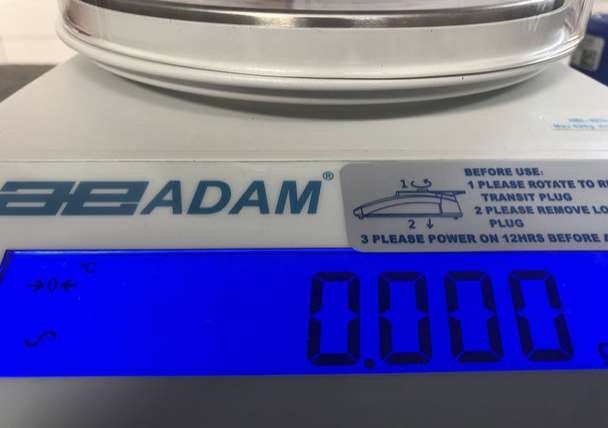
A specimen is weighed, dried under controlled conditions and weighed again to determine its water content. Sample handling matters because moisture can change during storage and transport. The result is often used alongside compaction, plasticity and density tests.

A closer look
A specimen is weighed, dried under controlled conditions and weighed again to determine its water content. Sample handling matters because moisture can change during storage and transport. The result is often used alongside compaction, plasticity and density tests.
UKAS accreditation applies to the particular methods listed in Hixtra’s current schedule, rather than every service. Ask us to confirm the accreditation status of the testing you require.
Hixtra in action
Working with Hixtra
From your first enquiry to your report, you’ll have practical advice on what to book, how to prepare and what happens next.
Share the site location, materials and testing specification. If you are unsure which test you need, we can help.
We agree the scope, access or sample requirements, availability and reporting arrangements before work starts.
Your results are reported for the agreed testing. Our team is on hand if you need to discuss the report.
Testing support across England & Wales
From individual site visits to ongoing testing programmes, we support construction, civil engineering and geotechnical projects across England and Wales.
Check availability for your site ↗Your questions
Practical answers on what this test is for, how to prepare and what you get back.
Ask us about your project →It measures the mass of water in a material as a percentage of the mass of the dry solids, not as a percentage of the wet sample. That distinction matters, because a figure expressed against dry mass means peats and very soft organic clays can legitimately return results above 100 per cent. The result is the starting point for most soils classification work and for any dry density calculation.
A representative specimen is weighed wet, dried in a ventilated oven at 105 to 110 degrees Celsius until it reaches constant mass, then weighed again, and the loss in mass is taken as water. Constant mass means less than 0.1 per cent further change after another hour of drying. Sixteen hours normally achieves that for a fine soil, with coarse granular material drying more quickly.
For soils it is commonly carried out to BS 1377-2 or to BS EN ISO 17892-1, the Eurocode-era equivalent that many current specifications call up. Aggregates are usually tested to BS EN 1097-5. The methods are close in substance but differ in their reporting requirements, and we test and report to whichever your specification names.
It depends on the largest particles present, because the specimen has to be big enough to represent them. Around 30 g is enough for a silt or clay, 100 g for a sand, 500 g where particles reach 10 mm, about 3 kg up to 31.5 mm and around 21 kg up to 63 mm. Send more rather than less if you are unsure of the grading.
Because the result only means something if the water is still in the sample when we weigh it. Moisture evaporates through a loose bag or a part-filled tub and is gained if the sample stands in the rain, so the reading drifts away from the condition on site. Use an airtight container filled to the top, keep it out of the sun and get it to the laboratory quickly.
Yes. Rapid site methods such as carbide meters and microwave drying give an immediate figure for earthworks control, but oven drying to constant mass is the reference method and is what most specifications require for a reported result. Rapid methods are less precise and can mislead in organic or gypsum-bearing soils. Where a site laboratory is running, the quick figures are usually checked against oven-dried results.
Most often to convert a measured bulk density into a dry density, since dry density is bulk density divided by one plus the moisture content expressed as a decimal. That is how a field density result is compared with a laboratory compaction reference. The figure also shows whether fill is near its optimum moisture content for compaction and it accompanies almost every soils classification report.
Yes. At 105 to 110 degrees Celsius organic matter can oxidise and gypsum gives up its water of crystallisation, so both return a moisture content that reads too high. The usual answer is to dry at a reduced temperature, around 50 degrees Celsius, and to state the temperature used on the report. Tell us if you suspect peat, made ground with a high organic content or gypsum in the sample.
Usually with others. It sits in almost every soils classification suite, because liquid limit, plastic limit, grading and compaction results are all read against the natural moisture content of the material. It is also run alongside in-situ density testing so that a dry density can be calculated. Ordering it as a single test is perfectly normal where you just need a check on a stockpile or a formation.
The oven is the controlling step. A fine soil normally needs around sixteen hours to reach constant mass, so a sample arriving one day is typically reported the next working day. Wet, heavy or coarse samples take longer, and organic or gypsum-bearing material dried at a reduced temperature takes considerably longer again. Transit to the laboratory is often the bigger variable. We confirm the expected timing before the work is booked.
Hixtra holds UKAS accreditation to ISO/IEC 17025 for the tests listed in its schedule of accreditation, number 8996. Accreditation is specific to the listed methods and scope rather than to every service we provide, and a method can be listed for permanent laboratory work but not for a site laboratory. Ask us to confirm whether the moisture content testing you need is covered before you book.
Send the site postcode, the material type, how many samples you expect, your preferred dates and the specification or testing schedule if you have one. Tell us the largest particle size, because that sets the sample mass and the preparation work involved. Whether you are delivering samples or want them collected, and whether other classification tests are needed on the same material, are the other things that move the price.
In our customers’ words
Independent feedback from the people we work with.
“Punctual, friendly and professional.”Read the full review ↗
“Perfect service and explained everything step by step.”Read the full review ↗
“Excellent service! Incredibly professional. Thankyou”Read the full review ↗
Customers come back to Hixtra
Read independent feedback from customers who have used our testing services.
4.8 / 5 on Trustpilot
“Punctual, friendly and professional.”
Lee Chippington · September 2026
Read this customer’s review ↗Same-day and next-day testing dates available. Tell us what you need and where, or call to check availability.