Understand your material
Assess the response of soils and stabilised materials to water exposure.
Soils & geotechnical laboratory testing
Assess the response of soils and stabilised materials to water exposure.
Same-day & next-day testing dates available. Call to check availability for your location and test requirements.
Practical testing. Experienced people. A service built around your project.
Quality, safety & professional standards
UKAS accreditation applies to the tests listed in our accredited schedule.
View our credentials ↗



Experienced people
Technical knowledge, with practical advice.
National coverage
Testing support wherever your project takes you.
A responsive service
Clear arrangements, from enquiry to reporting.
The right testing for your project
Practical advice, experienced testing staff and clear reporting. Assess the response of soils and stabilised materials to water exposure.
Speak to the team ↗Where this service helps
The right test helps answer a specific project question. We’ll agree the method and requirements with you before the work begins.
Assess the response of soils and stabilised materials to water exposure.
Agree the test method, sample condition and acceptance criteria before the work begins.
Use clear test records to support your project’s material and engineering assessment.
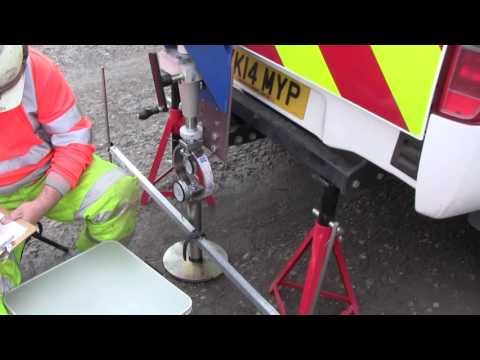
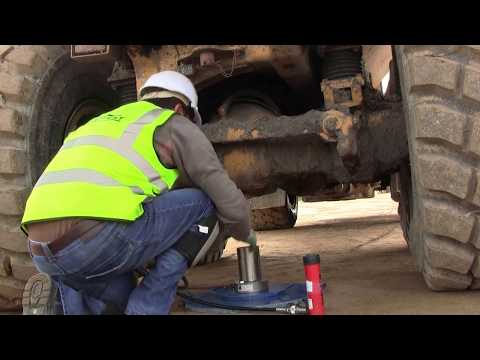
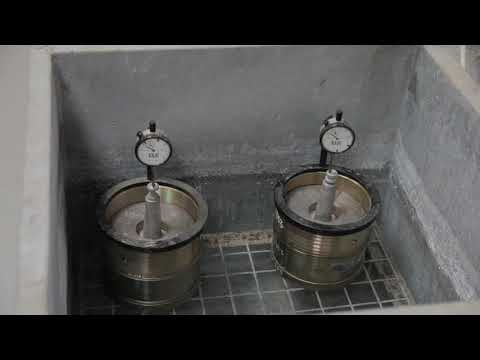
Laboratory swelling tests help investigate expansion in treated or untreated soils. Soaked CBR testing considers how water exposure affects the specified strength measurement. The conditioning period, temperature and acceptance criteria should be agreed for the material and project.

A closer look
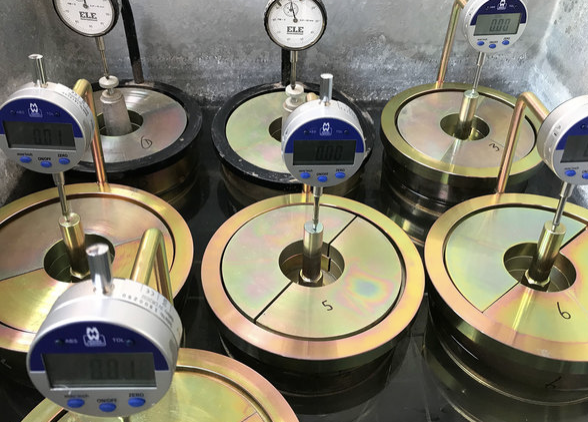
Laboratory swelling tests help investigate expansion in treated or untreated soils. Soaked CBR testing considers how water exposure affects the specified strength measurement. The conditioning period, temperature and acceptance criteria should be agreed for the material and project.
UKAS accreditation applies to the particular methods listed in Hixtra’s current schedule, rather than every service. Ask us to confirm the accreditation status of the testing you require.
Hixtra in action
Working with Hixtra
From your first enquiry to your report, you’ll have practical advice on what to book, how to prepare and what happens next.
Share the site location, materials and testing specification. If you are unsure which test you need, we can help.
We agree the scope, access or sample requirements, availability and reporting arrangements before work starts.
Your results are reported for the agreed testing. Our team is on hand if you need to discuss the report.
Testing support across England & Wales
From individual site visits to ongoing testing programmes, we support construction, civil engineering and geotechnical projects across England and Wales.
Check availability for your site ↗Your questions
Practical answers on what this test is for, how to prepare and what you get back.
Ask us about your project →It measures how much a soil or a treated material expands once it has free access to water, reported either as a linear rise in a mould or as a change in volume. That matters because a material which swells after it has been placed and compacted can lift the capping, slab or pavement above it, often weeks after the works are finished. Swelling is assessed on prepared specimens conditioned and soaked to an agreed procedure.
Because soaking represents the worst-case moisture condition the layer could reach in service, and a subgrade that performs well when dry can lose much of its strength once saturated. A soaked specimen is compacted in the normal way and then immersed before penetration, so the design value reflects wet-weather or high water table conditions. Swell during the soaking period is normally recorded at the same time.
They are most often required on stabilised soils, on sulfate-bearing ground and on expansive clays, and the request usually comes from the earthworks designer or the contractor's technical team before a stabilisation mix is approved. Highway and infrastructure specifications commonly call for swelling trials as part of that approval. Soaked testing is also asked for where a saturated subgrade condition has to be proved for pavement design.
Because sulfate reacting with calcium from the binder and alumina from the clay can form expansive minerals such as ettringite, which draw in water and generate very high swelling pressures. The damage shows up weeks or months after treatment, as heave in a stabilised capping or subbase. Sulfides such as pyrite make matters worse, because pulverisation and the raised pH cause them to oxidise and release further sulfate.
Sulfate screening normally covers water-soluble sulfate on a 2:1 extract, acid-soluble sulfate and total potential sulfate, the last of which accounts for sulfides that could oxidise later. TRL Report 447 sets out the methods commonly used. Results above roughly 0.25 per cent as sulfate usually prompt swelling trials and consideration of a different binder, but the thresholds that apply to your works are the ones in your specification.
Linear swelling is commonly determined to BS EN 13286-47, the same method that covers CBR and immediate bearing index, with the specimen restrained in a CBR mould. The accelerated swelling test for soil treated with lime or a hydraulic binder is BS EN 13286-49, carried out on unconfined specimens. Soaked CBR follows the CBR method your specification names. Tell us which your testing schedule calls for.
A soaked CBR is normally immersed for four days, while swelling trials on stabilised material run much longer, commonly 28 days and extended to 56 where sulfides are present. The accelerated method uses seven days fully immersed at 40 degrees after a conditioning period, which brings the reaction on faster. Annular surcharge discs sit on the specimen to represent the weight of the construction that will overlie the layer.
That is set by your specification, but the limits used in highway stabilisation work are commonly an average of no more than 5 mm with no individual specimen above 10 mm in the restrained mould test, and no more than 5 per cent volumetric expansion in the accelerated test. Agree the acceptance criteria with us before testing begins, because they govern how the specimens are prepared and conditioned.
An excessive swell result means the mix as designed is not safe to use on that material, so the design changes rather than the test being repeated. The usual routes are a different binder, often one containing ground granulated blastfurnace slag, a reduced lime content, or leaving that material untreated and dealing with it another way. Retesting a revised mix takes as long as the first round, so allow for it in the programme.
These tests use compacted specimens, so we need bulk material rather than intact tube samples, and enough of it to prepare the full set your specification requires. Send it in sealed containers at its natural moisture content and clearly referenced, because material that dries out in transit will not compact to the condition the design assumed. Confirm the quantity and containers with us before sampling.
Hixtra holds UKAS accreditation to ISO/IEC 17025 for the tests listed in its schedule of accreditation, number 8996. Accreditation is specific to the listed methods and scope, rather than to every service. Swelling and soaking covers several different procedures, soaking periods and conditioning regimes, so ask us to confirm the status of the exact method your specification names.
Send the material type, the binder and addition rates if it is being treated, the method and soaking period required, the number of specimens and your programme dates. The specification or testing schedule is the single most useful document. Cost is driven mainly by specimen numbers, mix preparation and the length of the conditioning period, since a long soak occupies laboratory space for weeks rather than days.
In our customers’ words
Independent feedback from the people we work with.
“Punctual, friendly and professional.”Read the full review ↗
“Perfect service and explained everything step by step.”Read the full review ↗
“Excellent service! Incredibly professional. Thankyou”Read the full review ↗
Customers come back to Hixtra
Read independent feedback from customers who have used our testing services.
4.8 / 5 on Trustpilot
“Punctual, friendly and professional.”
Lee Chippington · September 2026
Read this customer’s review ↗Same-day and next-day testing dates available. Tell us what you need and where, or call to check availability.