Understand your material
Assess placed material against the laboratory reference density required by your project.
Earthworks, compaction & stabilisation
Assess placed material against the laboratory reference density required by your project.
Same-day & next-day testing dates available. Call to check availability for your location and test requirements.
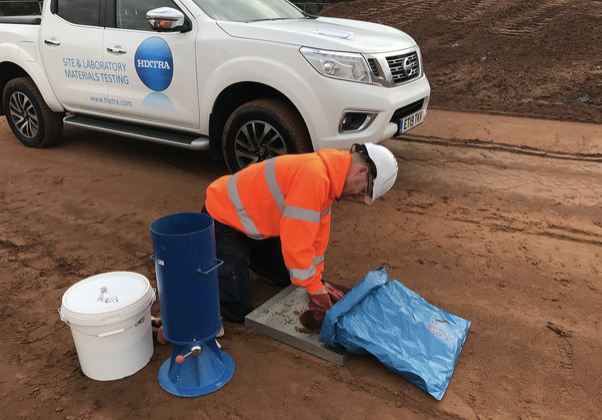
Practical testing. Experienced people. A service built around your project.
Quality, safety & professional standards
UKAS accreditation applies to the tests listed in our accredited schedule.
View our credentials ↗



Experienced people
Technical knowledge, with practical advice.
National coverage
Testing support wherever your project takes you.
A responsive service
Clear arrangements, from enquiry to reporting.
The right testing for your project
Practical advice, experienced testing staff and clear reporting. Assess placed material against the laboratory reference density required by your project.
Speak to the team ↗Where this service helps
The right test helps answer a specific project question. We’ll agree the method and requirements with you before the work begins.
Assess placed material against the laboratory reference density required by your project.
Agree the test method, sample condition and acceptance criteria before the work begins.
Use clear test records to support your project’s material and engineering assessment.
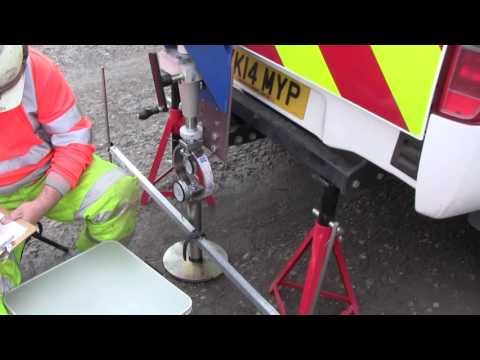
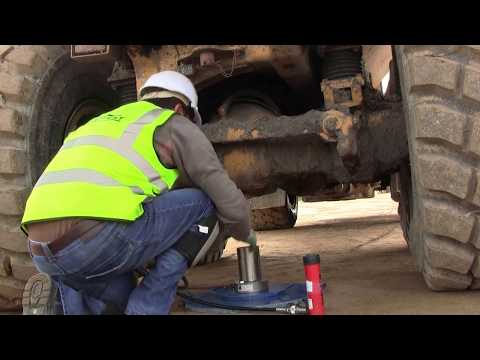
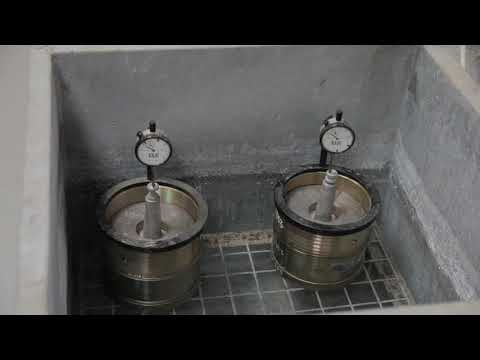
Laboratory tests establish the relevant maximum dry density. On-site density results can then be compared with that reference. The compaction method, reference test and acceptance percentage must come from the project specification rather than a universal target.

A closer look
Laboratory tests establish the relevant maximum dry density. On-site density results can then be compared with that reference. The compaction method, reference test and acceptance percentage must come from the project specification rather than a universal target.
UKAS accreditation applies to the particular methods listed in Hixtra’s current schedule, rather than every service. Ask us to confirm the accreditation status of the testing you require.
Hixtra in action
Working with Hixtra
From your first enquiry to your report, you’ll have practical advice on what to book, how to prepare and what happens next.
Share the site location, materials and testing specification. If you are unsure which test you need, we can help.
We agree the scope, access or sample requirements, availability and reporting arrangements before work starts.
Your results are reported for the agreed testing. Our team is on hand if you need to discuss the report.
Testing support across England & Wales
From individual site visits to ongoing testing programmes, we support construction, civil engineering and geotechnical projects across England and Wales.
Check availability for your site ↗Your questions
Practical answers on what this test is for, how to prepare and what you get back.
Ask us about your project →It shows how well material in the ground has been compacted, by comparing the dry density achieved on site with a reference density established in the laboratory for that same material. The comparison is normally expressed as a percentage of maximum dry density, sometimes called relative compaction. On its own a field density figure means very little; it only becomes an acceptance result once there is a reference to measure it against.
A sample of the material is compacted in a mould at several different moisture contents, and dry density is plotted against moisture content to give a curve. The peak of that curve is the maximum dry density, and the moisture content at which it occurs is the optimum moisture content. For soils this is normally carried out to a compaction method in BS 1377-2, which absorbed the withdrawn Part 4; for unbound mixtures the Proctor method in BS EN 13286-2 is commonly specified.
It depends on the material, the compactive effort your specification assumes and the particle size. BS 1377-2 offers light compaction with a 2.5 kg rammer, heavy compaction with a 4.5 kg rammer, and a vibrating hammer method that suits granular material. Each has limits on particle size and on how much of the sample may be retained on the 20 mm sieve, so coarse material may need a larger mould or a different approach.
The figure comes from your project specification rather than from a universal standard, and it is commonly around 95%. On highways and infrastructure work using end-product compaction, the required percentage for each material class is given in the earthworks material acceptability table of Series 600 of the Specification for Highway Works. On other projects the designer sets it. Always work to the figure in your own documents rather than a remembered number.
Because the field test measures bulk density, and the acceptance comparison is made on dry density. The moisture content is what converts one to the other, so without it there is no figure to compare with the laboratory reference. The moisture content is useful in its own right as well: knowing how far the material sits from optimum usually explains why a layer has or has not reached the density required.
Every material has an optimum moisture content at which a given compactive effort produces the highest dry density, and moving away from it in either direction reduces the density you can reach. Too dry and the particles resist rearranging; too wet and water occupies space the solids would otherwise fill, so extra rolling simply moves material around. This is why wet cohesive fill often cannot be brought up to specification by rolling alone.
Air voids criteria are normally used for cohesive fill, where the moisture content in the ground is what limits the density achievable. Series 600 applies a 5% air voids curve to certain selected cohesive material rather than a straight percentage of maximum dry density. Calculating air voids needs the particle density of the material as well as the field density and moisture content, so that determination has to be in the testing schedule.
The usual causes are a layer placed too thick, too few passes, plant that is wrong for the material, or a moisture content too far from optimum. Less obvious causes are worth ruling out before reworking anything: the result may have been compared against a reference for a different material, oversize stone can distort a field density, and a soft layer beneath can prevent the layer above compacting at all. Send us the figures and we will help narrow it down.
No. Compaction testing measures how densely material has been packed relative to a laboratory reference; plate bearing and LWD testing measure how stiff the layer is under an applied load. A layer can be properly compacted and still be too soft for its purpose if the material itself is weak, and a stiff surface can hide a poorly compacted layer beneath it. Specifications often call for both, for different parts of the works.
Yes. A maximum dry density applies only to the material it was determined on, so a change in source, grading or geology needs its own reference before field results can be judged against it. In practice that means a new compaction test when a new borrow area opens, when an imported material changes supplier, or when the grading of what is being placed visibly moves. Mixed material is the most common reason for results that look inconsistent.
Hixtra holds UKAS accreditation to ISO/IEC 17025 for the tests listed in its schedule of accreditation, number 8996. The laboratory compaction test and the field density method are separate entries, and site and laboratory work can carry different scope, so they are considered individually rather than as one service. Ask us to confirm whether the methods your specification names are covered, and each report will state the status of the result.
Price is driven by the number of laboratory reference tests, the number of field positions, how many visits the programme needs and how far the site is from the regional team. Standby time, out-of-hours working and any reinstatement count as well. A single reference covering a large uniform fill is a very different job from several materials with a test position every few metres, so send the specification and expected volumes for a relevant quotation.
In our customers’ words
Independent feedback from the people we work with.
“Punctual, friendly and professional.”Read the full review ↗
“Perfect service and explained everything step by step.”Read the full review ↗
“Excellent service! Incredibly professional. Thankyou”Read the full review ↗
Customers come back to Hixtra
Read independent feedback from customers who have used our testing services.
4.8 / 5 on Trustpilot
“Punctual, friendly and professional.”
Lee Chippington · September 2026
Read this customer’s review ↗Same-day and next-day testing dates available. Tell us what you need and where, or call to check availability.