Understand your material
Assess soils for geotechnical projects, earthworks, stabilisation and engineered fill.
Soils & geotechnical laboratory testing
Assess soils for geotechnical projects, earthworks, stabilisation and engineered fill.
Same-day & next-day testing dates available. Call to check availability for your location and test requirements.
Practical testing. Experienced people. A service built around your project.
Quality, safety & professional standards
UKAS accreditation applies to the tests listed in our accredited schedule.
View our credentials ↗



Experienced people
Technical knowledge, with practical advice.
National coverage
Testing support wherever your project takes you.
A responsive service
Clear arrangements, from enquiry to reporting.
The right testing for your project
Practical advice, experienced testing staff and clear reporting. Assess soils for geotechnical projects, earthworks, stabilisation and engineered fill.
Speak to the team ↗Where this service helps
The right test helps answer a specific project question. We’ll agree the method and requirements with you before the work begins.
Assess soils for geotechnical projects, earthworks, stabilisation and engineered fill.
Agree the test method, sample condition and acceptance criteria before the work begins.
Use clear test records to support your project’s material and engineering assessment.
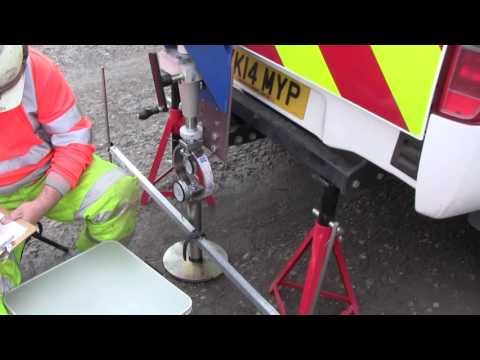
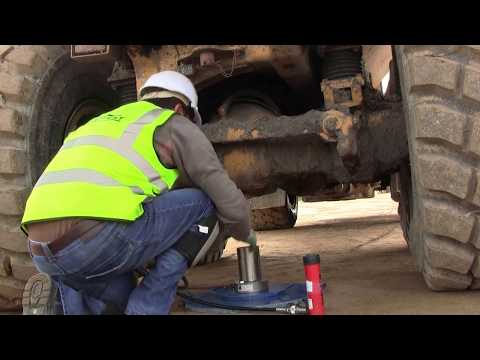
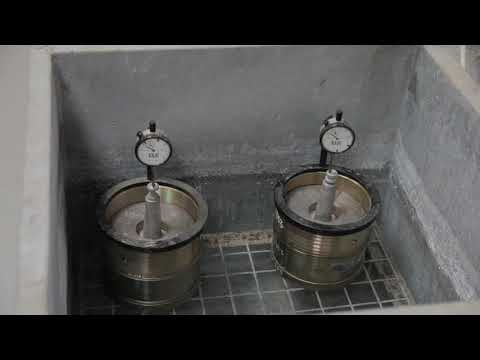
Hixtra offers classification and performance testing including water content, grading, plasticity, CBR and shear strength. We can combine laboratory testing with sampling and site compaction monitoring to support the requirements of your project.

A closer look
Hixtra offers classification and performance testing including water content, grading, plasticity, CBR and shear strength. We can combine laboratory testing with sampling and site compaction monitoring to support the requirements of your project.
UKAS accreditation applies to the particular methods listed in Hixtra’s current schedule, rather than every service. Ask us to confirm the accreditation status of the testing you require.
Hixtra in action
Working with Hixtra
From your first enquiry to your report, you’ll have practical advice on what to book, how to prepare and what happens next.
Share the site location, materials and testing specification. If you are unsure which test you need, we can help.
We agree the scope, access or sample requirements, availability and reporting arrangements before work starts.
Your results are reported for the agreed testing. Our team is on hand if you need to discuss the report.
Testing support across England & Wales
From individual site visits to ongoing testing programmes, we support construction, civil engineering and geotechnical projects across England and Wales.
Check availability for your site ↗Your questions
Practical answers on what this test is for, how to prepare and what you get back.
Ask us about your project →A standard classification suite is usually moisture content, particle size distribution, the Atterberg limits and particle density. Moisture content tells you how wet the material is against its optimum, grading says what the soil is actually made of, the liquid and plastic limits describe how the fine fraction behaves with water, and particle density lets void ratio and air voids be calculated from any density result. Specifications often add organic content, sulfate and pH.
BS 1377 is the British Standard for testing soils for civil engineering purposes, and it has been restructured into Part 1 for general requirements and sample preparation, Part 2 for the laboratory classification and geotechnical property tests, Part 3 for chemical tests and Part 9 for the in-situ methods. Where a European method exists, such as the BS EN ISO 17892 series, it normally takes precedence. Older specifications still name the withdrawn Part 4 for compaction and CBR work, which now sits in Part 2.
It depends on the test. Grading, plasticity, compaction and remoulded CBR run perfectly well on disturbed bulk samples, while shear strength, consolidation and bulk density need an undisturbed sample that keeps the soil's structure intact. Disturbed samples are dug from a trial pit or taken off the excavation and bagged, undisturbed samples are driven or hand cut as a tube or block and sealed straight away. The investigation specification normally states the sample type required for each test.
Big enough to represent the material and to make the specimens the test needs. A few hundred grams covers moisture content and the Atterberg limits, a few kilograms covers most classification work, and around 6 kg makes a single remoulded CBR specimen, rising to 15 kg or more where a compaction curve has to be established first. Coarse material needs far more, because the sample has to represent the largest particles present.
Disturbed material should go into sealed heavy duty bags or airtight tubs, filled well so little air is trapped and kept under about 25 kg a bag for safe handling. Undisturbed tubes should be sealed at both ends and carried upright, not dropped or left in the sun. Every container needs its own durable label giving the project, the pit or hole reference, the depth and the date.
Moisture sensitive work is the urgent part, so moisture content and anything depending on the as dug condition should be scheduled as soon as the sample reaches us, because even a well sealed bag loses water over time. Properly sealed material stays usable for grading, plasticity and particle density for a good deal longer. Undisturbed tube samples deteriorate faster and should be tested while the structure is still representative.
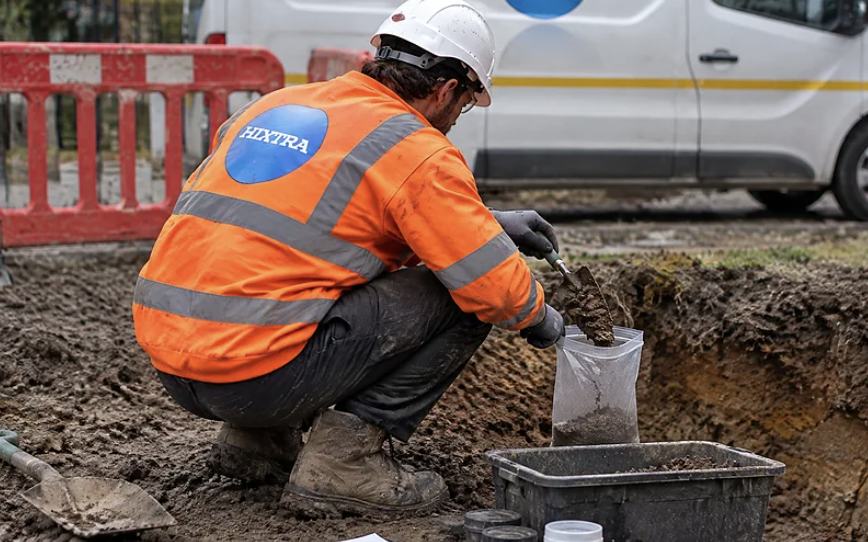
Yes. We can sample on site and carry the material through to the laboratory ourselves, which keeps the chain from sampling to result in one place and avoids any argument about how the sample was taken or stored. Site compaction monitoring can be combined with the laboratory work in the same way. If your own team is sampling, we'll set out quantities, containers and labelling before you start so nothing has to be repeated.
Classification testing identifies what the soil is, performance testing measures how it behaves under a defined condition. Moisture content, grading, plasticity and particle density put the material into a recognised description a specification can be checked against. Compaction, CBR and shear strength go further and give a number a designer can use, but only for the density and moisture condition the specimen was prepared at, which is why that condition has to be agreed first.
A report for each test or group of tests, giving the sample references and where the material came from, the method used, the result and the accreditation status of that test. Classification results are normally presented as a table alongside grading curves and a plasticity chart where those tests were run. Any deviation from the specified method is stated. Reporting format and distribution are agreed before the work starts.
The tests themselves are usually not the slow part, the conditioning is. Air drying a wet cohesive sample, a four day soak on a CBR, or a consolidation stage that has to run to the end of primary settlement all set their own pace and cannot be shortened. Incomplete sample references and a missing schedule hold work up just as effectively. We'll confirm the expected timing for your scope before the work is booked.
Hixtra holds UKAS accreditation to ISO/IEC 17025 for the tests listed in its schedule of accreditation, number 8996. Accreditation is specific to the listed methods and scope, so a schedule of soil tests will often contain some methods that sit inside it and some that do not, and the report states which is which. Ask us to confirm the accreditation status of the particular tests you need before you book.
By the number of samples and the preparation each test needs, with travel on top if we are collecting the material. Wet, stony or crushable soils take more preparation than a clean sample that arrives ready to test, and conditioning or soaking stages add laboratory time. Send the site postcode, the material type, the tests you need, rough sample numbers and your preferred dates. Call 01908 505833 or email enquiries@hixtra.co.uk.
In our customers’ words
Independent feedback from the people we work with.
“Punctual, friendly and professional.”Read the full review ↗
“Perfect service and explained everything step by step.”Read the full review ↗
“Excellent service! Incredibly professional. Thankyou”Read the full review ↗
Customers come back to Hixtra
Read independent feedback from customers who have used our testing services.
4.8 / 5 on Trustpilot
“Punctual, friendly and professional.”
Lee Chippington · September 2026
Read this customer’s review ↗Same-day and next-day testing dates available. Tell us what you need and where, or call to check availability.