Understand your material
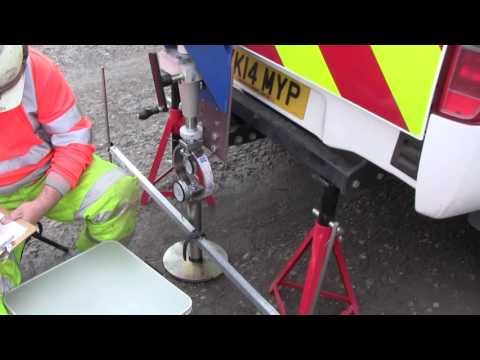
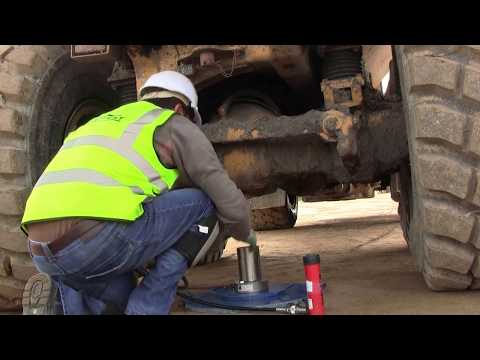
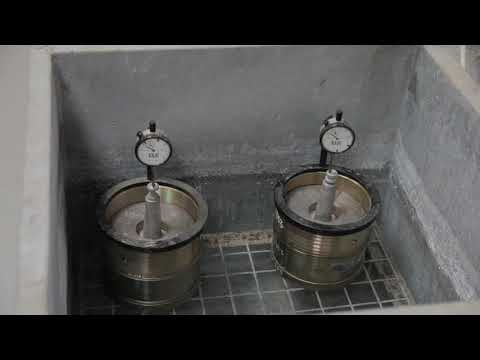
Provide ground load and settlement data to support the assessment of crane hardstandings.
Ground testing & bearing capacity
Provide ground load and settlement data to support the assessment of crane hardstandings.
Same-day & next-day testing dates available. Call to check availability for your location and test requirements.
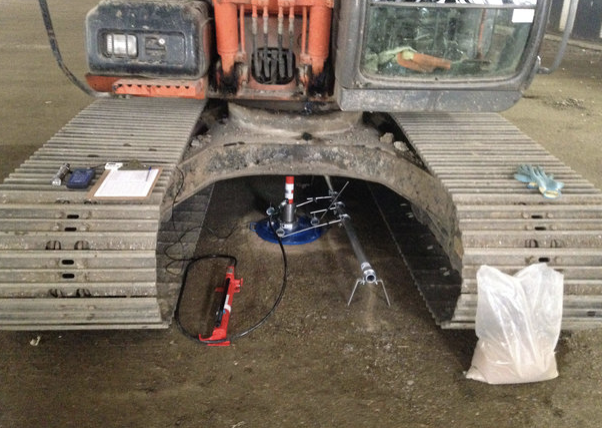
Practical testing. Experienced people. A service built around your project.
Quality, safety & professional standards
UKAS accreditation applies to the tests listed in our accredited schedule.
View our credentials ↗



Experienced people
Technical knowledge, with practical advice.
National coverage
Testing support wherever your project takes you.
A responsive service
Clear arrangements, from enquiry to reporting.
The right testing for your project
Practical advice, experienced testing staff and clear reporting. Provide ground load and settlement data to support the assessment of crane hardstandings.
Speak to the team ↗Where this service helps
The right test helps answer a specific project question. We’ll agree the method and requirements with you before the work begins.
Provide ground load and settlement data to support the assessment of crane hardstandings.
Agree the test method, sample condition and acceptance criteria before the work begins.
Use clear test records to support your project’s material and engineering assessment.
The required pressures, plate size and loading sequence should follow the lifting and ground assessment requirements. Testing provides measured evidence for the responsible engineer; a test result alone does not establish the safety of an entire lifting operation.

A closer look
The required pressures, plate size and loading sequence should follow the lifting and ground assessment requirements. Testing provides measured evidence for the responsible engineer; a test result alone does not establish the safety of an entire lifting operation.
UKAS accreditation applies to the particular methods listed in Hixtra’s current schedule, rather than every service. Ask us to confirm the accreditation status of the testing you require.
Hixtra in action
Working with Hixtra
From your first enquiry to your report, you’ll have practical advice on what to book, how to prepare and what happens next.
Share the site location, materials and testing specification. If you are unsure which test you need, we can help.
We agree the scope, access or sample requirements, availability and reporting arrangements before work starts.
Your results are reported for the agreed testing. Our team is on hand if you need to discuss the report.
Testing support across England & Wales
From individual site visits to ongoing testing programmes, we support construction, civil engineering and geotechnical projects across England and Wales.
Check availability for your site ↗Your questions
Practical answers on what this test is for, how to prepare and what you get back.
Ask us about your project →It gives measured load and settlement data for the ground at the positions you intend to set the crane up on. A plate is loaded in stages against a reaction and the settlement at each increment is recorded, so the result shows how that ground responds to pressure comparable with the crane's. It is measured evidence for the person assessing the lift. A test result on its own does not establish that a crane position is safe.
Usually the appointed person for the lift, the crane supplier or the temporary works engineer, often routed through the principal contractor. BS 7121-1, the code of practice for safe use of cranes, places a duty on the appointed person to obtain an assessment by a competent person that the ground or means of support will carry the loads imposed by the crane. Plate bearing testing is one of the standard ways of getting the ground data that assessment needs.
No, our role is to measure and report how the ground behaves under load, not to assess lifting operations, design hardstandings or approve crane positions. We are not the competent person for the lift. That assessment sits with the appointed person, and with the temporary works engineer where a hardstanding or crane pad is being designed. Ground data is one input into a lift plan that also covers the crane, the pads, the load and the sequence.
The target pressure comes from the crane supplier's ground bearing pressure figures for the configuration you are lifting in, not from us. Those figures depend on the crane, the outrigger or track loads, the pad size and the working radius, so they need to be confirmed before we attend. We then agree the plate diameter and loading sequence to suit and apply the load in stages to the agreed maximum.
Positions are normally set under the proposed outrigger or track locations, because that is where the load is actually applied. Where the crane will be used in more than one position or radius, each set-up position is usually tested in turn. We also look for areas over backfilled trenches, made ground or recently placed fill, where a hardstanding that looks uniform on the surface often is not. Mark the positions on a drawing and we test what you show us.
Often yes, but the position needs to be checked before we attend rather than on the day. Proximity to an excavation, basement wall, retaining structure or service run changes how the ground behaves under load and can make a position unrepresentative or unsafe, and the reaction machine also has to stand somewhere. Send service drawings and the excavation layout with your enquiry so we can agree positions that are both useful and workable.
It should be finished to its intended level and profile, compacted and free of standing water, loose stone and rutting at each test position. A crane pad or hardstanding that is still being built gives a result for something the crane will not actually stand on. We also need a reaction machine, usually a tracked excavator, with safe access to each position, and an area that stays clear of other plant and traffic while each test runs.
Allow roughly an hour per position once the reaction machine is in place, so several positions are normally achievable in a single visit. Setting up, moving between positions and waiting for settlement to stabilise at each load increment are what drive the time, and soft or variable ground takes longer. Testing needs to happen once the hardstanding is complete but well before the crane is due, so there is time to act on the result.
The result is reported as measured settlement against applied pressure for each position, usually as a load-settlement curve, from which a modulus or a settlement at a given pressure can be taken. Converting that into an allowable bearing pressure means applying a factor of safety and a settlement limit to the measured data, which is a design decision for your engineer. We report the measurement; the interpretation stays with the person responsible for the lift.
We report what was measured, and the options are then a matter for your engineer and the appointed person. Common responses are larger outrigger pads or mats to spread the load, improving or thickening the hardstanding, reducing the radius, changing the crane or moving the set-up position altogether. We can retest after remedial works, and it is worth agreeing the retest positions with the designer before we return.
That depends on what your project or lifting plan requires rather than on any general rule, so check the specification before booking. Hixtra holds UKAS accreditation to ISO/IEC 17025 for the tests listed in its schedule of accreditation, number 8996. Accreditation is specific to the listed methods and scope, so ask us to confirm whether the test you need is covered, and the report will state the status of each result.
Send the site postcode, the crane supplier's ground bearing pressure figures, the number and location of proposed set-up positions, access details and your preferred dates. Cost is driven mainly by the number of test positions, travel to site, whether you can provide the reaction machine and any standby or out-of-hours working around the lift. Same-day and next-day testing dates are available in many areas, so call 01908 505833 if the lift date is tight.
In our customers’ words
Independent feedback from the people we work with.
“Punctual, friendly and professional.”Read the full review ↗
“Perfect service and explained everything step by step.”Read the full review ↗
“Excellent service! Incredibly professional. Thankyou”Read the full review ↗
Customers come back to Hixtra
Read independent feedback from customers who have used our testing services.
4.8 / 5 on Trustpilot
“Punctual, friendly and professional.”
Lee Chippington · September 2026
Read this customer’s review ↗Same-day and next-day testing dates available. Tell us what you need and where, or call to check availability.