Understand your material
Investigate changes in penetration resistance through shallow pavement and ground layers.
Ground testing & bearing capacity
Investigate changes in penetration resistance through shallow pavement and ground layers.
Same-day & next-day testing dates available. Call to check availability for your location and test requirements.
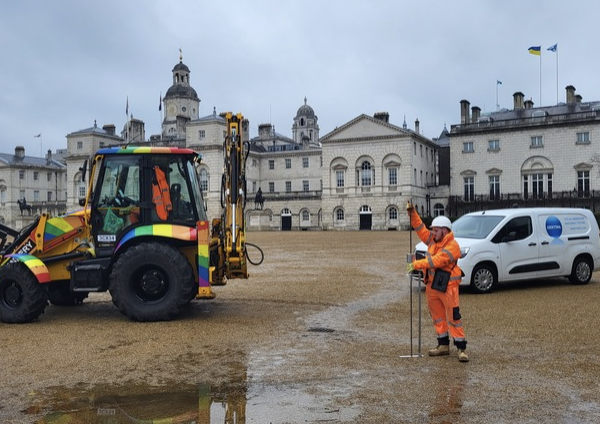
Practical testing. Experienced people. A service built around your project.
Quality, safety & professional standards
UKAS accreditation applies to the tests listed in our accredited schedule.
View our credentials ↗



Experienced people
Technical knowledge, with practical advice.
National coverage
Testing support wherever your project takes you.
A responsive service
Clear arrangements, from enquiry to reporting.
The right testing for your project
Practical advice, experienced testing staff and clear reporting. Investigate changes in penetration resistance through shallow pavement and ground layers.
Speak to the team ↗Where this service helps
The right test helps answer a specific project question. We’ll agree the method and requirements with you before the work begins.
Investigate changes in penetration resistance through shallow pavement and ground layers.
Agree the test method, sample condition and acceptance criteria before the work begins.
Use clear test records to support your project’s material and engineering assessment.
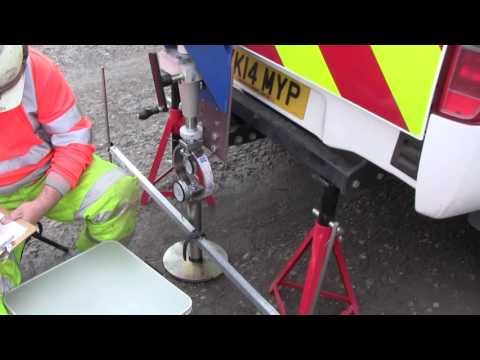
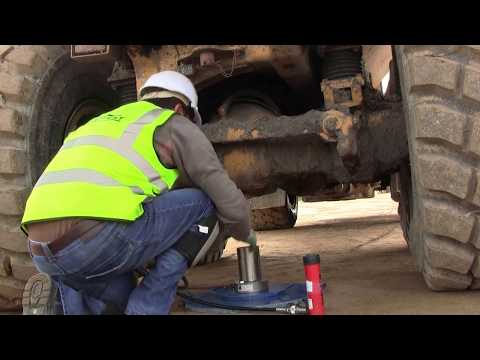
A falling hammer drives a cone into the material and penetration is recorded against the number of blows. The results can help identify layer changes. Any correlation with CBR depends on the material; mixed or heterogeneous ground can limit interpretation.

A closer look
A falling hammer drives a cone into the material and penetration is recorded against the number of blows. The results can help identify layer changes. Any correlation with CBR depends on the material; mixed or heterogeneous ground can limit interpretation.
UKAS accreditation applies to the particular methods listed in Hixtra’s current schedule, rather than every service. Ask us to confirm the accreditation status of the testing you require.
Hixtra in action
Working with Hixtra
From your first enquiry to your report, you’ll have practical advice on what to book, how to prepare and what happens next.
Share the site location, materials and testing specification. If you are unsure which test you need, we can help.
We agree the scope, access or sample requirements, availability and reporting arrangements before work starts.
Your results are reported for the agreed testing. Our team is on hand if you need to discuss the report.
Testing support across England & Wales
From individual site visits to ongoing testing programmes, we support construction, civil engineering and geotechnical projects across England and Wales.
Check availability for your site ↗Your questions
Practical answers on what this test is for, how to prepare and what you get back.
Ask us about your project →A standard cone is driven into the ground by repeated blows from a falling hammer, and the operator records how far it advances with each blow. An 8 kg hammer dropping 575 mm onto a 60 degree cone is the usual arrangement. The result is a penetration rate in millimetres per blow, where a smaller figure means a stiffer material. The equipment is handheld, so no plant or vehicle is needed at the position.
The DCP is not covered by a British Standard for soils, so testing usually follows a recognised method such as ASTM D6951 together with the equipment's own procedure. Where a CBR is inferred from the penetration rate, the correlation most often used in this country comes from published TRL research. Your specification should say which correlation is acceptable, and where it does not, that is worth agreeing with the designer before testing.
Around a metre is typical with standard rods, and extensions can take it deeper, although adding rods changes the mass being driven and weakens any correlation. Dense granular layers, cobbles or a stiff crust can stop the cone well short of that, and refusal on a single stone is common in coarse fill. Where you need a reliable profile below about a metre, an intrusive investigation is the better tool.
Treat it as an estimate rather than a measurement, because the CBR is inferred from the penetration rate through a correlation. The published relationships work best in homogeneous fine grained soils and become unreliable in mixed material, made ground or anything with significant stone content. Moisture condition matters too, since the same soil penetrates more easily when wet. Where a defensible CBR percentage is needed, a direct test is the stronger option.
Yes, and this is often the most useful thing it does. A clear change in the penetration rate marks a boundary between materials of different resistance, such as soft clay over dense gravel. The report plots cumulative blows against depth at each position, with the penetration rate for each interval, so layer changes and any refusal read straight off the profile. It shows where things change rather than what the material is, so pair it with an inspection pit.
Use a DCP when access rules out the alternatives, for example inside a building, in a narrow trench, behind a structure or anywhere a vehicle and reaction machine cannot reach. It is light, quick and needs no plant, but it gives an approximate assessment rather than a direct measurement, so where an in-situ CBR or plate bearing test is possible those usually carry more weight. Describe the access and we will tell you what is feasible.
Yes. Wetter soil offers less resistance, so the same material shows a higher penetration rate after a period of rain and any inferred CBR comes out lower. That makes the timing of the test relevant to how the result should be read, particularly in fine grained soils. The state of the ground and the recent weather are recorded with the test, because the result reflects conditions on the day rather than a design condition.
Yes. The DCP drives a steel rod up to a metre into the ground, so a services search and a scan of each position are needed before testing, and the same applies to any buried structure, membrane or drainage you know about. Send us the services drawings with the proposed positions and we will agree which of them can safely be tested. Positions can usually be moved a short distance to keep clear.
The position needs a flat, firm surface at the level you want profiled, with loose material cleared so the cone starts from a known point. Where there is a bound surfacing, a small hole has to be cored or broken through first and reinstated afterwards. The test itself leaves a hole around 20 mm across, usually backfilled with the arisings, so reinstatement is minimal compared with a trial pit.
A straightforward position takes around 15 to 20 minutes including setting up and recording, so a good number can be covered in a day where access is easy. Deeper profiles, hard layers and moving between positions inside a building or across a live site all slow it down. Because the equipment is carried by hand, the walking distance between positions matters more than it does for vehicle based methods.
Hixtra holds UKAS accreditation to ISO/IEC 17025 for the tests listed in its schedule of accreditation, number 8996. Accreditation is specific to the listed methods and scope rather than to every service we provide. Because DCP results are usually interpreted through a correlation, it is worth agreeing in advance exactly what the report will state and asking us to confirm the accreditation status of the testing you need.
Send the site postcode, the number and location of the positions, the depth you need to reach, your preferred dates and the specification if there is one. Say whether the positions are through a bound surface, because coring and reinstatement add to the work. Travel, the number of positions and any restricted access, permit or out of hours requirement are the main things that move the price.
In our customers’ words
Independent feedback from the people we work with.
“Punctual, friendly and professional.”Read the full review ↗
“Perfect service and explained everything step by step.”Read the full review ↗
“Excellent service! Incredibly professional. Thankyou”Read the full review ↗
Customers come back to Hixtra
Read independent feedback from customers who have used our testing services.
4.8 / 5 on Trustpilot
“Punctual, friendly and professional.”
Lee Chippington · September 2026
Read this customer’s review ↗Same-day and next-day testing dates available. Tell us what you need and where, or call to check availability.