Understand your material
Assess the frost susceptibility of soils and aggregates intended for engineered fill or subbase.
Aggregates & subbase testing
Assess the frost susceptibility of soils and aggregates intended for engineered fill or subbase.
Same-day & next-day testing dates available. Call to check availability for your location and test requirements.
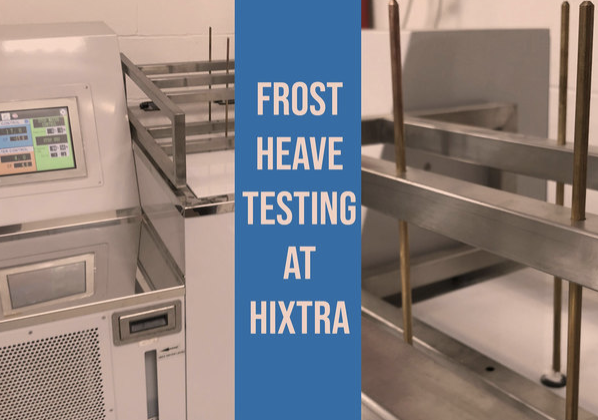
Practical testing. Experienced people. A service built around your project.
Quality, safety & professional standards
UKAS accreditation applies to the tests listed in our accredited schedule.
View our credentials ↗



Experienced people
Technical knowledge, with practical advice.
National coverage
Testing support wherever your project takes you.
A responsive service
Clear arrangements, from enquiry to reporting.
The right testing for your project
Practical advice, experienced testing staff and clear reporting. Assess the frost susceptibility of soils and aggregates intended for engineered fill or subbase.
Speak to the team ↗Where this service helps
The right test helps answer a specific project question. We’ll agree the method and requirements with you before the work begins.
Assess the frost susceptibility of soils and aggregates intended for engineered fill or subbase.
Agree the test method, sample condition and acceptance criteria before the work begins.
Use clear test records to support your project’s material and engineering assessment.
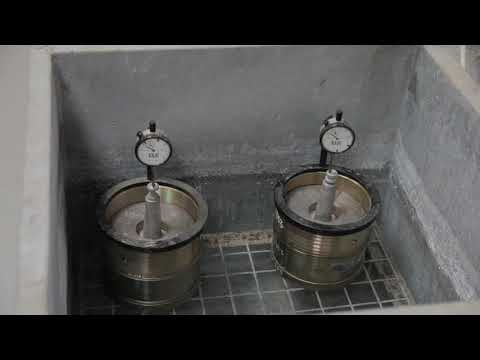
Prepared specimens are tested under controlled freezing conditions to measure heave. The programme should reflect material type, intended use and the applicable specification. Confirm sample quantity and the conditioning and testing period before sending material.

A closer look
Prepared specimens are tested under controlled freezing conditions to measure heave. The programme should reflect material type, intended use and the applicable specification. Confirm sample quantity and the conditioning and testing period before sending material.
UKAS accreditation applies to the particular methods listed in Hixtra’s current schedule, rather than every service. Ask us to confirm the accreditation status of the testing you require.
Hixtra in action
Working with Hixtra
From your first enquiry to your report, you’ll have practical advice on what to book, how to prepare and what happens next.
Share the site location, materials and testing specification. If you are unsure which test you need, we can help.
We agree the scope, access or sample requirements, availability and reporting arrangements before work starts.
Your results are reported for the agreed testing. Our team is on hand if you need to discuss the report.
Testing support across England & Wales
From individual site visits to ongoing testing programmes, we support construction, civil engineering and geotechnical projects across England and Wales.
Check availability for your site ↗Your questions
Practical answers on what this test is for, how to prepare and what you get back.
Ask us about your project →It measures how much a prepared specimen of the material rises when it is frozen from the top with water available at its base, recorded in millimetres. That upward movement is the same mechanism that lifts and cracks a pavement over a cold winter, as ice lenses form in the material and draw more water up behind them. The test is looking for that behaviour in the laboratory before the material goes into the ground.
It is normally carried out to BS 812-124, the method named in the Specification for Highway Works. Clause 801 of Series 800 sets the acceptance criterion, classifying material as non-frost-susceptible where the mean heave is 15 mm or less. Your own specification may set a different limit or reference a different document, and we work to the one named in your contract.
When the material will sit close enough to the finished surface for frost to reach it. The Specification for Highway Works requires material within 450 mm of the designed final surface of a road or paved central reserve to be non-frost-susceptible, reducing to 350 mm on sites where the Mean Annual Frost Index is below 50. Below that depth the requirement usually falls away, so the construction thickness above the material matters as much as the material itself.
Specimens are compacted to a reference density and water content established beforehand, usually by the vibrating hammer method, then conditioned and set up in a refrigerated cabinet with their bases standing in water at a controlled temperature. The tops are held under freezing conditions while the bases are kept unfrozen, and the rise of each specimen is measured through the freezing period. The reported result is the mean heave of the set.
Longer than anything else in a subbase suite, and it needs planning into the programme rather than squeezing in at the end. Before the freezing stage can start, the material has to be graded, checked for plasticity and compacted to a determined reference density and moisture content, and the specimens then need conditioning. Allow weeks rather than days overall. We confirm the expected timing for the agreed scope before the work is booked.
Fine material and the ability to draw water upwards. A material with a significant proportion of silt-sized particles has pores fine enough to feed ice lenses by capillary action but coarse enough to let water move, which is the worst combination. Clean crushed rock with few fines rarely heaves, while chalk, some limestones, soft brick and any material with a dirty fines fraction are the usual culprits.
Sometimes. Some specifications and overseeing organisations accept certain well established materials as non-frost-susceptible on the basis of type and previous test evidence, and a supplier may already hold a current frost heave certificate for the source, which saves repeating the test. The other route is to design the frost susceptible material out of the top 450 mm altogether. Whether either is acceptable is a decision for the overseeing organisation rather than the laboratory.
A representative bulk sample large enough to prepare a full set of compacted specimens, plus enough material for the grading, plasticity and compaction work that has to come first. That means a substantial quantity rather than a bucketful, taken as increments from several points across the stockpile or the delivery instead of one scoop from the face. A shortfall means a second trip for material, and on this test that costs real programme time.
The report gives the heave measured for each specimen and the mean heave for the set, in millimetres, together with the density, moisture content and grading the specimens were prepared at. Against the Specification for Highway Works, a mean heave of 15 mm or less classifies the material as non-frost-susceptible. The preparation details matter as much as the number, because the result only applies to material in that condition.
Either keep it away from the frost zone or change the material. In practice that means increasing the thickness of the layers above it so it sits below the specified depth, replacing it with a material shown to be non-frost-susceptible, or reworking the source to reduce the fines that are driving the heave. Which of those is workable depends on the levels, the design and the programme, so it is a decision to take with your designer.
Often, yes. Some specifications require frost heave testing to be carried out by a laboratory holding current UKAS accreditation for that method, so it is worth reading the clause before you place the work. Hixtra holds UKAS accreditation to ISO/IEC 17025 for the tests listed in its schedule of accreditation, number 8996. Accreditation is specific to the listed methods and scope, so ask us to confirm the position for the testing you need.
The material type and source, the specification or clause it is being tested against, how many samples are involved, the site postcode and the date the result is needed. Cost is driven mainly by the number of samples and the preparation each one takes, because the grading, plasticity and compaction work all sit in front of the freezing stage. Tell us the programme and we will be straight about whether it can be met.
In our customers’ words
Independent feedback from the people we work with.
“Punctual, friendly and professional.”Read the full review ↗
“Perfect service and explained everything step by step.”Read the full review ↗
“Excellent service! Incredibly professional. Thankyou”Read the full review ↗
Customers come back to Hixtra
Read independent feedback from customers who have used our testing services.
4.8 / 5 on Trustpilot
“Punctual, friendly and professional.”
Lee Chippington · September 2026
Read this customer’s review ↗Same-day and next-day testing dates available. Tell us what you need and where, or call to check availability.