Understand your material
Identify and quantify the constituent materials within a recycled aggregate sample.
Aggregates & subbase testing
Identify and quantify the constituent materials within a recycled aggregate sample.
Same-day & next-day testing dates available. Call to check availability for your location and test requirements.
Practical testing. Experienced people. A service built around your project.
Quality, safety & professional standards
UKAS accreditation applies to the tests listed in our accredited schedule.
View our credentials ↗



Experienced people
Technical knowledge, with practical advice.
National coverage
Testing support wherever your project takes you.
A responsive service
Clear arrangements, from enquiry to reporting.
The right testing for your project
Practical advice, experienced testing staff and clear reporting. Identify and quantify the constituent materials within a recycled aggregate sample.
Speak to the team ↗Where this service helps
The right test helps answer a specific project question. We’ll agree the method and requirements with you before the work begins.
Identify and quantify the constituent materials within a recycled aggregate sample.
Agree the test method, sample condition and acceptance criteria before the work begins.
Use clear test records to support your project’s material and engineering assessment.
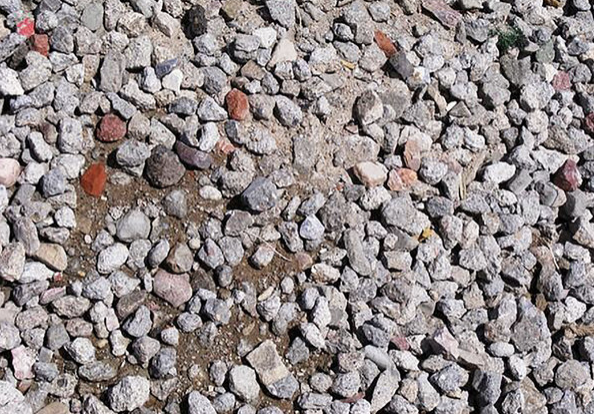
Particles are examined, separated into the required categories and weighed. The results can be compared with limits for the intended fill or subbase. Grading and other performance tests may also be needed to assess the material fully.

A closer look
Particles are examined, separated into the required categories and weighed. The results can be compared with limits for the intended fill or subbase. Grading and other performance tests may also be needed to assess the material fully.
UKAS accreditation applies to the particular methods listed in Hixtra’s current schedule, rather than every service. Ask us to confirm the accreditation status of the testing you require.
Hixtra in action
Working with Hixtra
From your first enquiry to your report, you’ll have practical advice on what to book, how to prepare and what happens next.
Share the site location, materials and testing specification. If you are unsure which test you need, we can help.
We agree the scope, access or sample requirements, availability and reporting arrangements before work starts.
Your results are reported for the agreed testing. Our team is on hand if you need to discuss the report.
Testing support across England & Wales
From individual site visits to ongoing testing programmes, we support construction, civil engineering and geotechnical projects across England and Wales.
Check availability for your site ↗Your questions
Practical answers on what this test is for, how to prepare and what you get back.
Ask us about your project →It tells you what the material is made of, as a percentage by mass of each constituent type. The coarse particles are sorted into concrete and mortar, unbound aggregate and natural stone, clay masonry, bituminous material, glass, floating material and everything else, then weighed. That breakdown is what a specification compares against its limits, because two crushed materials with the same grading can behave very differently depending on what went into them.
It is usually carried out to BS EN 933-11, the classification test for the constituents of coarse recycled aggregate. The method covers particles between 4 mm and 63 mm, so it describes the coarse fraction rather than the fines. Where your specification names a different method or a different set of categories we work to that instead, so send us the clause you are being held to.
They are the constituent classes used to describe a recycled aggregate. Rc is concrete, concrete products and mortar; Ru is unbound aggregate, natural stone and hydraulically bound aggregate; Rb is clay masonry such as brick and tile, calcium silicate units and aerated non-floating concrete; Ra is bituminous material; Rg is glass; X is everything else, including clay and soil, metal, wood, plastic, rubber and gypsum; FL is floating material.
The sample is dried, washed and sieved to remove everything finer than 4 mm, then sorted particle by particle by hand into the constituent classes, and each class is weighed. Results are reported as a percentage by mass of the test portion. Floating material is the exception. It is separated in water, surface dried and measured by volume rather than mass, because a small weight of polystyrene or wood occupies a lot of space.
Because the limits in a specification are set on constituents, not just on grading. A recycled Type 1 unbound mixture, for example, is normally held to no more than 1% other material of Class X, up to 50% bituminous material and up to 25% glass. A material that is mostly crushed concrete with clean brick can meet those limits, while the same grading carrying a few percent of wood, plaster or soil will not.
The material fails against that clause and cannot be used in that position until it is dealt with. In practice the options are to reprocess the stockpile, screen the contamination out and retest, blend it with cleaner material or accept it for a use where the limits are less demanding. Class X is usually the one that catches people out, because a small volume of plasterboard, wood or plastic goes a long way.
A constituent test needs a substantial sample: BS EN 933-11 sets a minimum test portion mass that rises with the top size of the material, so a coarse recycled aggregate needs tens of kilograms. That is the portion after reduction, so the bulk sample coming in needs to be larger again. Tell us the top size and we will confirm the quantity, because sending too little is the most common reason a constituent test has to be repeated.
Take a number of increments from different points and different heights in the pile and combine them into one bulk sample, rather than filling a bucket from the nearest face. Recycled material segregates badly, and the fines and the occasional lump of timber do not sit where you would expect. Sampling off the loading shovel as the pile is worked, or from a conveyor, gives a fairer picture than digging into the toe.
No. Constituent classification proves what the material is made of, but a Type 1 unbound mixture also has to meet the grading envelope and the requirements for resistance to fragmentation, magnesium sulfate soundness, plasticity of the fines, sulfate content and, where it sits close to the finished surface, frost susceptibility. We normally run constituent classification alongside grading as a minimum, because together they tell you most of what you need early on.
The report gives the percentage by mass of each constituent class, with floating material given as a volume, alongside the sample reference and the size fraction examined. Where your specification sets category limits we can present the result against them so the comparison is obvious. The sorting is labour intensive rather than slow, and we confirm the expected reporting date for the agreed scope before the work is booked.
Accreditation covers particular methods rather than everything we do, so it is a question to ask before booking rather than to assume. Hixtra holds UKAS accreditation to ISO/IEC 17025 for the tests listed in its schedule of accreditation, number 8996, and accreditation is specific to the listed methods and scope. Ask us to confirm whether the constituent testing you need is covered, and the report will state the status of the result.
The site postcode, the material and its source, the specification you are working to, approximate quantities and your preferred dates. Cost is driven by the number of samples, the quantity of material to be sorted, whether we collect the samples or you deliver them and what else is being tested at the same time. Hand sorting a large test portion takes time, so top size matters.
In our customers’ words
Independent feedback from the people we work with.
“Punctual, friendly and professional.”Read the full review ↗
“Perfect service and explained everything step by step.”Read the full review ↗
“Excellent service! Incredibly professional. Thankyou”Read the full review ↗
Customers come back to Hixtra
Read independent feedback from customers who have used our testing services.
4.8 / 5 on Trustpilot
“Punctual, friendly and professional.”
Lee Chippington · September 2026
Read this customer’s review ↗Same-day and next-day testing dates available. Tell us what you need and where, or call to check availability.