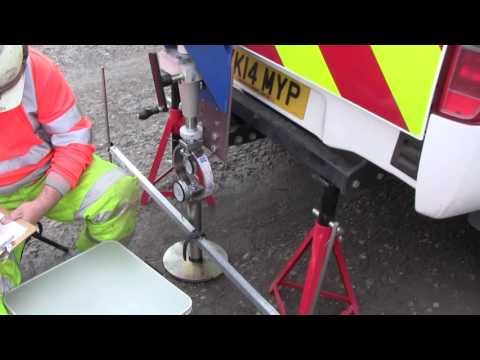
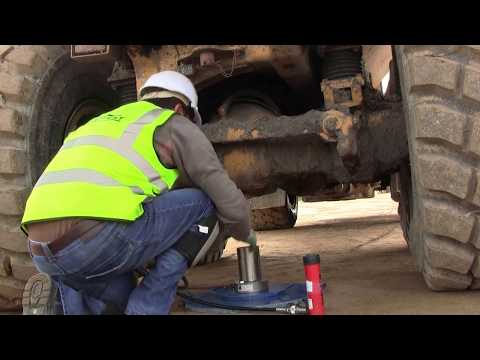
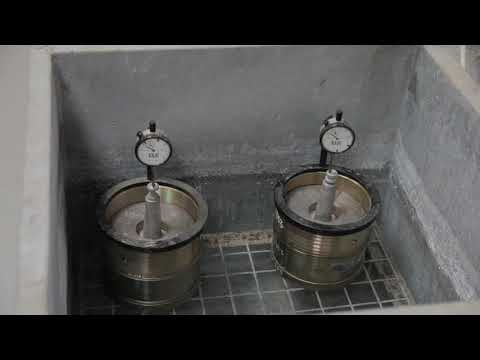
Understand your material
Measure fresh concrete consistency on site before placement.
Concrete testing & coring
Measure fresh concrete consistency on site before placement.
Same-day & next-day testing dates available. Call to check availability for your location and test requirements.
Practical testing. Experienced people. A service built around your project.
Quality, safety & professional standards
UKAS accreditation applies to the tests listed in our accredited schedule.
View our credentials ↗



Experienced people
Technical knowledge, with practical advice.
National coverage
Testing support wherever your project takes you.
A responsive service
Clear arrangements, from enquiry to reporting.
The right testing for your project
Practical advice, experienced testing staff and clear reporting. Measure fresh concrete consistency on site before placement.
Speak to the team ↗Where this service helps
The right test helps answer a specific project question. We’ll agree the method and requirements with you before the work begins.
Measure fresh concrete consistency on site before placement.
Agree the test method, sample condition and acceptance criteria before the work begins.
Use clear test records to support your project’s material and engineering assessment.
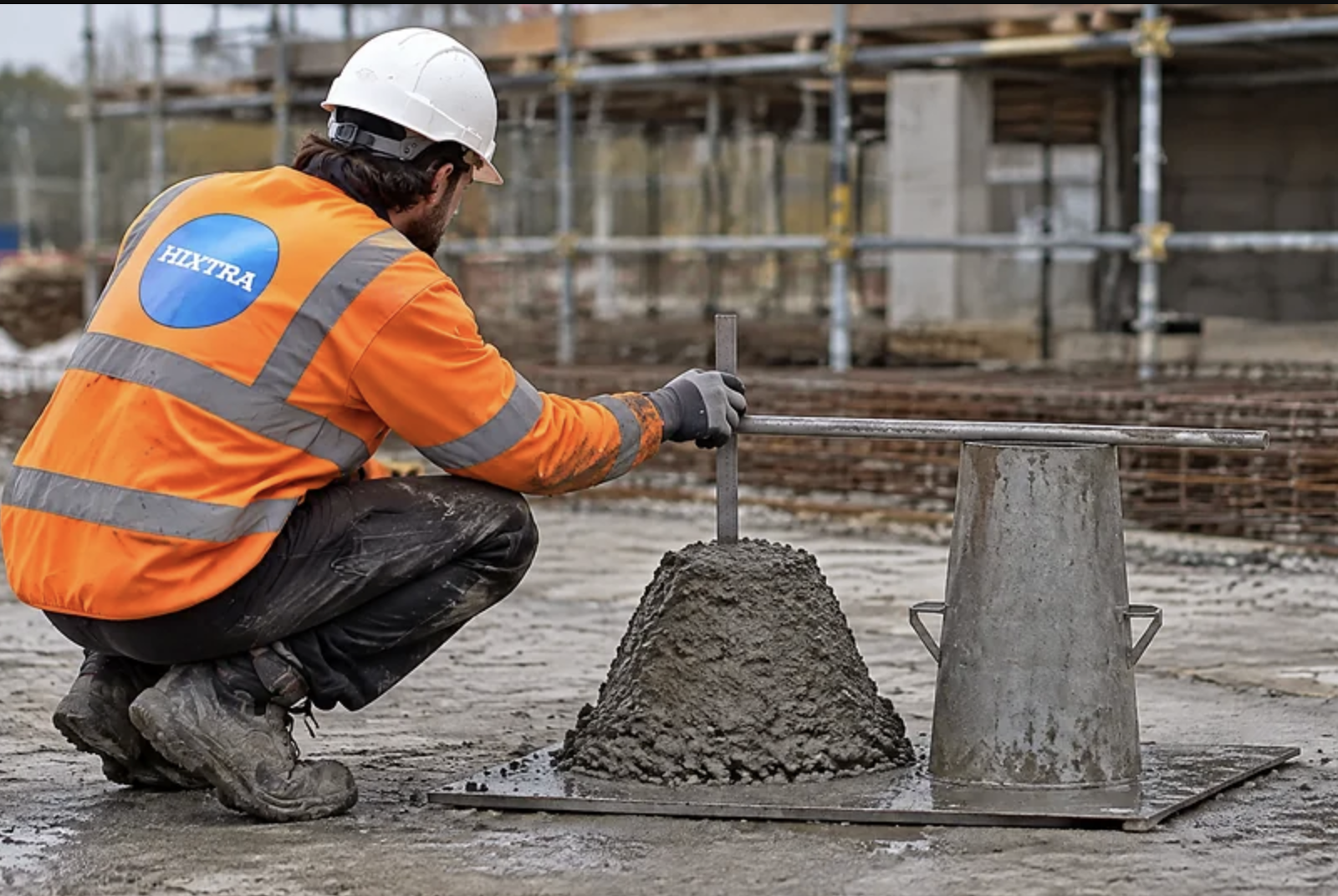
The sample is compacted into the slump cone and the change in height is measured after the mould is lifted. Compare the result with the specified consistency requirements. Where a different consistency method is required, we can discuss flow testing and the agreed sampling programme.
Slump testing is fresh concrete work, so it is carried out within roughly an hour’s drive of our Milton Keynes laboratory. That is set by the specimens rather than by the mileage, because any cubes made during the same visit have to be in controlled curing quickly. Hardened concrete testing, including cube and core strength, covers England and Wales.

A closer look
The sample is compacted into the slump cone and the change in height is measured after the mould is lifted. Compare the result with the specified consistency requirements. Where a different consistency method is required, we can discuss flow testing and the agreed sampling programme.
UKAS accreditation applies to the particular methods listed in Hixtra’s current schedule, rather than every service. Ask us to confirm the accreditation status of the testing you require.
Hixtra in action
Working with Hixtra
From your first enquiry to your report, you’ll have practical advice on what to book, how to prepare and what happens next.
Share the site location, materials and testing specification. If you are unsure which test you need, we can help.
We agree the scope, access or sample requirements, availability and reporting arrangements before work starts.
Your results are reported for the agreed testing. Our team is on hand if you need to discuss the report.
Testing support across England & Wales
From individual site visits to ongoing testing programmes, we support construction, civil engineering and geotechnical projects across England and Wales.
Check availability for your site ↗Your questions
Practical answers on what this test is for, how to prepare and what you get back.
Ask us about your project →The damp cone is placed on a level rigid plate, filled in three layers with 25 strokes of the tamping rod to each layer, struck off level, then lifted vertically and steadily clear of the concrete. The drop from the height of the mould to the highest point of the slumped concrete is measured and recorded to the nearest 10 mm. The whole test is done without interruption, because the concrete stiffens while you work and a pause changes the answer.
Usually BS EN 12350-2, with the sample taken to BS EN 12350-1 and the consistence class or target value coming from BS EN 206 and BS 8500 or from the project specification. Highways work may instead point to the relevant series of the Specification for Highway Works. Where your documents name a different method, or a different point of testing, we work to those and the report states the method used.
They are bands of slump in millimetres used to specify consistence: S1 is 10 to 40 mm, S2 is 50 to 90 mm, S3 is 100 to 150 mm, S4 is 160 to 210 mm and S5 is 220 mm or more. A specification either names a class or gives a target value with a tolerance. S2 and S3 cover most structural concrete placed with poker vibration, while S4 is typical of pumped and free-flowing mixes.
It means the concrete as delivered is not at the consistence the specification asked for, which is a supply matter rather than a strength result. We report the figure, the time it was taken and the delivery ticket details, and we tell the site straight away. The decision to accept, reject or hold the load is yours and your engineer's, not ours. Consistence is one of the things a producer's conformity is judged on, so the record matters to both sides.
Only where the first result was not valid. If the concrete shears off to one side or collapses, that is not a true slump, so the test is repeated on a fresh portion of the same sample. A valid slump that simply falls outside the specified class is not retested: the figure stands, and the next load is a separate sample with its own result. Where two attempts both give a shear or collapse slump, the mix is outside what the test can sensibly describe.
Concrete loses workability from the moment it is batched, so any gap between the plant and the chute shows up as a lower slump. Time in transit, concrete and ambient temperature, dry or absorbent aggregates and the type and dose of admixture all affect how quickly it stiffens, and a long wait on site between loads makes it worse. This is why consistence is specified and tested at the point of delivery rather than at the plant.
No, the test is only sensitive between about 10 and 210 mm, so a very stiff mix gives almost no slump and a very fluid one collapses, and in neither case does the number tell you much. Stiff concrete is better described by the degree of compactability or Vebe methods, and high-workability concrete by the flow table test. Self-compacting concrete is assessed by slump-flow instead. Send the consistence clause from your specification and we'll confirm which method fits.
That is set by your specification, and testing every load is unusual outside high-risk or low-volume pours. A common arrangement is the first load of a pour, then a proportion of the rest, plus a test alongside every sample taken for cubes and any load that looks different from the ones before it. More frequent testing early in a job, or after a mix change, is often worth it. We'll work to whatever frequency your testing schedule sets out.
We plan the visit around the pour, and short waits between loads are expected. Longer waits are chargeable as standby, so it helps to tell us the pour start time, the expected number of loads and the interval between them when the visit is booked. If the pour moves or is cancelled, tell us as early as you can. Same-day and next-day testing dates are available in many areas, though that depends on location and workload.
As a single figure in millimetres to the nearest 10 mm, alongside the information needed to tie it to a load: the date and time, the delivery ticket number, the mix reference, the sampling point and the pour location. The form of slump is noted, and any departure from the standard method is stated. Most sites want the number at the time, so it is given to your site contact on the day and confirmed in the written record.
Hixtra holds UKAS accreditation to ISO/IEC 17025 for the tests listed in its schedule of accreditation, number 8996. Accreditation is specific to the listed methods and scope, so it applies to the methods on that schedule rather than to every service. Ask us to confirm whether the test you need is covered, ideally before the work is booked, and the report will make the status of each result clear. If your specification requires accredited consistence testing, say so at enquiry stage.
Cost follows the visit rather than the number of tests, so the main drivers are travel to your site, time on site, the number of visits across the programme and any out-of-hours working. Slump is rarely booked on its own, and it usually works out cheaper per visit when combined with cube making or other fresh concrete tests on the same trip. Send your site postcode, the concrete specification, the pour dates, the expected number of loads and the testing frequency.
In our customers’ words
Independent feedback from the people we work with.
“Punctual, friendly and professional.”Read the full review ↗
“Perfect service and explained everything step by step.”Read the full review ↗
“Excellent service! Incredibly professional. Thankyou”Read the full review ↗
Customers come back to Hixtra
Read independent feedback from customers who have used our testing services.
4.8 / 5 on Trustpilot
“Punctual, friendly and professional.”
Lee Chippington · September 2026
Read this customer’s review ↗Same-day and next-day testing dates available. Tell us what you need and where, or call to check availability.