Understand your material
Assess the breakdown of soil lumps during lime or cement stabilisation.
Earthworks, compaction & stabilisation
Assess the breakdown of soil lumps during lime or cement stabilisation.
Same-day & next-day testing dates available. Call to check availability for your location and test requirements.
Practical testing. Experienced people. A service built around your project.
Quality, safety & professional standards
UKAS accreditation applies to the tests listed in our accredited schedule.
View our credentials ↗



Experienced people
Technical knowledge, with practical advice.
National coverage
Testing support wherever your project takes you.
A responsive service
Clear arrangements, from enquiry to reporting.
The right testing for your project
Practical advice, experienced testing staff and clear reporting. Assess the breakdown of soil lumps during lime or cement stabilisation.
Speak to the team ↗Where this service helps
The right test helps answer a specific project question. We’ll agree the method and requirements with you before the work begins.
Assess the breakdown of soil lumps during lime or cement stabilisation.
Agree the test method, sample condition and acceptance criteria before the work begins.
Use clear test records to support your project’s material and engineering assessment.
This rapid site test supports control of the mixing process. It is normally used alongside other stabilised soil tests because adequate pulverisation alone does not establish the final strength or compliance of the treated material.

A closer look
This rapid site test supports control of the mixing process. It is normally used alongside other stabilised soil tests because adequate pulverisation alone does not establish the final strength or compliance of the treated material.
UKAS accreditation applies to the particular methods listed in Hixtra’s current schedule, rather than every service. Ask us to confirm the accreditation status of the testing you require.
Hixtra in action
Working with Hixtra
From your first enquiry to your report, you’ll have practical advice on what to book, how to prepare and what happens next.
Share the site location, materials and testing specification. If you are unsure which test you need, we can help.
We agree the scope, access or sample requirements, availability and reporting arrangements before work starts.
Your results are reported for the agreed testing. Our team is on hand if you need to discuss the report.
Testing support across England & Wales
From individual site visits to ongoing testing programmes, we support construction, civil engineering and geotechnical projects across England and Wales.
Check availability for your site ↗Your questions
Practical answers on what this test is for, how to prepare and what you get back.
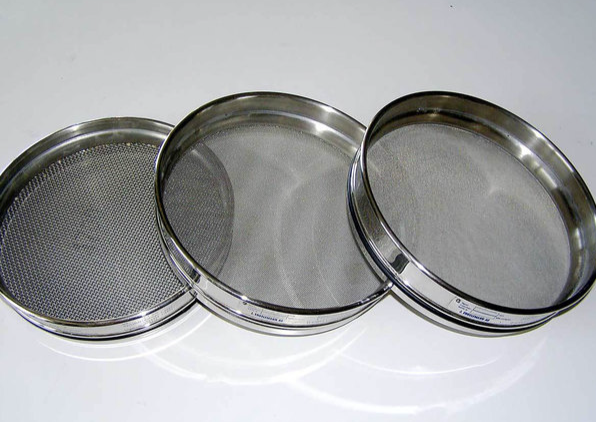
Ask us about your project →It measures how completely the mixing plant has broken the soil down into fine particles rather than leaving intact lumps of clay. A sample of the processed material is taken from the treated layer, then dried and sieved, and the proportion passing the specified sieve is calculated. The result tells you whether the binder has been distributed through the soil or is coating lumps that are still untreated inside.
The result is a percentage by mass passing a stated sieve, compared against a minimum in the specification. Series 600 of the Specification for Highway Works commonly requires 95% of the processed material to pass a 28 mm sieve after dry sieving. Exactly what is counted, and whether stone already present in the soil is excluded, is set by the clause your works are specified to. The test method is normally the one your specification names.
An unbroken lump is untreated soil sitting inside a treated layer. Lime or cement only reacts with the surfaces it reaches, so the lump keeps its original moisture content and plasticity, stays soft and leaves a compressible pocket the surrounding material has to bridge. It is a common reason a stabilised layer passes on density but comes back short on strength or CBR after curing.
After the final mixing pass and before compaction starts, because that is the last moment the plant can still act on the result. On a lime job that means after the mellowing period and the final pass, not after the first mix. Sampling too early gives a result the site cannot use, and sampling once rolling has begun gives one nobody can use at all.
It means more mixing rather than more binder. The usual responses are further passes with the rotavator, a slower forward speed, a higher rotor speed and a check that the mixing depth and the overlap between adjacent runs suit the layer being treated. If the material still will not break down after extra passes, the problem is normally the moisture condition or a soil that needs longer mellowing, not the machine.
Yes, and it is the most common reason a result fails. Wet clay smears and rolls into balls under the rotor instead of breaking, while very dry, hard-baked ground resists breaking down at all. Lime helps by drying and modifying the clay during mellowing, which is part of why the mellowing period exists. Rain between passes can undo a result that was acceptable an hour earlier.
The sample is cut through the full depth of the treated layer at a representative position, so it reflects what the rotor has actually done rather than only the surface. Enough material is needed to give a meaningful sieved mass once the coarse fraction is separated, which in practice means a bulk sample rather than a handful. It should be tested promptly, before it dries out or takes on rain.
Pulverisation is a rapid site test, and the sieving is normally done at the test position so the plant is not held up. Where the material has to be dried before sieving that adds time, which is why the test is planned into the sequence rather than called for at the last minute. We confirm the working arrangements and the expected timing when the visit is booked.
The frequency comes from your specification, normally set against the area or volume of material processed rather than a fixed number per day. In practice you want a test wherever the material, the moisture condition or the plant set-up changes, and another after any reworked area. Under-testing usually costs more than over-testing, because a failure found after compaction means taking the layer back up.
No. Pulverisation confirms only that the soil has been broken down well enough for the binder to be distributed through it. It says nothing about whether the right amount of binder went in, whether the layer was compacted properly or what strength it will reach. It is used alongside binder spread rate checks, moisture content or MCV, in-situ density and strength or CBR testing on cured specimens.
Ask us to confirm before the works are specified, because accreditation applies to particular methods rather than to a service as a whole. Hixtra holds UKAS accreditation to ISO/IEC 17025 for the tests listed in its schedule of accreditation, number 8996. Accreditation is specific to the listed methods and scope, and we will tell you plainly which parts of your stabilisation testing sit inside it.
Cost is driven by the number of tests per day, the length of the stabilisation programme, travel to site and whether an engineer is needed on site continuously or for planned visits. Say whether pulverisation is the only test required or sits alongside moisture, MCV and density work, because a combined visit is priced differently to a single test. Send the site postcode, specification, expected daily area treated and your start date.
In our customers’ words
Independent feedback from the people we work with.
“Punctual, friendly and professional.”Read the full review ↗
“Perfect service and explained everything step by step.”Read the full review ↗
“Excellent service! Incredibly professional. Thankyou”Read the full review ↗
Customers come back to Hixtra
Read independent feedback from customers who have used our testing services.
4.8 / 5 on Trustpilot
“Punctual, friendly and professional.”
Lee Chippington · September 2026
Read this customer’s review ↗Same-day and next-day testing dates available. Tell us what you need and where, or call to check availability.