Understand your material
Assess soils, fill and aggregates for sulfate, pH, chloride, organic matter and contamination.
Soils & geotechnical laboratory testing
Assess soils, fill and aggregates for sulfate, pH, chloride, organic matter and contamination.
Same-day & next-day testing dates available. Call to check availability for your location and test requirements.
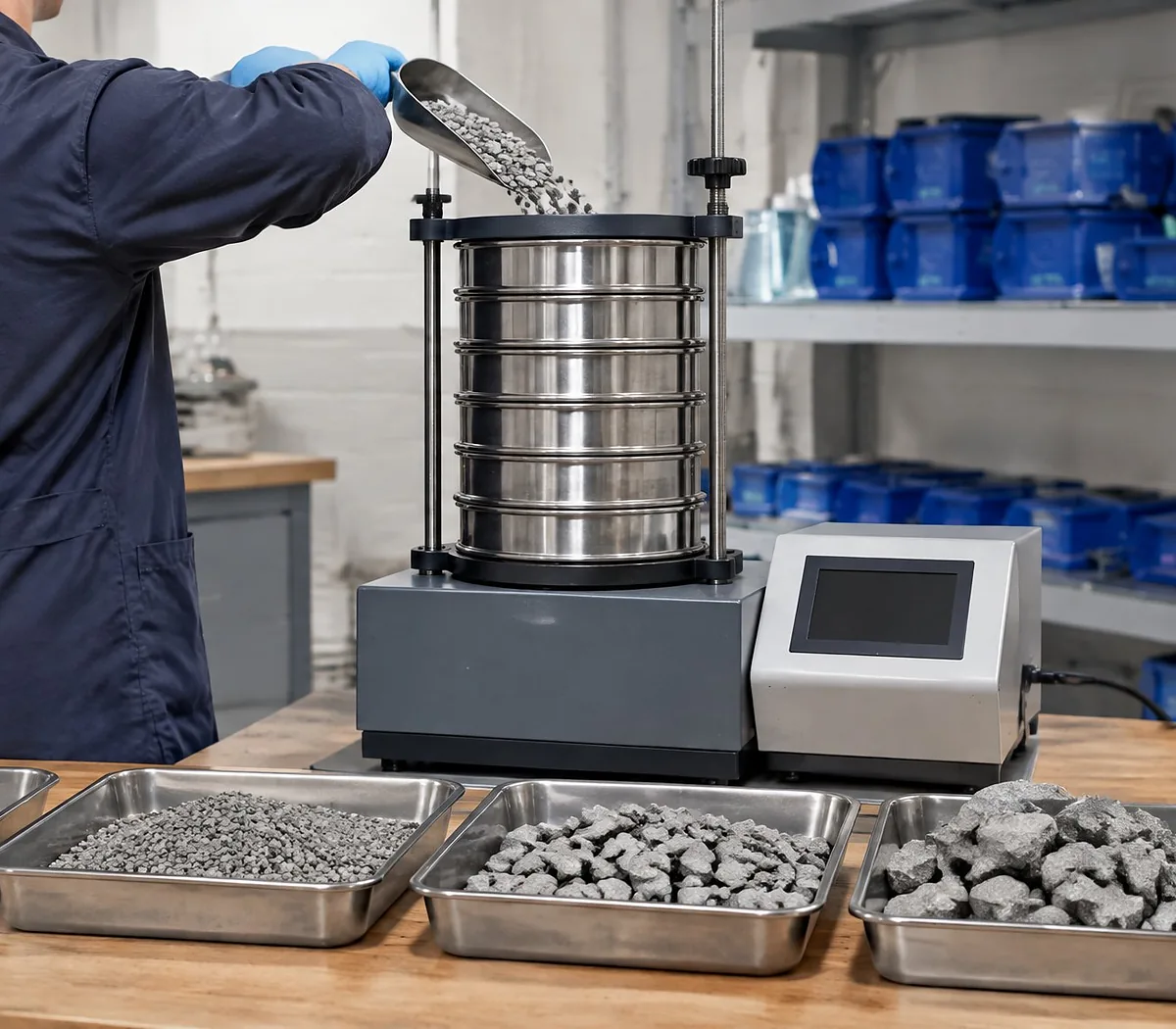
Practical testing. Experienced people. A service built around your project.
Quality, safety & professional standards
UKAS accreditation applies to the tests listed in our accredited schedule.
View our credentials ↗



Experienced people
Technical knowledge, with practical advice.
National coverage
Testing support wherever your project takes you.
A responsive service
Clear arrangements, from enquiry to reporting.
The right testing for your project
Practical advice, experienced testing staff and clear reporting. Assess soils, fill and aggregates for sulfate, pH, chloride, organic matter and contamination.
Speak to the team ↗Where this service helps
The right test helps answer a specific project question. We’ll agree the method and requirements with you before the work begins.
Assess soils, fill and aggregates for sulfate, pH, chloride, organic matter and contamination.
Agree the test method, sample condition and acceptance criteria before the work begins.
Use clear test records to support your project’s material and engineering assessment.
Chemical testing looks at what the material contains rather than how it behaves under load, taking in pH and sulfate, chloride, organic matter and wider contamination screening. It is ordered where concrete is cast against the ground, where soil is to be stabilised with lime or cement, and where material is leaving site or being kept and reused. Hixtra takes or receives the samples, agrees the schedule and issues the results, with the analysis itself subcontracted to an accredited laboratory.

A closer look
Chemical testing looks at what the material contains rather than how it behaves under load, taking in pH and sulfate, chloride, organic matter and wider contamination screening. It is ordered where concrete is cast against the ground, where soil is to be stabilised with lime or cement, and where material is leaving site or being kept and reused. Hixtra takes or receives the samples, agrees the schedule and issues the results, with the analysis itself subcontracted to an accredited laboratory.
Soil chemical testing is typically specified to BS 1377-3, which covers organic matter, total organic carbon, loss on ignition, sulfur compounds, carbonate, chloride, magnesium, pH, electrical resistivity and redox potential. Aggregates and recycled material are usually tested to BS EN 1744-1, and where a highways or structural backfill specification applies the sulfur determinations often follow the numbered tests in TRL Report 447. Waste work follows the Environment Agency’s WM3 guidance, with waste acceptance criteria testing using the leaching methods in the BS EN 12457 series. We follow whatever your specification calls up.
UKAS accreditation applies to the particular methods listed in Hixtra’s current schedule, rather than every service. Ask us to confirm the accreditation status of the testing you require.
Hixtra in action
Working with Hixtra
From your first enquiry to your report, you’ll have practical advice on what to book, how to prepare and what happens next.
Share the site location, materials and testing specification. If you are unsure which test you need, we can help.
We agree the scope, access or sample requirements, availability and reporting arrangements before work starts.
Your results are reported for the agreed testing. Our team is on hand if you need to discuss the report.
Testing support across England & Wales
From individual site visits to ongoing testing programmes, we support construction, civil engineering and geotechnical projects across England and Wales.
Check availability for your site ↗Your questions
Practical answers on what this test is for, how to prepare and what you get back.
Ask us about your project →It measures what the material contains rather than how it performs under load. The usual determinations are pH and water-soluble sulfate, which decide how aggressive the ground is to buried concrete; total sulfur and total potential sulfate, which show how much more sulfate could appear if sulfides in the material oxidise; chloride, which matters where steel is embedded or buried; organic matter, which interferes with cement and lime; and a broader contamination screen where the material is leaving site or being reused. Which of those you need comes from the specification and the decision being made, not from the soil itself.
Soil chemical testing is typically specified to BS 1377-3, which covers organic matter, total organic carbon, loss on ignition, sulfur compounds, carbonate, chloride, magnesium, pH, electrical resistivity and redox potential. Aggregates and recycled material are usually tested to BS EN 1744-1. Where a highways or structural backfill specification applies, the sulfur determinations often follow the numbered tests in TRL Report 447. Waste work follows the Environment Agency’s WM3 guidance, with waste acceptance criteria testing using the leaching methods in the BS EN 12457 series. Those are the standards normally named. Send your specification and we will follow what it calls up.
Three situations cover most of it. Concrete cast against the ground needs an aggressive chemical environment for concrete class, assessed to BRE Special Digest 1 and carried through into a design chemical class using BS 8500, and that assessment needs sulfate and pH results. Lime or cement stabilisation needs the sulfate and sulfide position known beforehand, because sulfate-bearing soil can swell after treatment. Material that is leaving site, or being kept and reused under a materials management plan, needs enough analysis to be classified. If none of those apply, chemical testing is usually not required.
Whichever your specification names, because sulfate is not a single number and the tests are not interchangeable. A 2:1 water/soil extract gives water-soluble sulfate, the figure used for BRE Special Digest 1 classification. An acid digestion gives acid-soluble sulfate, the sulfate already present and available. Total sulfur captures everything, including sulfide that has not yet oxidised, and total potential sulfate is what the ground could eventually produce if it did. TRL Report 447 sets these out as separately numbered tests reported as percentage sulfur, so a clause quoting a test number is asking for that test rather than an equivalent. On made ground or pyritic ground the total figures usually matter more than the soluble one.
The material type and where it has come from, the determinations or the specification clause, the sample references with depth or location, and the dates you are working to. Tell us what the result is for as well, because a sulfate figure for a concrete class and a sulfate figure for a stabilisation assessment are not always the same test. Confirm quantity, containers and delivery with us before sampling, since a chemical suite has different container requirements from a classification suite. We can take the samples ourselves if that is easier.
Longer than a classification test, and the schedule belongs partly to the subcontract laboratory rather than to us. Sample preparation, drying and extraction all take their own time, a leaching test runs to a fixed contact period that cannot be shortened, and a full waste acceptance suite takes longer than a single pH and sulfate determination. Same-day and next-day attendance for sampling is available in many areas, but the analysis itself is not a same-day service. We confirm the expected timing for your scope before the work is booked.
As a report giving the sample references and where the material came from, the determination, the method, the result and the units, together with the accreditation status of each result. Units matter here more than in most testing, because sulfur results can be expressed as percentage sulfur or as percentage sulfate and soil and water results are not on the same basis, so the report states which is used. Determinations carried out by the subcontract laboratory are identified as such. Any deviation from the specified method is stated, and the reporting format and distribution are agreed before the work starts.
Usually nothing, because most of these results place the material in a class rather than pass or fail it. A high sulfate and low pH combination puts the ground in a more aggressive environment class, which means a different concrete rather than a problem, and a sulfate figure above the threshold for stabilisation means a different binder or a different approach rather than a rejection. Waste work is the exception: a leaching result above the acceptance criteria for a landfill class means the material has to go somewhere else. We report the number and set out what it means.
Once material is going off site the question stops being geotechnical and becomes a waste question. Classification follows the Environment Agency’s WM3 guidance, using the composition of the material and the hazardous property assessment, and a landfill will normally also want waste acceptance criteria testing, which combines a total analysis with a leaching test to show what actually comes out of the material in water. Where the intention is to keep and reuse the material rather than dispose of it, the CL:AIRE Definition of Waste: Development Industry Code of Practice and its materials management plan set out what has to be demonstrated. Tell us which route you are on, because it changes the suite.
No, and we would rather say that plainly than leave it vague. Chemical analysis of soils and aggregates is the one service Hixtra does not carry out in its own laboratory. It is subcontracted to an accredited laboratory, whose accreditation is its own rather than part of ours. Hixtra holds UKAS accreditation to ISO/IEC 17025 for the tests listed in its schedule of accreditation, number 8996, and accreditation is specific to the listed methods and scope. We take or receive the samples, agree the schedule, handle the chain of custody and issue the results to you, with the subcontracted determinations identified and the accreditation status of each result stated, so you deal with us from the first call to the report and your client can see exactly what is covered.
Classification testing describes how the soil behaves. Moisture content, grading, plasticity and particle density tell you what the material is and how it will handle. Chemical testing describes what the material contains, and it answers the questions the physical tests cannot: whether the ground will attack a foundation, whether the soil will take a lime binder, whether the material can be moved off site. The two are often booked together, because a specification that asks for a classification suite frequently adds sulfate, pH and organic content at the end of the list.
Sometimes, but do not rely on it. A bulk bag dug for grading and plasticity is often fine for pH, sulfate and organic content if it has been sealed properly and has not sat in the sun. It is usually not suitable for a contamination screen or a waste acceptance suite, which need specific containers, headspace control for volatile compounds and a documented chain of custody from the point of sampling. Sulfide-bearing material is the other trap, because it can oxidise in an open or poorly sealed bag and give a sulfate result the ground does not actually have.
By the number of samples and the number of determinations on each one, so a pH and sulfate pair on six samples is a very different job from a full waste acceptance suite on the same six. Sample preparation adds to it, a leaching test costs more than a direct determination, and site attendance for sampling is priced on top with travel included. Turnaround affects it too, since a compressed programme costs more than a normal one. Send the site postcode, the material, the determinations or the specification clause and your programme dates. Call 01908 505833 or email enquiries@hixtra.co.uk.
In our customers’ words
Independent feedback from the people we work with.
“Punctual, friendly and professional.”Read the full review ↗
“Perfect service and explained everything step by step.”Read the full review ↗
“Excellent service! Incredibly professional. Thankyou”Read the full review ↗
Customers come back to Hixtra
Read independent feedback from customers who have used our testing services.
4.8 / 5 on Trustpilot
“Punctual, friendly and professional.”
Lee Chippington · September 2026
Read this customer’s review ↗Same-day and next-day testing dates available. Tell us what you need and where, or call to check availability.