What Milton Keynes ground means for LWD testing.
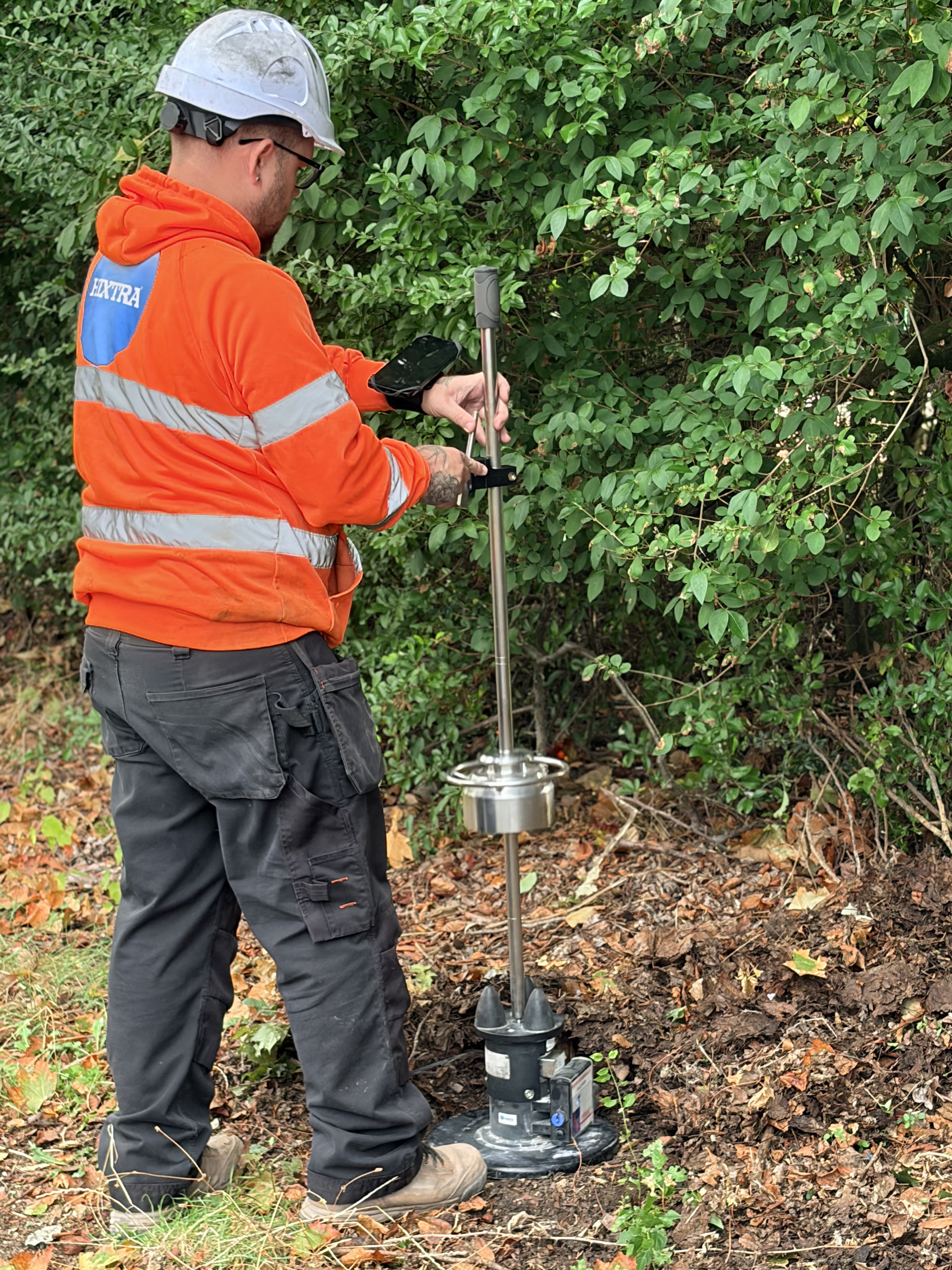
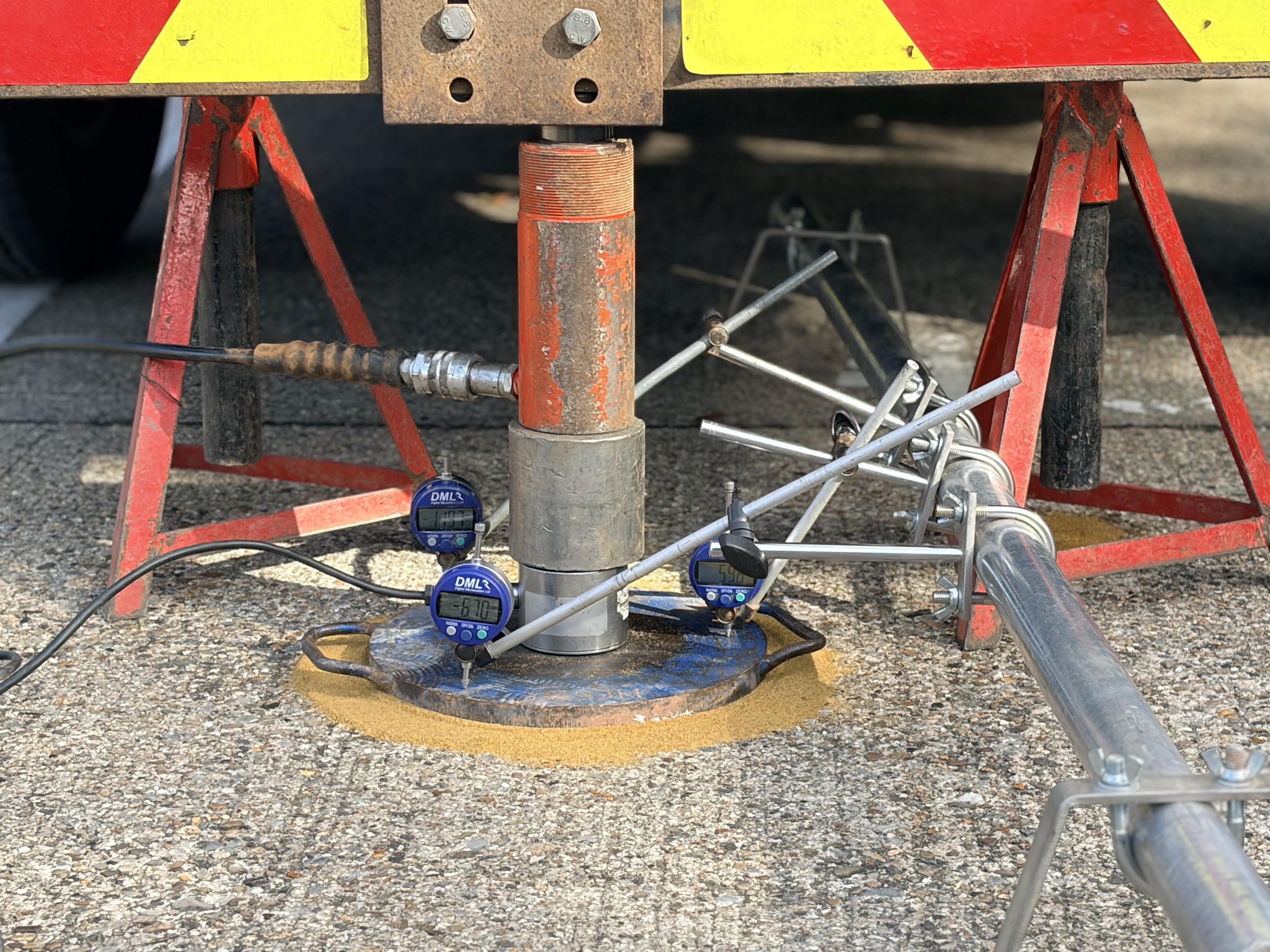
CBR testing and plate bearing testing answer different questions from an LWD, and on local ground all three get used. Oxford Clay is stiff, high plasticity and very moisture sensitive at formation level. Soft cohesive soil is the weak point of the LWD, so readings directly on wet clay are unreliable, and specifications here assume the wet case and put a capping layer down first. That layer is where the LWD belongs. On the glacial sands and gravels that cap parts of the plateau it can be used at formation. Around Willen, Caldecotte and the river valleys, a granular layer over soft alluvium gives a composite reading that can flatter the ground beneath. On the infilled pits towards Bletchley and Newton Longville, results scatter with the fill, and a quick LWD grid is a good way to find where.