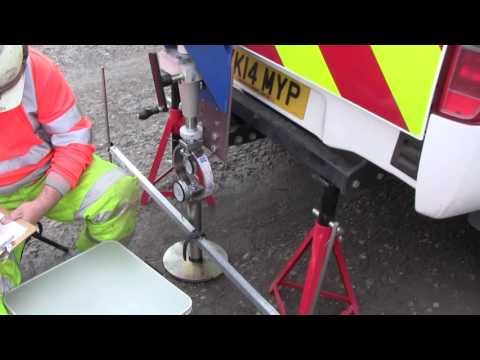
 Watch the film
CBR & plate bearing testing
Winchester
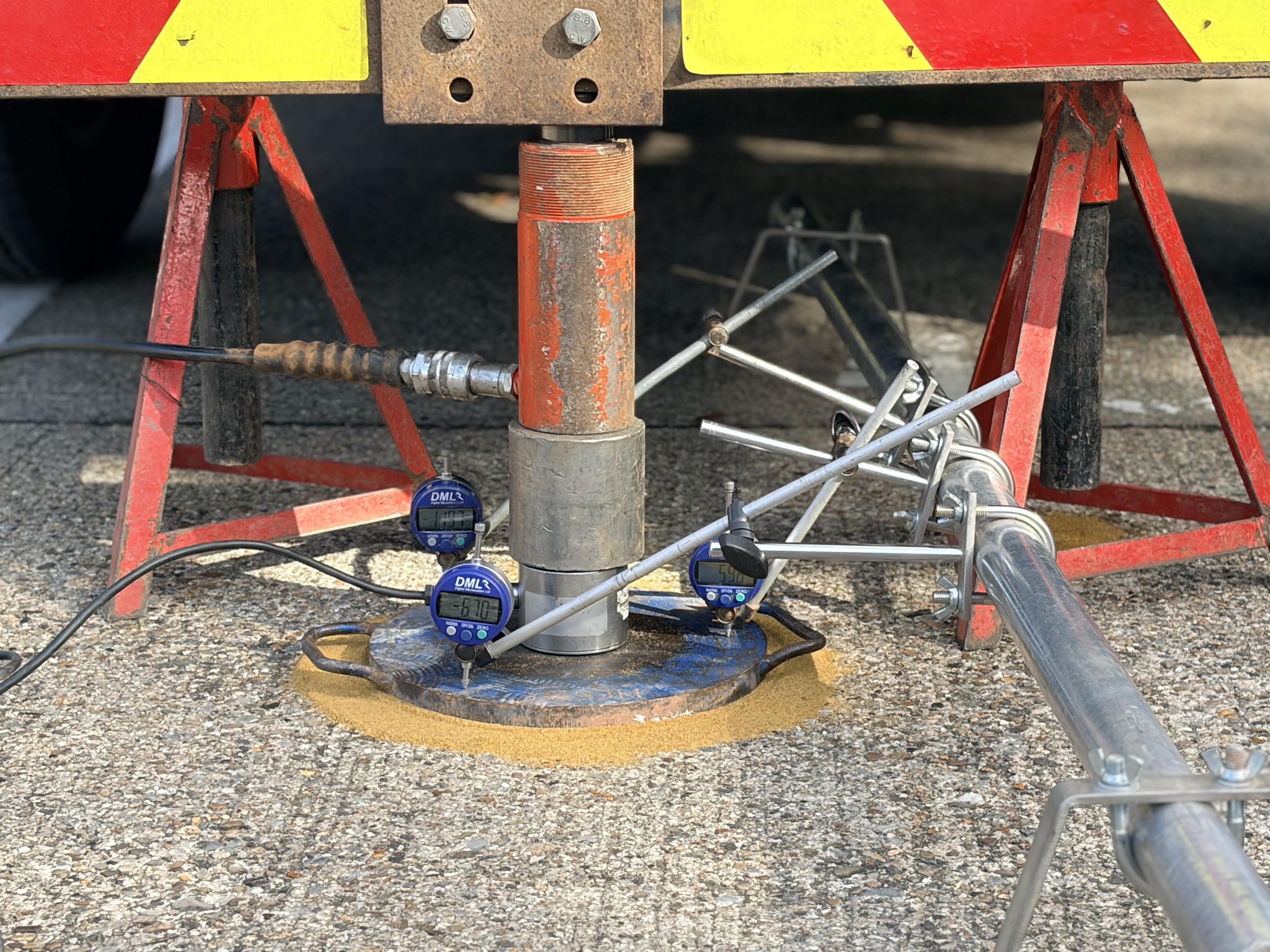
Plate bearing, CBR and LWD testing in Winchester, plus concrete cube, soil and aggregate testing at our laboratory. Call 01962 461501 to check dates.
On your site. On your side.
Same-day and next-day testing dates are often available. Call to check dates for your location and test requirements.
Quality, safety & professional standards
Expertise you can check.
UKAS accreditation applies to the tests listed in our accredited schedule.
View our credentials ↗

Experienced people
Technical knowledge, with practical advice.
National coverage
Testing support wherever your project takes you.
A responsive service
Clear arrangements, from enquiry to reporting.
Your regional contact
Local project details.
National testing expertise.
Same-day and next-day testing dates are available. Call your regional number to check dates for your location and test requirements. Site visits are coordinated centrally by Hixtra.
Areas served
Southampton, Eastleigh, Andover, Basingstoke, Portsmouth, Bournemouth and the Isle of Wight
Send your site postcode so we can confirm travel, access and availability. Coverage does not imply a permanent office in each town.
Local projects
The work we are called out to do here.
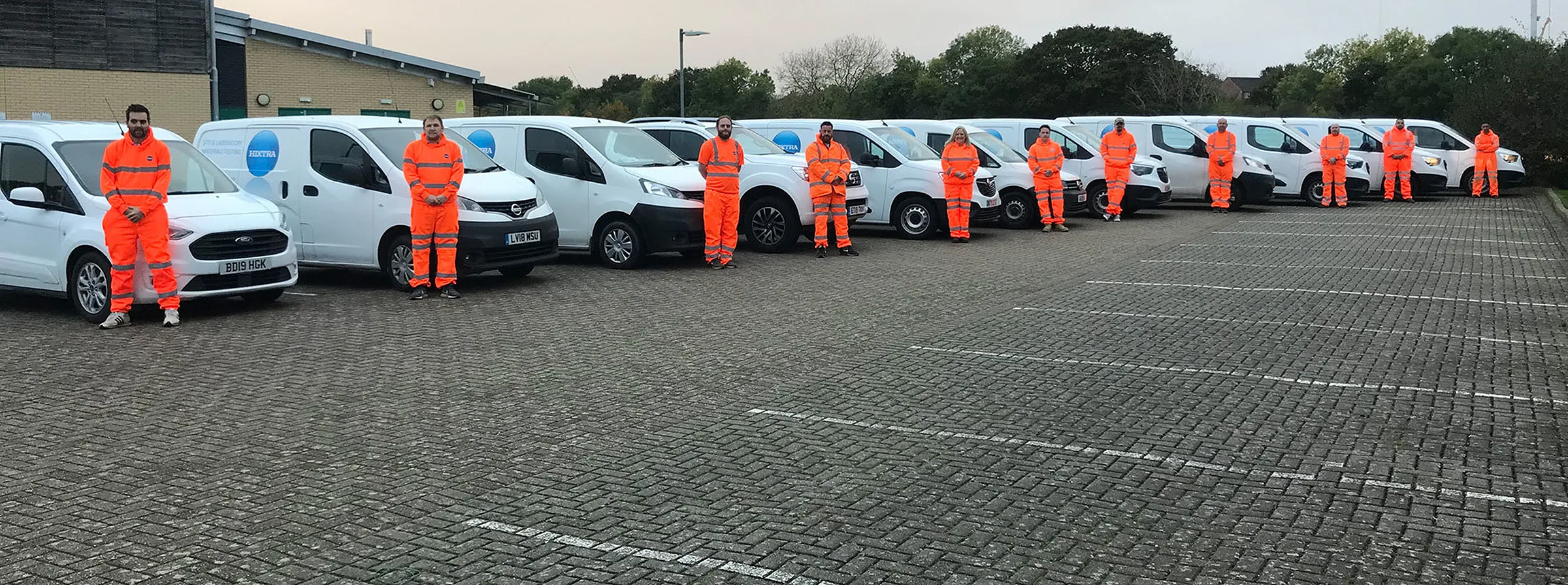
Around Winchester the work is mostly housing and commercial schemes on the chalk along the M3 and A34, where the formation has to be tested soon after it is exposed. Across Hampshire, Dorset and the Sussex coast the call is most often for CBR testing on estate and highway roads for housing schemes on the downland and along the coast, and for plate bearing on chalk formations and the granular capping laid over them. Piling contractors ask for working platform testing on the same ground. At Portsmouth, Southampton and Poole the work is crane pads for port, marine and coastal projects, on reclaimed or alluvial ground with large outrigger loads. Callers are groundworks contractors, piling contractors, crane operators and geotechnical consultants.
Teams travel from Milton Keynes for every visit; there is no Hixtra base in the region. The south coast is a reasonable run, so dates are usually easier to find than in the far south west or the north, and same-day and next-day dates are often available, subject to the schedule. Isle of Wight work needs ferry crossings built into the plan, so it is planned rather than squeezed in. On chalk, tell us when the formation was exposed and what has run over it since, because that decides when to test.
Fresh concrete testing, meaning slump, flow and cube making, is only offered within about an hour’s drive of Milton Keynes, which does not reach this region. Hardened cube testing and coring are available throughout it. Send the site postcode to 01962 461501 for a quote.
Choose the right method
Ground testing that matches your specification.
Tell us the site conditions and what your specification requires. We can help you choose between direct CBR, plate bearing and other suitable ground-testing methods.
Plate bearing & derived CBR
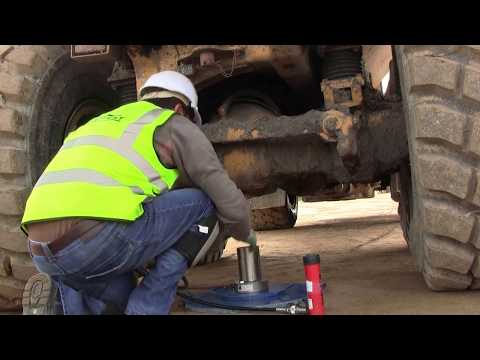
Assess ground performance under a loaded plate for pavements, earthworks and working platforms. Where a derived CBR is required, the method and interpretation must be agreed against your project specification.
Plate bearing testing →In-situ CBR, LWD & DCP
Different methods answer different questions. Tell us the specified test, the material and the stage of construction. We can help arrange the appropriate testing package without treating these results as interchangeable.
Explore ground testing →Ground conditions
What the ground here tends to do.
Winchester sits in the Itchen valley where it cuts through the Hampshire Downs, so almost every site in and around the city is on chalk or on what the river has left on top of it. On the valley sides and the higher ground, at Kings Worthy, Harestock, Badger Farm and Winnall, the chalk is close to the surface, often under a cap of Clay-with-Flints, and the dry valleys between hold head and gravelly chalk wash that is looser than the rock either side. Through the centre and the water meadows the Itchen floodplain is alluvium, peat and tufa with groundwater at shallow depth, which is soft, compressible and nothing like the chalk a few hundred metres up the hill. Where clay cover sits on chalk, solution features can open beneath it, and they are a question for the ground investigation, not something a surface bearing test will find.
Chalk is the ground to get right. The Chalk of the Hampshire Downs, the South Downs and the Isle of Wight is stiff and strong when intact and gives high plate bearing stiffness. Worked wet or over-trafficked it degrades to putty chalk, the formation is lost and the plate or CBR result collapses with it. The result depends on how the formation was treated before we arrived, so we ask when it was exposed, whether it has rained since and what has trafficked it. Flint bands complicate in situ CBR and DCP work: a plunger or cone on a flint gives a false high or a refusal, so we log those and reposition. Clay-with-Flints caps much of the downland, variable in thickness and behaviour, so a scheme can move from chalk to clay and back within a few hundred metres.
The Hampshire Basin around Southampton, Portsmouth and the Solent has London Clay, the Bracklesham and Barton beds and the Bagshot Sands, so clays and sands alternate over short distances and results swing with them. Bournemouth and the New Forest sit largely on sands and gravels of the Poole and Branksome formations, which drain well and test very differently from the chalk a few miles north; specifications there lean on density and compaction as much as CBR. Around Hastings the Hastings Beds and Weald Clay alternate too, with well known coastal landslip that needs the consultant’s view before any platform is designed. Alluvium in the Test, Itchen, Arun and Adur valleys and in the coastal harbours is soft and compressible, so port and marine crane pads are designed from the ground investigation and proved by plate tests on the platform.
Regional coverage, one schedule
Local knowledge. National reach.
Every visit is planned and reported from the Hixtra laboratory in Milton Keynes, so you get the same people, the same methods and the same reporting wherever the site is.
Check availability for your site ↗Before your visit
A little preparation.
A smoother site visit.
Send the specification
Include required methods, test locations, material details and any acceptance criteria set by your engineer.
Confirm access and reaction load
For plate bearing testing, discuss the required reaction load, safe working area and site access before booking.
Agree dates and reporting
We will confirm availability, scope and expected reporting arrangements for the work you need.
Hixtra in action
See the testing in practice.
Your questions
Your questions, answered.
Practical answers on ground conditions, choosing a test and arranging a visit in this region.
Ask us about your project →Do you cover Winchester and the surrounding towns, and is there a local office?
Yes, we cover them. We attend sites across Winchester and the villages around it, from Kings Worthy and Alresford to Twyford, Colden Common and Chandler’s Ford, and along the M3 and A34 to Eastleigh, Southampton, Andover and Basingstoke. Beyond that the same number covers the rest of Hampshire, Dorset and the Sussex coast: Portsmouth, Bournemouth and Poole, the New Forest, the Isle of Wight and east along the coast to Hastings. There is no Hixtra office in Winchester or anywhere in the region. The 01962 number rings through to the laboratory in Milton Keynes and every team travels from there. Coverage means we attend; it does not mean staff, vehicles or kit are kept locally. Soil and aggregate samples travel back to the laboratory with the team, or you can courier them.
Which tests can you carry out on a Winchester site?
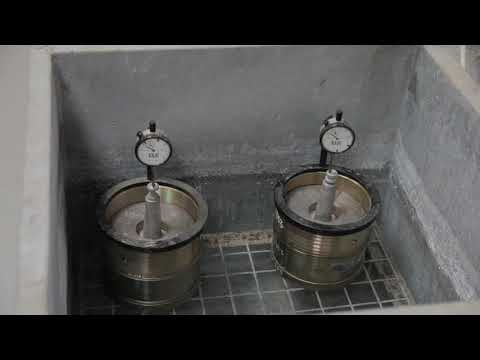
On chalk the usual requests are plate bearing testing on formations, capping and working platforms, and in-situ CBR testing on estate and highway road formations, with DCP testing where flints allow it. LWD testing is a quick way to check a compacted capping layer across a large area, and on the sands towards the coast density and compaction testing matter as much as CBR. We take soil and aggregate samples and cut concrete cores on the same visit. The laboratory in Milton Keynes runs soaked laboratory CBR, classification, compaction, chalk, chemical and aggregate tests, and concrete cube compressive strength testing on cubes made on your site. Fresh concrete testing at the pour does not reach Winchester. The full range is on the testing services page.
How quickly can you attend a site in Winchester, and how is Isle of Wight work scheduled?
Same-day and next-day dates are often available, subject to the schedule. We never guarantee an attendance time, but the south coast is a reasonable run from Milton Keynes, so dates are usually easier to find here than in the far south west or the north. The Isle of Wight is the exception. Ferry crossings have to be built into the day, so island work is planned rather than squeezed in and a same-day date there is unlikely. Give us the positions, the rig or crane loads and a preferred window and we will book the crossing around them. If you have positions on both sides of the Solent, say so and we will try to sequence them.
Why does the timing of a plate bearing or CBR test on chalk matter so much?
Because chalk only gives its good result while it is intact. The Chalk of the Hampshire Downs, the South Downs and the Isle of Wight is stiff and strong undisturbed, with high plate bearing stiffness. It is also very sensitive to remoulding. Worked wet, or run over repeatedly by dumpers and excavators, it degrades to putty chalk and the formation is lost; the plate settles far more and the CBR falls away. The test reports the state of the chalk on the day, so a formation trafficked for a week in rain will fail a specification it would have passed the day it was cut. Test soon after exposure, keep plant off the formation, protect it, and tell us the history when you book.
What do flint bands and Clay-with-Flints do to CBR and DCP results?
Flint bands run through the chalk and distort any test that pushes a small point into the ground. An in situ CBR plunger that lands on a flint reads far too high; a DCP cone on a flint gives a refusal that looks like a strong layer. Neither is the strength of the chalk. We log these, move the position and report what happened, rather than pass off a flint as ground strength. Clay-with-Flints caps much of the downland and varies in thickness and behaviour. A scheme on the tops can move from clay to chalk and back within a few hundred metres, so read the ground investigation and expect them to test differently. A plate bearing test is less affected by isolated flints than a CBR.
What is the ground like around Bournemouth, the New Forest and the Solent?
Different from the chalk a few miles north. Bournemouth and the New Forest sit largely on sands and gravels of the Poole and Branksome formations, which drain well and give consistent CBR and plate results when the moisture is controlled. Specifications on these sands are usually about density and compaction as much as bearing, so density testing often sits alongside the CBR. The Hampshire Basin around Southampton, Portsmouth and the Solent is more complicated: London Clay, the Bracklesham and Barton beds and the Bagshot Sands alternate over short distances, so a position on sand and a position on clay on the same site can give very different values. Alluvium in the coastal harbours is soft and compressible and needs treating as a separate case again.
What should I know about testing around Hastings and the Weald?
East Sussex around Hastings sits on the Hastings Beds and Weald Clay, alternating sands and clays that change over short distances, so a single test rarely characterises a site and positions need spreading across the scheme. The clays are moisture sensitive in the way any high plasticity clay is, and the sands can lose strength when wet. The coast here has well known landslip, and any crane pad, working platform or haul road near the cliff line needs the geotechnical consultant’s stability assessment before it is designed; a plate test proves the platform, it does not prove the slope beneath it. Tell us if a position is close to the coast so we can plan the reaction machine’s approach and where it can stand safely.
Plate bearing, CBR, LWD or DCP: which should I ask for on chalk and sand?
Follow the specification first, then think about the ground. On an intact chalk formation a plate bearing test is the most reliable measure and it is what platform designers ask for; an in situ CBR on chalk is possible but flints and remoulding make it more scattered. For estate and highway road subgrades the specification will usually ask for CBR, and on Clay-with-Flints or the Solent clays a laboratory soaked CBR on a sample is often the value that governs. LWD is quick for checking uniformity across a granular capping over chalk, but it is not a plate test and designers will not accept it as one. DCP is useful on the sands and on alluvium to profile strength with depth; on flinty chalk it refuses and misleads.
Which standard is plate bearing testing usually carried out to?
Plate bearing tests are usually carried out to the plate loading method described in BS 1377-9, with the plate size, load increments and maximum applied pressure set by your specification. Tell us what the result has to demonstrate and we will confirm the method before booking.
Can you do fresh concrete testing in Winchester or elsewhere in Hampshire?
No. Fresh concrete testing, meaning slump, flow and cube making at the pour, is only offered within about an hour’s drive of Milton Keynes, and that does not reach this region. Basingstoke is the closest of the towns on this page and is still beyond it on most days, so ask rather than assume; Winchester, the coast and the Isle of Wight are well outside. For pours here you will need a technician nearer to hand for the slump and the cube making. Hardened concrete is different: cubes made and cured on site can be sent to the laboratory in Milton Keynes for testing, and coring is a site visit we make anywhere in the region, island included.
Do you test hardened concrete cubes and cores from sites in this region?
Yes, throughout Hampshire, Dorset, Sussex and the Isle of Wight. The fresh concrete radius does not apply to hardened concrete. Cubes made by your team or your readymix supplier can be delivered to Milton Keynes for crushing at the ages the specification calls for, usually 7 and 28 days, with the density and failure type recorded on the report. Coring is a site visit: we cut cores from slabs, hardstandings, quay aprons and pile caps where cube results are missing or disputed, or where a designer wants the in place strength before loading. Cores go back to the laboratory for preparation and testing. If accreditation matters, ask which concrete methods are on the UKAS schedule before you book.
Do you test working platforms for piling rigs here?
Yes. Platforms in this region are usually a granular layer over chalk, over the Solent clays or over alluvium in the harbours, and each behaves differently under a rig. On chalk the platform designer often relies on the chalk itself, so the state of the formation when the platform was built matters as much as the stone on top. On alluvium the platform does the work and the subgrade strength from the ground investigation drives the design. We plate test at the positions the rig will track and stand on and report the values needed for the check, normally to the approach in BRE 470. Send the rig type, its bearing pressures and a plan of the positions with the enquiry.
Can you test crane pads for port, marine and coastal work at Portsmouth, Southampton and Poole?
Yes, and it is a regular part of the work here. Port and marine crane positions are often on reclaimed ground or alluvium behind a quay, sometimes on made ground over old dock fill, with high outrigger loads and limited standing room between the water and the live operation. We plate test each outrigger position to the bearing pressure in the lift plan and report the settlement and allowable pressure at each. A plate stresses a shallower depth than a large outrigger mat, so on soft alluvium the plate can pass while the mat loads softer ground beneath; where that is a risk we say so and a DCP at the position helps. Port sites usually need inductions and escorts, so tell us the permit process early.
Is the testing UKAS accredited?
Hixtra holds UKAS accreditation to ISO/IEC 17025 under schedule number 8996. Accreditation is granted method by method, not to the company as a whole, and it covers only the tests on the current schedule. Most of the soil and aggregate tests we run, which make up most of the chalk, sand and clay work in this region, are on it. Some concrete tests are still going through the process. So some of what we do is accredited and some is not, and it depends on the method, never on the company. If a specification for a highway scheme or a port client calls for a UKAS accredited result, name the test when you enquire and we will confirm whether that method is on the schedule before you book.
What do you need before you come out, and how do results arrive?
The site postcode and a gate location, then the specification: plate size, target bearing pressure or settlement limit, target CBR, and crane or rig loads if the test is for a platform. On chalk, tell us when the formation was exposed, whether it has rained since and what has trafficked it. Then the number of positions and a marked plan, access for the reaction machine, working hours and any induction or permit requirements, which matter at the ports. For the Isle of Wight, tell us which ferry route suits the site. Site results are normally reported the same day as a PDF with positions, load increments, settlement readings and derived values. Laboratory results follow when the test finishes.