Hixtra · LWD testing in Bristol

LWD testing in Bristol.

Lightweight deflectometer testing for Bristol sites. From housing at Filton and Hengrove to the big granular platforms at Avonmouth, an LWD checks the stiffness of a placed layer at dozens of positions in one visit, with no reaction vehicle and results the same day.

Talk to Hixtra →0117 422 8206

Same-day and next-day dates are often available for Bristol, with results normally reported the same day. Call to check availability.

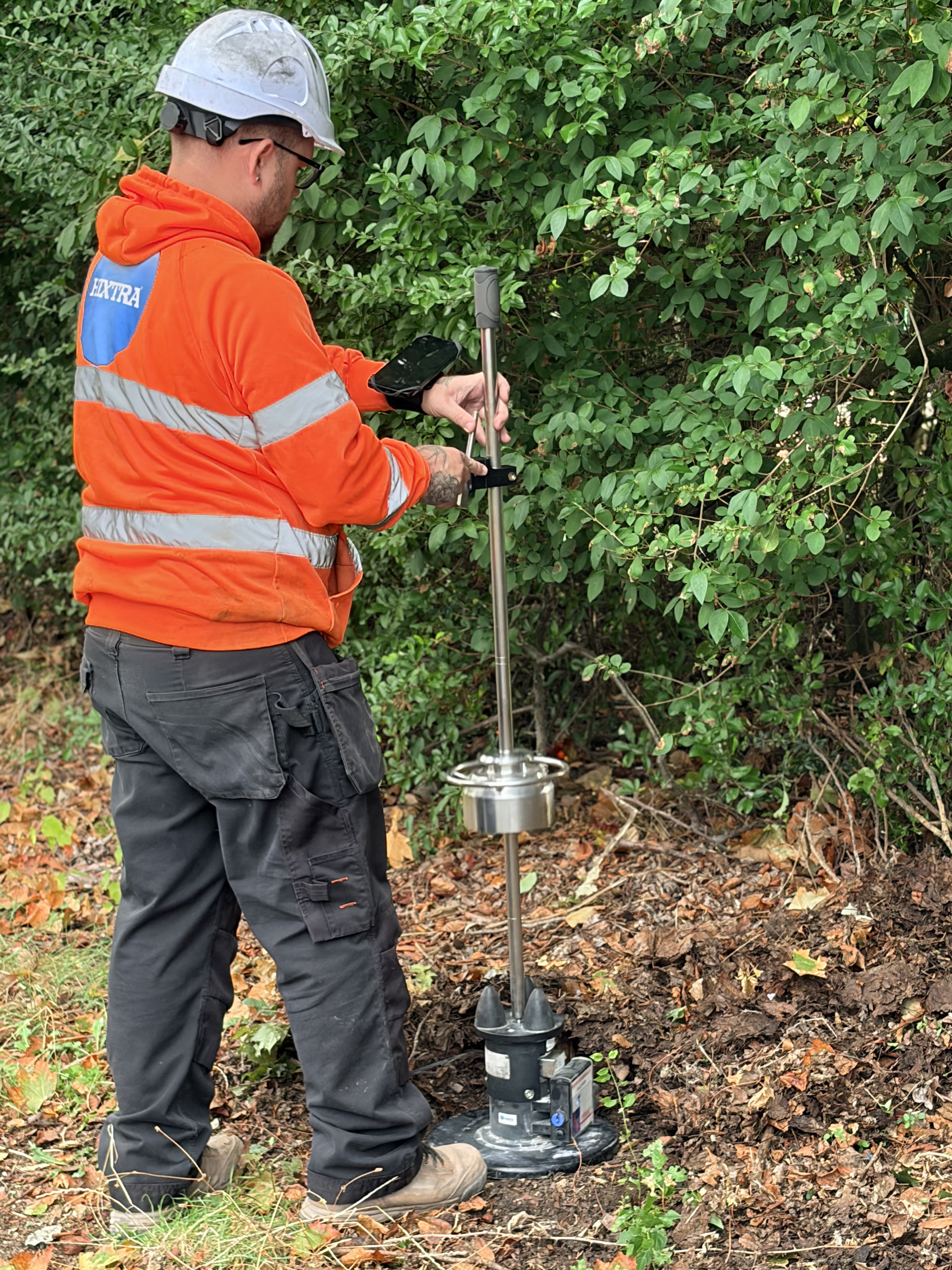
Hixtra technician carrying out a light weight deflectometer test beside a hedge

Quality, safety & professional standards

Expertise you can check.

UKAS accreditation applies to the tests listed in our accredited schedule. Ask us for the current scope before you book.

Understand our accreditation →
UKAS testing · 8996
CHAS accredited contractor
SSIP scheme assessed
AGS member

A whole platform in one visit

Minutes per test means a proper grid across a slab or platform, which suits a two hour trip.

No reaction vehicle

The equipment is hand carried, so tight harbourside plots and finished areas are testable.

Reported the same day

Results normally reach your engineer the same day as a PDF, position by position.

LWD testing in Bristol

Where an LWD earns its place on a Bristol site.

Bristol builds on almost every kind of ground, and what most sites have in common is a granular layer between the ground and the structure. An LWD is the quickest way to show that layer is stiff enough and consistent. On the estuary in particular it has limits, so it helps to know where it fits.

01 / PLACED LAYERS

Capping, sub-base and granular platforms

The LWD works best on granular layers with a real elastic response: limestone Type 1, 6F capping and engineered fill. It is used to sign off each layer across estate roads, yards and slab footprints around Bristol. Explore LWD testing →

02 / PLATE BEARING

Where a plate test is still needed

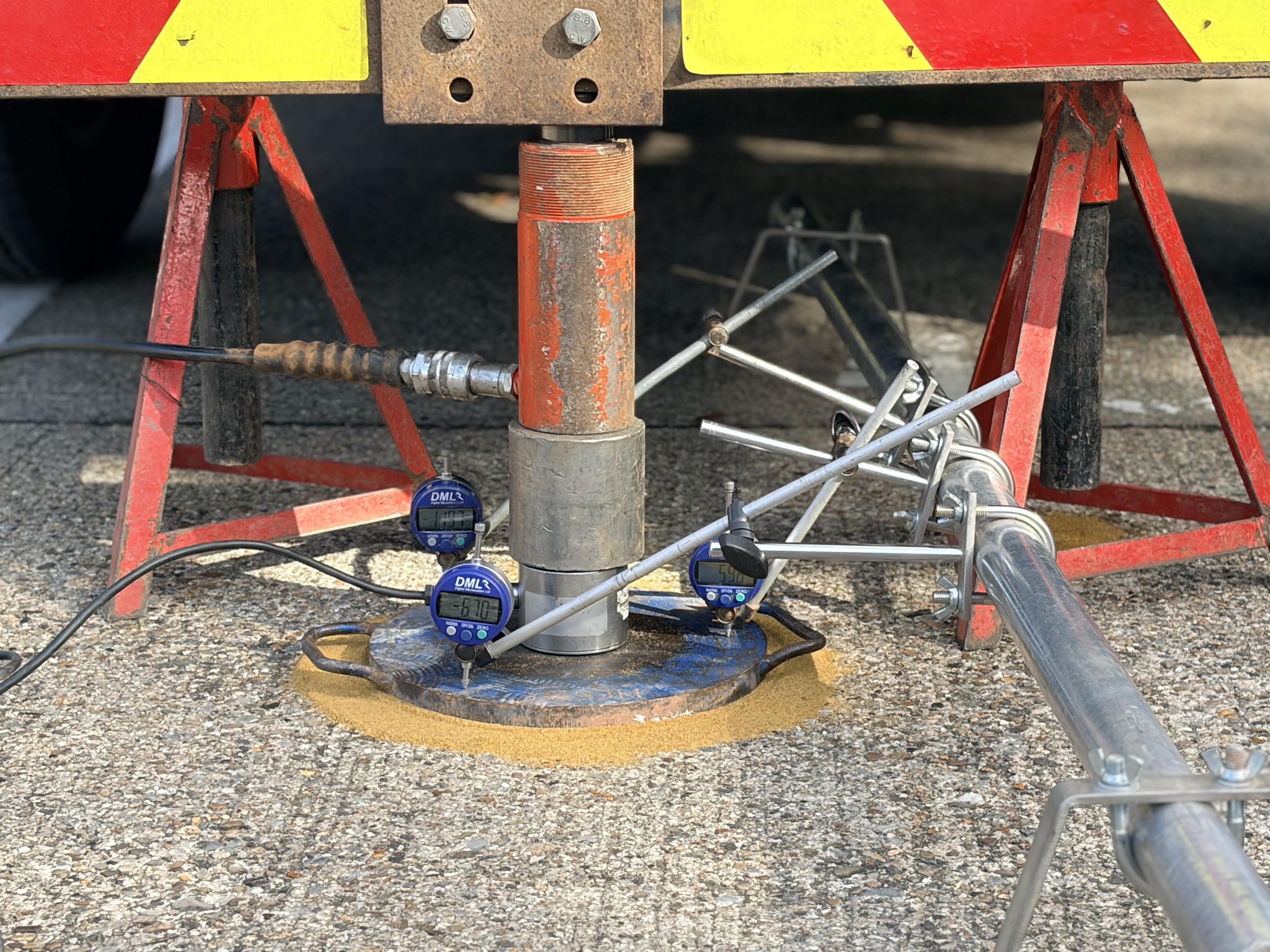
At Avonmouth and Severnside, piling platforms and crane pads are designed to a bearing pressure and proved by plate bearing. An LWD grid across the rest of the platform shows whether it matches the positions that were plate tested. Explore plate bearing testing →

03 / DCP

Looking deeper with DCP

An LWD sees only the top 300 to 450 mm. Over deep estuarine clay and peat that is nowhere near enough, so a DCP profile through the platform shows how thick it is and how soft the ground beneath it is. Explore DCP testing →

What Bristol ground means for LWD testing.

CBR testing and plate bearing testing answer different questions from an LWD, and Bristol’s ground decides which you need. At Avonmouth and Severnside the natural ground is soft estuarine clay, silt and peat. An LWD on a granular platform there reads the platform, and can read well while the soft ground beneath is untested, so it must never be the only evidence for a rig or a crane. On the Mercia Mudstone and the Lias clay around the city the method is unreliable directly on a wet clay formation, and belongs on the capping above. Where limestone is close to the surface at Clifton and on the ridges, readings on the thin cover are very high and tell you little. On the coalfield fill of Kingswood and Bedminster and the made ground by the harbour, results vary, and the speed of the LWD is what lets you map that variation.
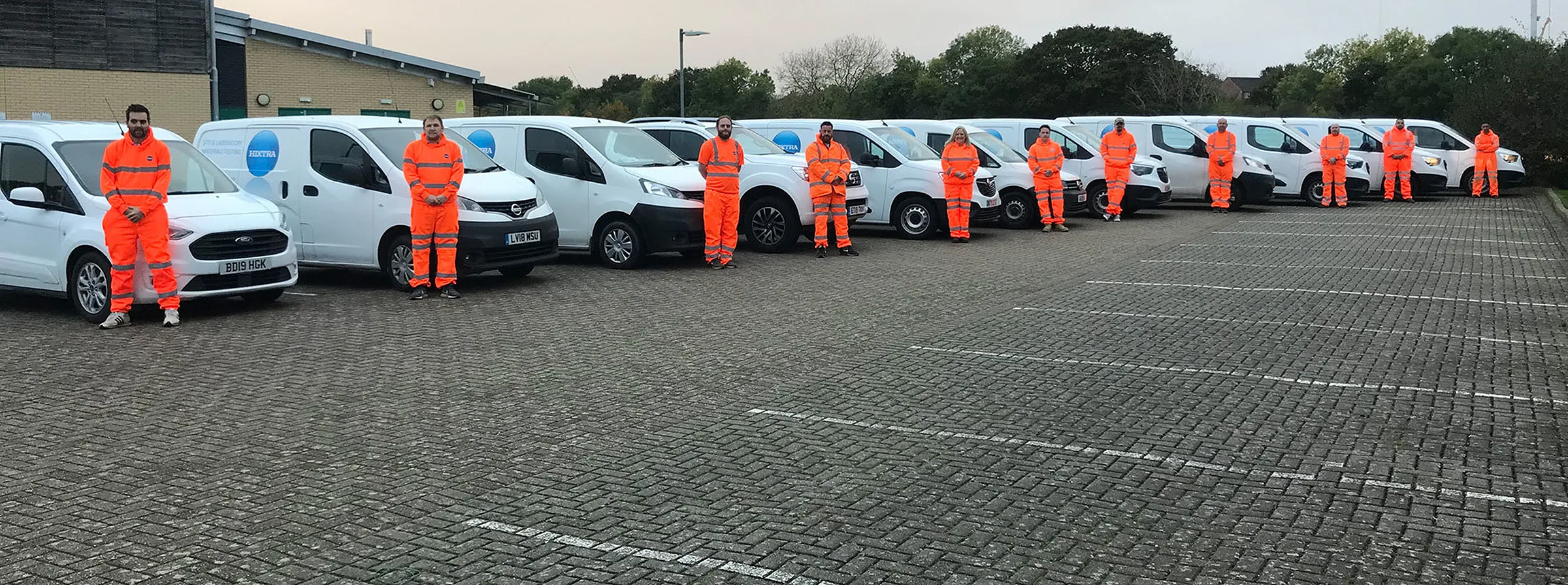
Hixtra vans and staff lined up outside
Ground testing carried out to an agreed method.Hixtra project photography.

Questions people ask

Your questions, answered.

Practical answers for planning and booking LWD testing in Bristol.

Ask us about your project →
How quickly can you carry out LWD testing in Bristol?

Same-day and next-day dates are often available, subject to the schedule, but Bristol is around two hours from our laboratory in Milton Keynes, so next-day is the realistic one. An LWD visit needs no reaction vehicle, which makes it easier to schedule than plate bearing. Ring 0117 422 8206 with the postcode and the area to be covered.

What does an LWD test measure?

A lightweight deflectometer measures how stiff the surface layer is, by dropping a known weight onto a plate and recording how far the surface deflects. A 10 kg weight falling onto a 300 mm plate is typical, with a few seating drops to bed the plate followed by measuring drops that are averaged. The result is a dynamic surface modulus in megapascals, calculated from the force applied and the deflection it produced. Each position takes a few minutes, so a large Avonmouth platform can be covered in a day.

Can I rely on LWD results for a piling platform at Avonmouth?

Not on their own. An LWD assesses roughly the top 300 to 450 mm, and a working platform on the estuary is often thicker than that, over many metres of soft clay and peat. The platform is designed from the ground investigation and proved by plate bearing at the design pressure, normally to the approach in BRE 470. LWD is a useful addition to show the platform is uniform between plate positions.

Can you use an LWD directly on Mercia Mudstone or Lias clay?

Not reliably once the clay is wet. Soft cohesive soils deform plastically and give little elastic recovery for the equipment to read, so results scatter. At formation level on these clays an in-situ CBR is the better test. Use the LWD on the capping and sub-base above, where it gives quick, repeatable readings.

What stiffness should my capping or sub-base achieve?

Your specification or designer sets it. For pavements, DMRB CD 225 defines foundation classes by surface modulus, starting at 50 MPa, and the specification says which class applies and how it must be demonstrated. For slabs and yards the engineer may set a project value. Tell us the target and the report shows every position against it.

Which standard is LWD testing carried out to?

There is no single British Standard for the lightweight deflectometer. Testing usually follows the equipment manufacturer’s procedure alongside a recognised method such as ASTM E2583. On highway schemes the requirement comes from the specification, with performance testing of pavement foundations covered by Series 800 of the Specification for Highway Works.

How deep does an LWD test assess?

Roughly one to one and a half plate diameters, so the top 300 to 450 mm with a 300 mm plate. That is the single most important thing to understand about the method in Bristol. It is a test of the layer you placed. It says nothing about estuarine clay three metres down or old workings under a coalfield site.

How many LWD tests can you do in one visit?

Dozens. Each position takes a few minutes, and because Bristol is a two hour trip each way, covering the whole area in one visit is what makes the method good value here. Send the layout and we will suggest a grid, or follow the spacing in your specification.

Can an LWD result be converted to a CBR?

It can be estimated, but dynamic stiffness and direct CBR are different measurements and the relationship depends on the material. Any conversion must be appropriate to the material and agreed for the project, and should be reported as derived. If the adopting authority wants a CBR, a CBR test is the cleaner route.

What access and preparation do you need?

Very little access, because the equipment is hand carried. The surface should be reasonably flat, even and free of loose stone so the plate seats properly. Port and energy sites at Avonmouth usually have their own induction, so allow time for it. Tell us the material, the layer thickness and what is beneath it, because that affects how the results should be read.

Is your LWD testing UKAS accredited?

Hixtra holds UKAS accreditation to ISO/IEC 17025 under schedule number 8996. Accreditation is granted method by method, not to the company as a whole, so it applies only to the tests listed on our current schedule. Ask us to confirm the accreditation status of LWD testing when you enquire, particularly if your specification requires accredited results, and we will tell you before you book.

What does LWD testing in Bristol cost?

Every visit is quoted from the site postcode, and at two hours each way travel is part of the price. The way to get value is to cover the whole area in one visit and to combine LWD with any plate bearing, CBR or sampling you need. Send the postcode, the area to be tested and a firm ready date and we will quote.

Do you have an office in Bristol?

No. Hixtra has one laboratory, in Milton Keynes, and every Bristol visit is run from there. The 0117 number rings through to the same team as our other numbers, and we keep no staff or depot in the city. Book with a firm ready date so the trip is not wasted.

Hixtra in action

See the testing in practice.

Explore our films →
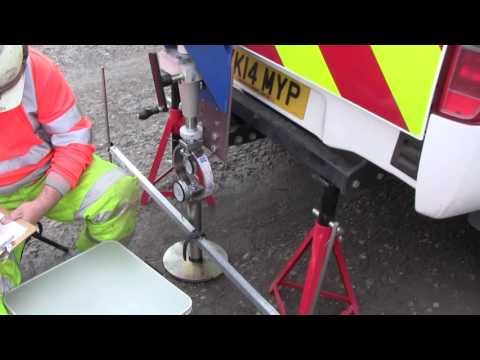
In-situ CBR testing — Hixtra's original filmWatch the film

In-situ CBR testing

See how bearing strength is tested directly on site.

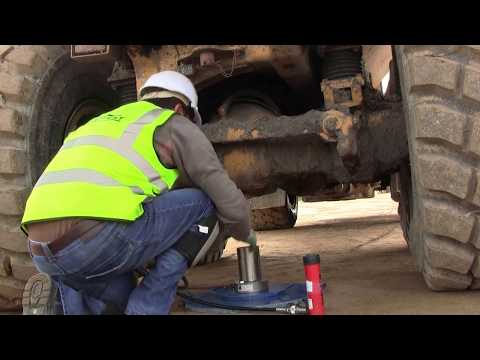
Plate bearing testing — Hixtra's original filmWatch the film

Plate bearing testing

Watch a plate bearing test being carried out on prepared ground.

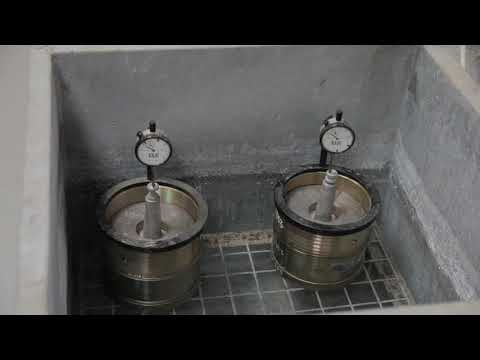
Soaked laboratory CBR testing — Hixtra's original filmWatch the film

Soaked laboratory CBR testing

Follow the laboratory process used to assess a prepared soil specimen.

In our customers’ words

A reputation built
on the work we do.

Trustpilot 4.8 / 5 ↑

Independent feedback from the people we work with.

★★★★★

Lee ChippingtonTrustpilot · September 2026

Read the full review →
★★★★★

terry heatherTrustpilot · August 2026

Read the full review →