November 16, 2026
In-situ vs laboratory CBR: when you need both
In-situ and laboratory CBR answer different questions. This guide shows how to read the specification, plan each route into the programme and book both as one job when the design needs it.
Practical testing. Experienced people. A service built around your project.
A formation's about to be opened for a new pavement. The specification asks for a CBR, and nobody's said whether that means a site test or a laboratory one. That's the in-situ vs laboratory CBR question, and it's best settled before anything is booked.
Short answer: they answer different questions. The specification decides which you need. Sometimes it's both.
Key takeaways
- One test can't stand in for the other, because each answers a different question.
- Your specification sets the test conditions and the reported value.
- A soaked test adds at least four days for the soak and can't be hurried, so get the sample in early.
- If you need the formation as found and the wettest likely condition, put both in one enquiry.
Start with what the specification asks for
The three kinds of CBR, in-situ, laboratory and derived, aren't interchangeable. Which one fits depends on the material, on access, and on what the result is for.
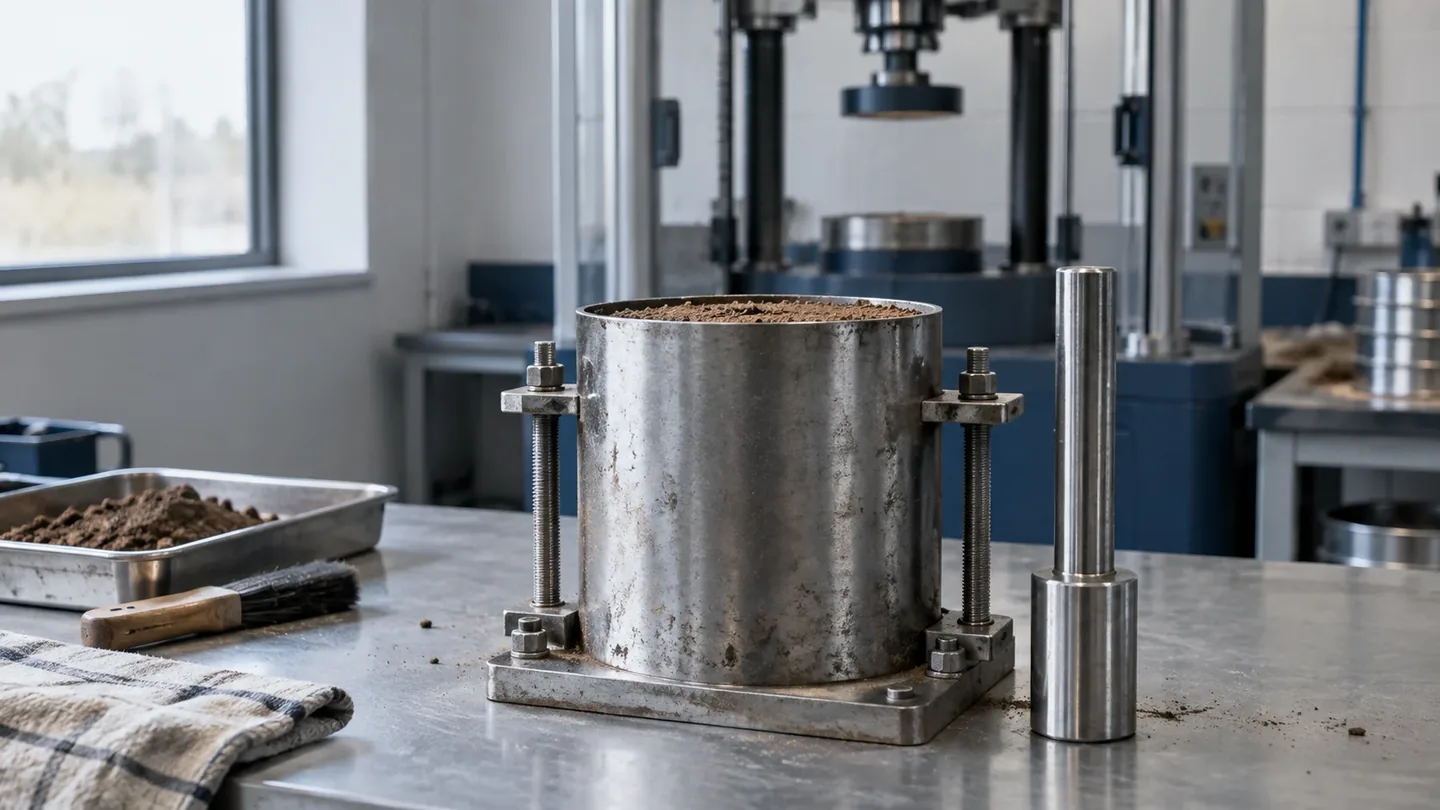
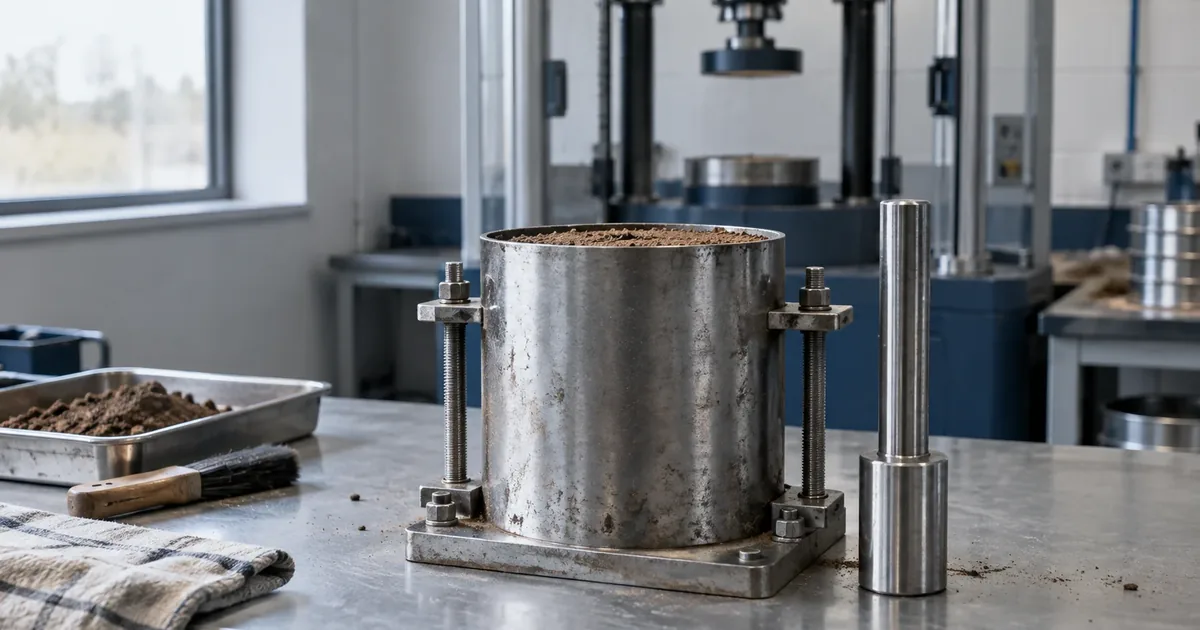
A laboratory CBR tests a specimen remoulded to a chosen density and moisture, so it tells you what the material can do in that set state. An in-situ CBR takes the ground as it was on the day, with whatever compaction and moisture it had. Your specification fixes the compaction, the surcharge, whether there's a soak and which value gets reported. If it's silent, the laboratory condition follows the use the result will be put to.
Each method is set out under in-situ CBR testing and laboratory CBR testing.
What each route asks of your programme
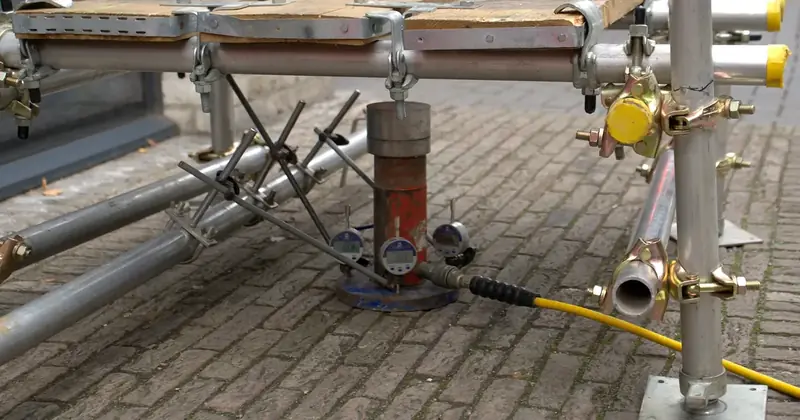
Site testing happens at the level the design relates to. Often that means digging down to formation first. Let us know whether a vehicle can get to the positions on open ground or whether trial holes are needed, since that changes the time on site and can rule the method out. Most of the site day normally goes on moving between positions, digging trial holes and waiting for plant to clear, not on the tests themselves.
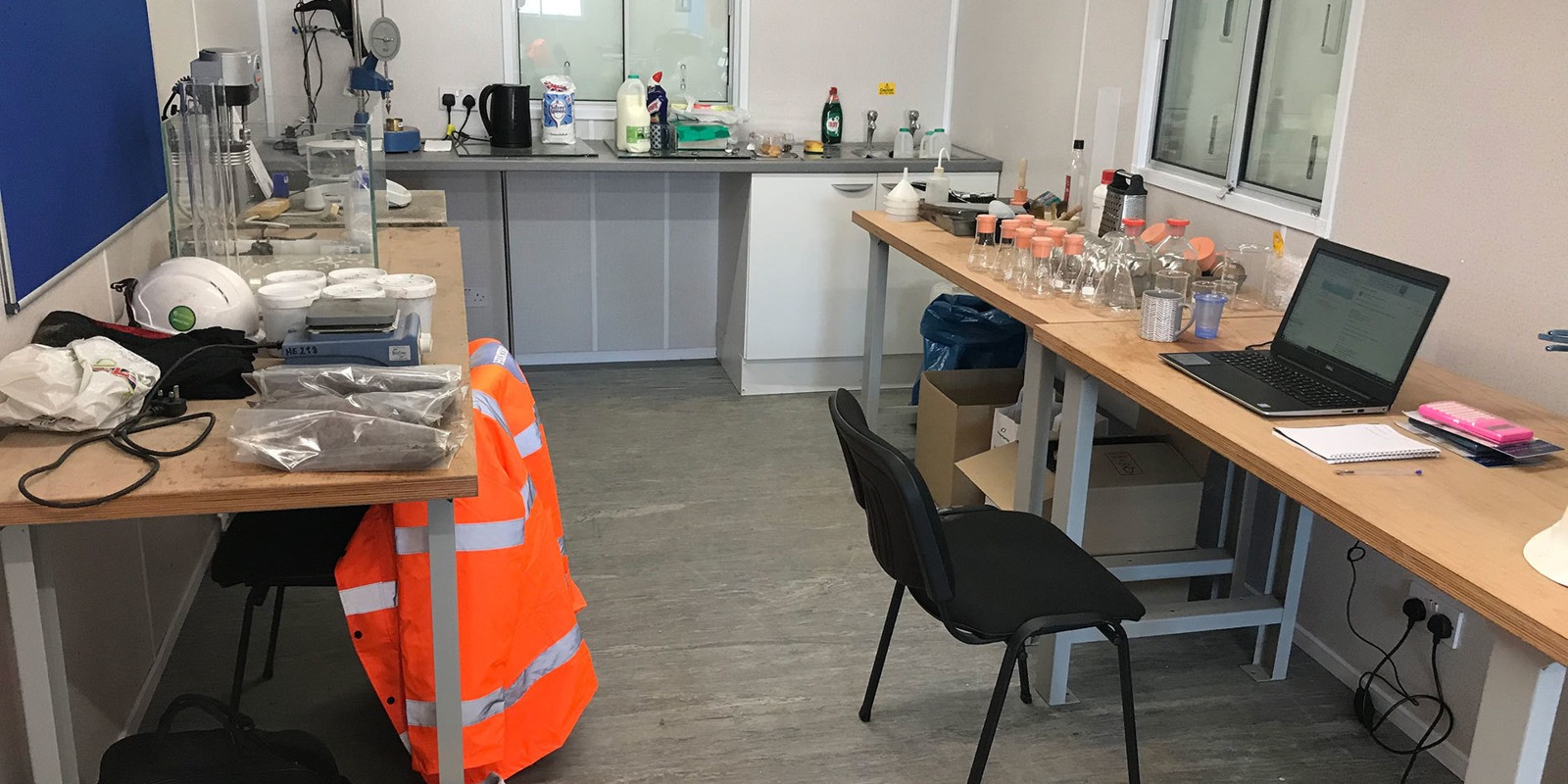
The laboratory route starts with material, not a visit. Ask us how much material we need first, because a laboratory CBR needs a good deal more than a classification test. Send it sealed and at its natural moisture content rather than dried out, with the sample reference and depth on the container.
Soaking is only carried out where the specification calls for it. When it is, the specimen normally sits under water for four days, and nothing speeds that up. Building a compaction curve, or bringing the material to a target moisture content beforehand, adds more time. Unsoaked work moves faster. If the material turns up at the right moisture content, it can be prepared and tested quickly. We confirm the expected timing before the work is booked.
What each result gives your designer
From the site test, you get a value for each position, backed by its load and penetration data. Read those figures against the moisture condition and the compaction records, since the result shows the ground as found.
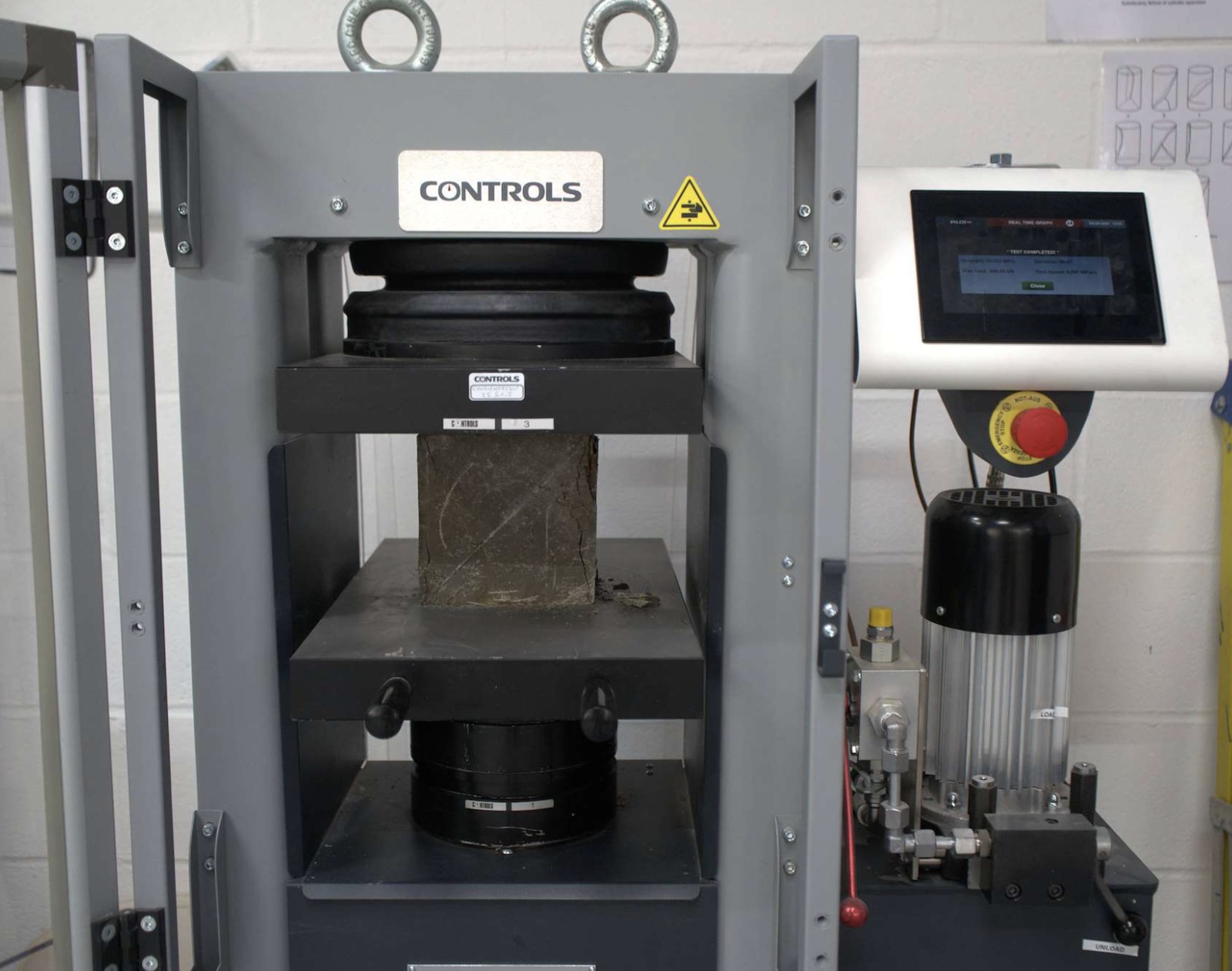
The laboratory report sets out the CBR for each end tested alongside the load and penetration data. It also records how the specimen was made up and tested, so you'll see its dry density, moisture content, compaction method and surcharge. For a soaked specimen, the report adds the soaking period and the swell measured. Where swell matters for its own sake, swelling and soaking tests deal with it directly.
An undisturbed sample, taken in a CBR mould or a tube that can be trimmed into one, can be tested as received rather than remoulded. That tells you about the material in the state it was actually in. It helps for an existing formation, but it tells you nothing about how the material will behave once it's dug out, placed and recompacted. That's why most design work uses remoulded specimens.
So the two numbers won't match. Neither result is wrong.
When you don't need both
Often one test does the job. If the specification only wants the existing formation as found, in-situ testing is enough, provided the ground suits it. In-situ CBR is best suited to clays, silts, sands and fine gravels, and material containing particles larger than about 20 mm is generally unsuitable.
If the material is fill that'll be excavated and recompacted later, there's nothing finished to test yet. The laboratory covers it alone. Remoulded CBR runs perfectly well on disturbed bulk samples.
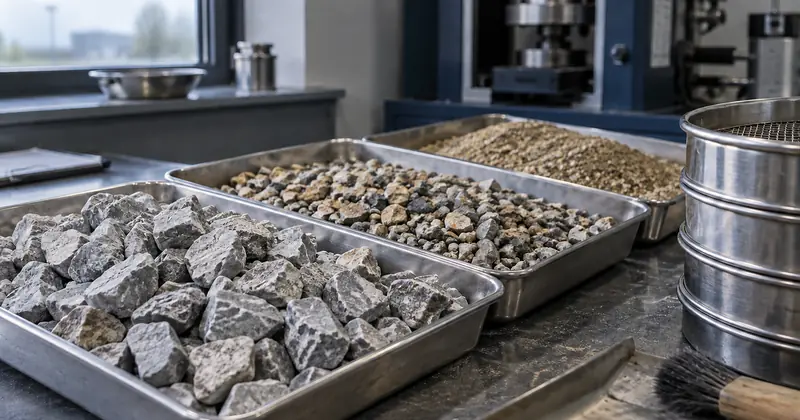
A laboratory CBR has a 20 mm rule too. It covers material passing a 20 mm sieve and isn't applicable where more than about a quarter of the sample is retained on it, so ask us which test fits before sampling. Our CBR testing guide sets the options out.
When you need both, and how to plan it as one job
Book both when the designer needs two answers. One is the formation as it stands. Any result reflects the material's condition on the day of the test. The other is an allowance for the wettest likely condition, which is normally dealt with in the laboratory, not by waiting for a dry day. No single test can cover both.
Ask for moisture content testing at the test position as well. Then the result can be read against the material's natural and optimum moisture contents.
Check the paperwork too, before you book. Accreditation is specific to the listed methods and scope rather than to everything we do, and a method can be listed for laboratory work but not for site work, or the other way round. If your specification calls for it, say so for both halves of the job when you enquire, so we can check the site method and the laboratory method separately.
Then plan it as one job. If we're already on site for the in-situ positions, the bulk sample for the laboratory work can be collected as part of that visit. Send the material type, test specification, sample references and required dates. Say which soaking conditions you need.
Frequently asked questions
We already have a soaked laboratory CBR. Do we still need in-situ tests?
That depends on the specification, so check with the designer before dropping the site test. They measure different things. Your soaked result describes the material in a defined, remoulded state, while an in-situ test describes the formation exactly as it is on the day, compaction, moisture and all.
Can the soak be shortened to suit the programme?
No. A soaked test adds at least the four day soak, and it sets its own pace. Get the sample to us early.
Can one sample give us both soaked and unsoaked results?
Possibly. Several specimens can be prepared across a moisture range where the design needs it. Agree soaked, unsoaked or both with the designer before sampling, and tell us when you book.
Is the in-situ method accredited the same way as the laboratory test?
Not necessarily. Each method is listed, or not, on its own terms. Treat the site test and the laboratory test as two separate checks. Ask us to confirm the accreditation status of each test before booking.
More from Hixtra.
Practical testing guidance and project updates from our team.
All news & projects →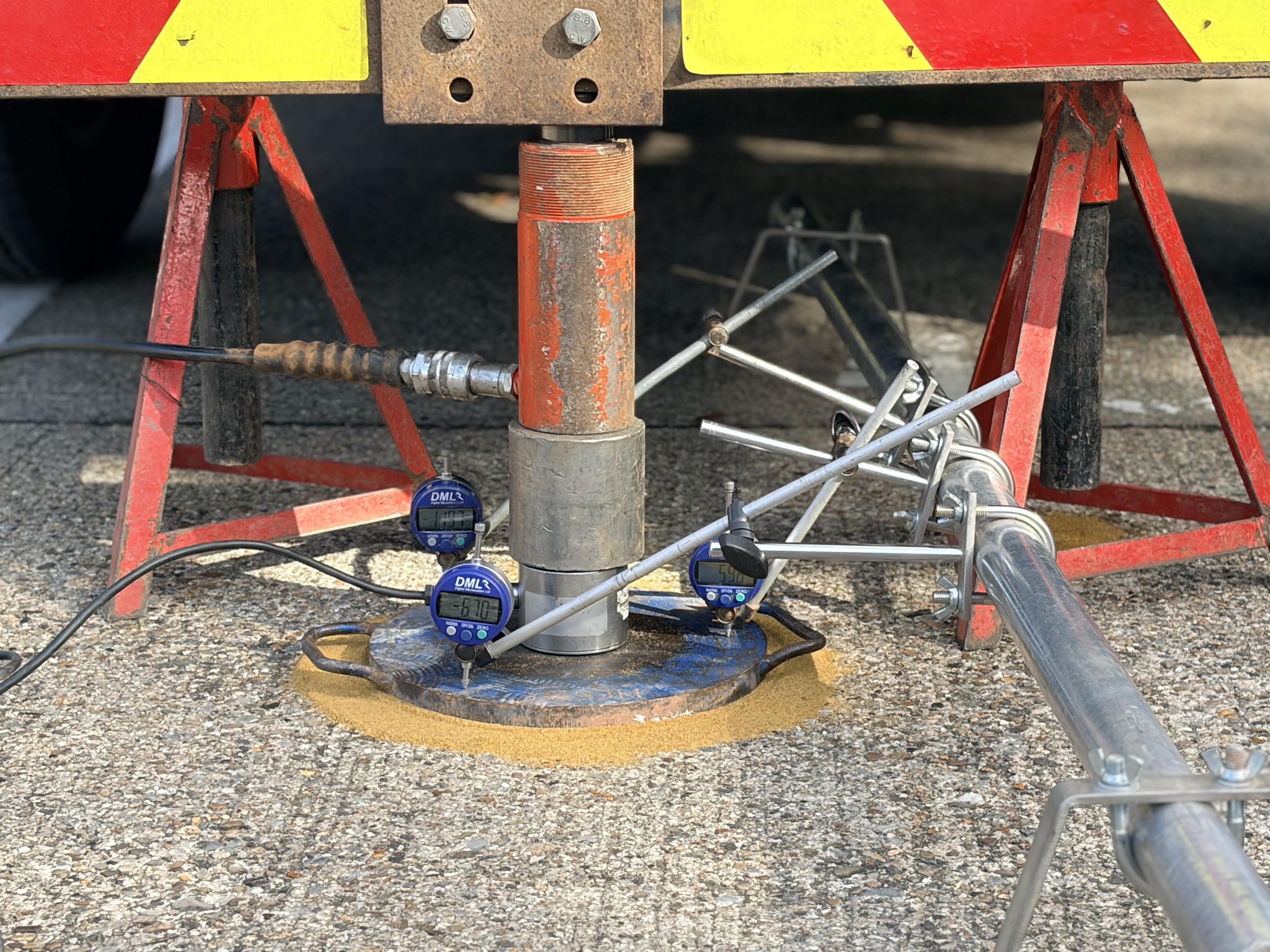
Testing support across England & Wales
Testing arranged around your programme.
Tell us the specification, the number of test positions and your dates. We confirm what is needed and when we can attend before the work is booked.
Check availability for your site →