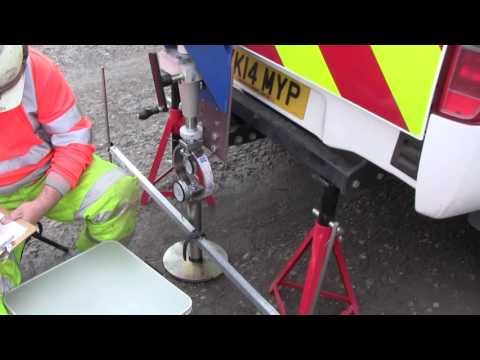
 Watch the film
CBR & plate bearing testing
Nottingham
Plate bearing, CBR and LWD testing in Nottingham, plus concrete cube, soil and aggregate testing at our laboratory. Call 0115 786 5656 to check dates.
On your site. On your side.
Same-day and next-day testing dates are often available. Call to check dates for your location and test requirements.
Quality, safety & professional standards
Expertise you can check.
UKAS accreditation applies to the tests listed in our accredited schedule.
View our credentials ↗

Experienced people
Technical knowledge, with practical advice.
National coverage
Testing support wherever your project takes you.
A responsive service
Clear arrangements, from enquiry to reporting.
Your regional contact
Local project details.
National testing expertise.
Same-day and next-day testing dates are available. Call your regional number to check dates for your location and test requirements. Site visits are coordinated centrally by Hixtra.
Areas served
Derby, Leicester, Loughborough, Mansfield, Newark, Grantham and Lincoln
Send your site postcode so we can confirm travel, access and availability. Coverage does not imply a permanent office in each town.
Local projects
The work we are called out to do here.
Around Nottingham the calls are mostly for CBR testing on estate roads for the housing sites on the edge of the city, at Clifton, Edwalton, Gedling, Hucknall and out towards Bingham, and for plate bearing tests on working platforms before a piling rig arrives. The M1 corridor from junction 24 to junction 28, the A453 and the area around East Midlands Airport carry a steady run of distribution sheds, where we test formation and capping for yards and floor slabs and prove crane hardstandings for the steel frame. In the city centre and along the Trent the work shifts to brownfield plots: former factory, rail and colliery land where the fill history is uncertain and the platform has to be proved in its own right. Callers are groundworks and piling contractors, crane operators and their consultants.
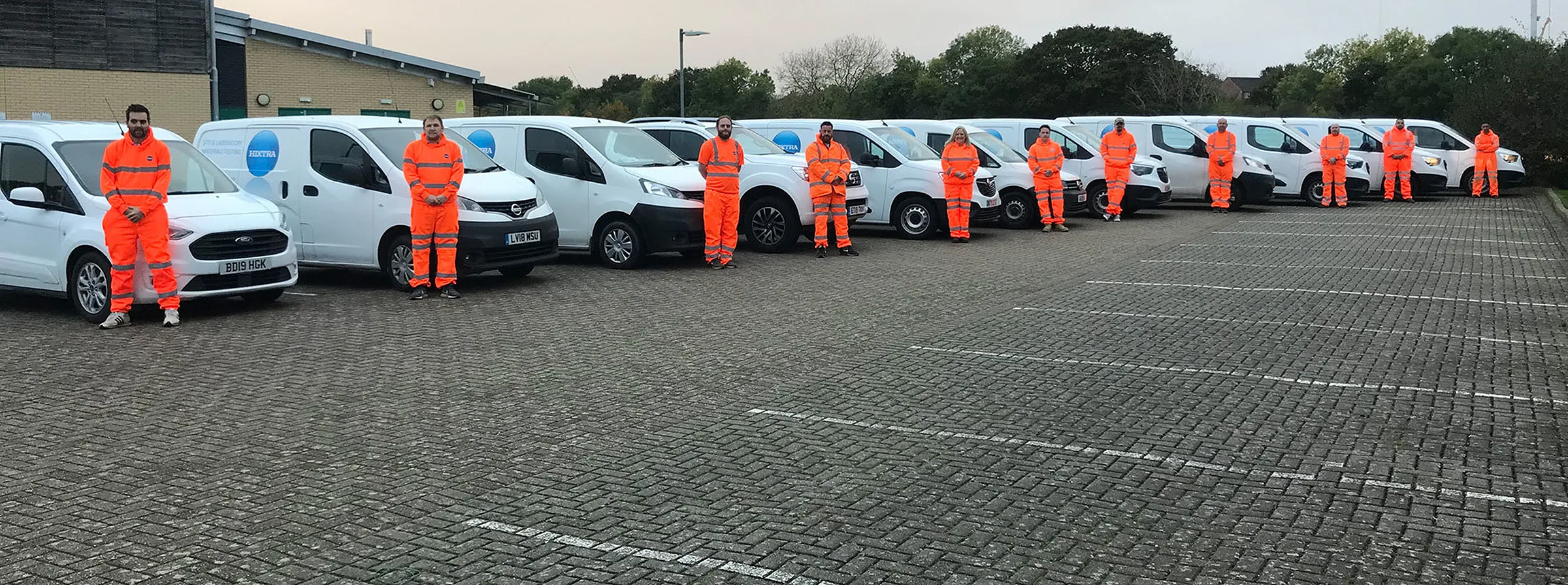
Every team travels from the Hixtra laboratory in Milton Keynes. Nottingham is about an hour and a half up the M1, with Derby, Leicester and Loughborough a similar run or shorter, so same-day and next-day dates are often available, subject to the schedule. Fresh concrete testing, meaning slump, flow and cube making at the pour, is only offered within about an hour’s drive of the laboratory, which does not reach Nottingham. Cube testing, coring and the full range of soil and aggregate laboratory testing are available for any Nottingham site, because the samples come to the laboratory. Call 0115 786 5656 with your site postcode for a quote.
Choose the right method
Ground testing that matches your specification.
Tell us the site conditions and what your specification requires. We can help you choose between direct CBR, plate bearing and other suitable ground-testing methods.
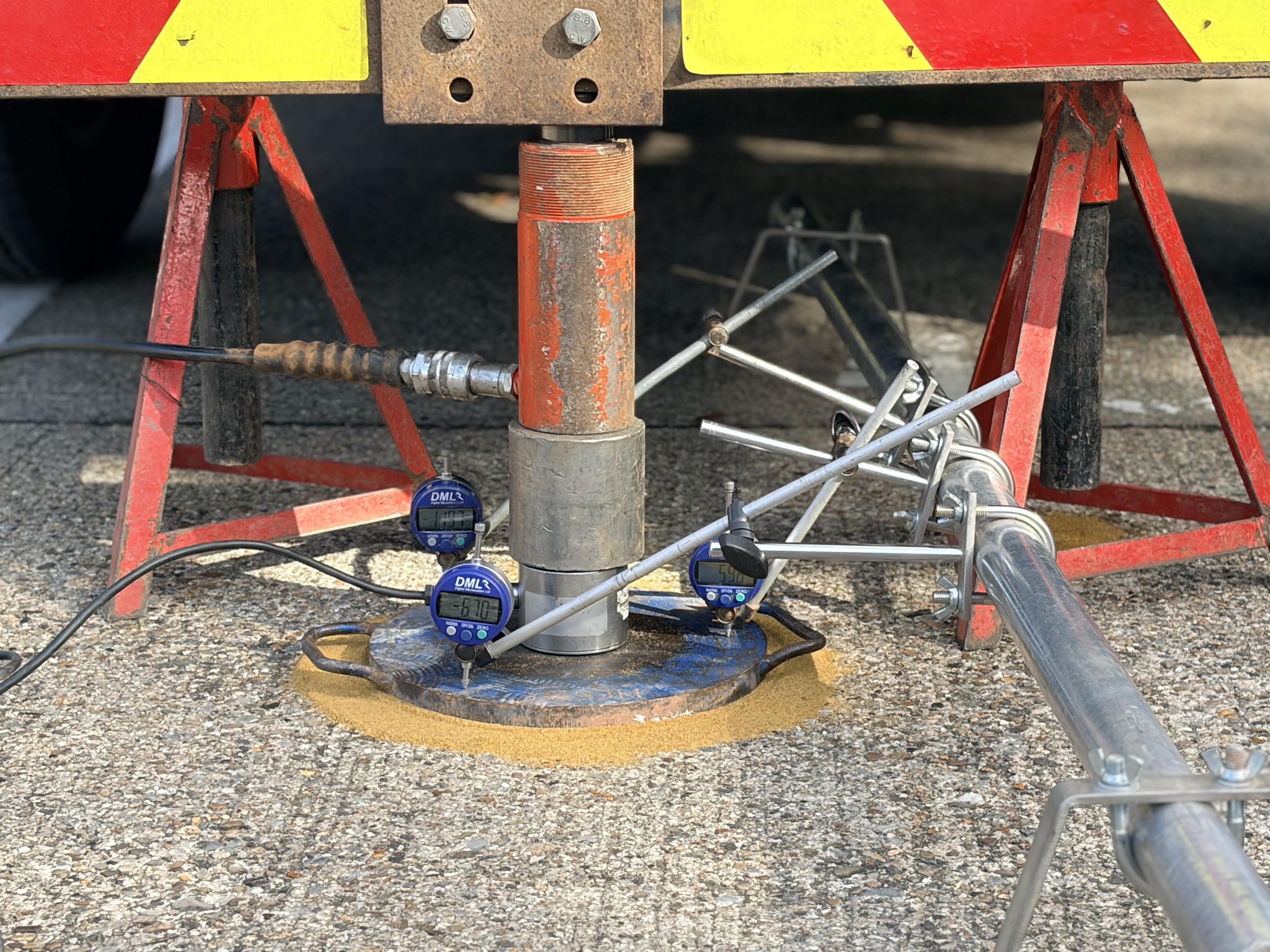
Plate bearing & derived CBR
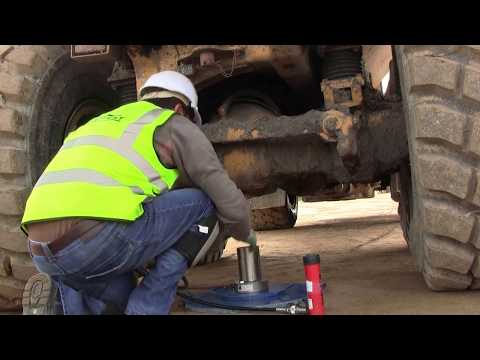
Assess ground performance under a loaded plate for pavements, earthworks and working platforms. Where a derived CBR is required, the method and interpretation must be agreed against your project specification.
Plate bearing testing →In-situ CBR, LWD & DCP
Different methods answer different questions. Tell us the specified test, the material and the stage of construction. We can help arrange the appropriate testing package without treating these results as interchangeable.
Explore ground testing →Ground conditions
What the ground here tends to do.
Nottingham sits on a geological join, and which side of it your site is on decides what a test returns. The city centre, the Castle, Lenton, Radford and the ground north towards Arnold are on Sherwood Sandstone: a weak, free-draining sandstone that gives good, steady CBR and plate bearing values and changes little with the weather. It is also soft enough to have been cut by hand for centuries, so the city is riddled with caves, cellars and old rock-cut stores. A bearing test describes the surface it is carried out on, not a void a few metres below it, so on a city centre plot the cave records are read before the platform is designed.
East and south of that line, through Mapperley, Carlton, Gedling, West Bridgford, Clifton and Ruddington, the ground is Mercia Mudstone. It weathers to a firm red clay that trims well in a dry week and softens quickly once it is wet and trafficked, so a formation CBR taken on Friday may not describe the same formation on Monday. South of the Trent towards Gotham, East Leake and Newark the mudstone carries gypsum, which matters twice: sulfate levels need checking before any lime or cement stabilisation, and again for buried concrete.
The Trent valley through Beeston, Colwick, Holme Pierrepont and Netherfield is alluvium over sand and gravel, with a high water table and a long history of gravel working. Many of the old pits have been backfilled, and results on that fill scatter from one position to the next. West and north west of the city, around Wollaton, Bilborough, Eastwood, Ilkeston and Hucknall, the Coal Measures bring shallow old workings, colliery spoil and opencast backfill, and much of it falls inside the Coal Authority development high risk area. North through Bulwell to Mansfield the Magnesian Limestone gives the firmest natural ground in the area.
Regional coverage, one schedule
Local knowledge. National reach.
Every visit is planned and reported from the Hixtra laboratory in Milton Keynes, so you get the same people, the same methods and the same reporting wherever the site is.
Check availability for your site ↗Before your visit
A little preparation.
A smoother site visit.
Send the specification
Include required methods, test locations, material details and any acceptance criteria set by your engineer.
Confirm access and reaction load
For plate bearing testing, discuss the required reaction load, safe working area and site access before booking.
Agree dates and reporting
We will confirm availability, scope and expected reporting arrangements for the work you need.
Hixtra in action
See the testing in practice.
Your questions
Your questions, answered.
Practical answers on ground conditions, choosing a test and arranging a visit in this region.
Ask us about your project →Do you cover Nottingham and the surrounding towns?
Yes. We attend sites across the city and its suburbs, from Bulwell, Arnold and Hucknall in the north to West Bridgford, Clifton and Ruddington in the south, and east and west to Carlton, Gedling, Beeston, Stapleford and Long Eaton. Beyond the city we cover Derby, Leicester, Loughborough, Mansfield, Newark, Grantham and Lincoln, and the M1, A52, A46 and A453 corridors between them. Every visit is run from our laboratory in Milton Keynes and there is no line on the map where coverage stops; if your site is in England or Wales we will attend. Send the site postcode and we will confirm a date and a price for that address.
Which tests can you carry out on a Nottingham site?
On site we carry out in-situ CBR testing, plate bearing testing, LWD testing, DCP testing and density and compaction testing, for road formations, capping, sub-base, working platforms and crane hardstandings. We also take soil and aggregate samples and cut concrete cores. Back at the laboratory we run soaked laboratory CBR, classification, compaction, chemical and aggregate testing, and concrete cube compressive strength testing on cubes made on your site. The only service that does not reach Nottingham is fresh concrete testing at the pour, which is limited to about an hour’s drive of Milton Keynes. The full list is on the testing services page.
How quickly can you attend a site in Nottingham?
Same-day and next-day dates are often available, subject to the schedule, and we do not guarantee an attendance time. Nottingham is about an hour and a half from the laboratory by the M1, which is a comfortable day trip with several test positions, so it is one of the easier cities for us to fit in at short notice. Derby, Loughborough and Leicester are a similar run or shorter. Newark, Lincoln and Mansfield are further and are usually planned a day or two ahead, grouped with other work where we can. If a rig or a crane is standing waiting, say so when you ring and we will look at what can be moved.
What is the ground like in Nottingham and what does it do to a test result?
It depends which side of the city you are on. The centre, Lenton, Radford and the north of the city are on Sherwood Sandstone, which drains freely and gives good, consistent CBR and plate bearing values. Mapperley, Carlton, Gedling, West Bridgford and Clifton are on Mercia Mudstone, which weathers to a red clay that is sound when dry and weak once wet and trafficked, so results move with the weather and with how long the formation has stood open. Along the Trent the ground is alluvium over sand and gravel with water close to the surface. West towards Eastwood and Ilkeston it is Coal Measures with spoil and old workings. Expect steady results on the sandstone, seasonal swings on the mudstone and scatter on anything filled.
Does a plate bearing or CBR test tell me anything about Nottingham’s caves or old mine workings?
No, and it is worth being clear about that. A plate bearing test stresses the ground to a depth of roughly one and a half to two plate diameters, and a CBR plunger much less, so both describe the surface layer and the material just beneath it. Neither will find a sandstone cave under a city centre plot or a shallow coal working under a site in Bilborough or Eastwood. Those are questions for the desk study, the city’s cave records, the Coal Authority mining report and the ground investigation. Our testing sits alongside that work: once the designer is satisfied about what lies below, we prove that the platform or formation at the surface does what the design assumes.
Why does the gypsum in the Mercia Mudstone matter?
Because sulfate causes two separate problems. South and east of Nottingham, towards Gotham, East Leake, Cropwell Bishop and Newark, the Mercia Mudstone contains bands and veins of gypsum. If a clay with a high sulfate content is stabilised with lime or cement, the reaction can form expansive minerals and the treated layer heaves, sometimes months after it passed its tests. The same sulfate attacks buried concrete if the mix has not been designed for it. Both are avoided by testing first. We run sulfate and related chemical tests on samples from formation level in the laboratory, and the results go to the designer before a binder or a concrete class is chosen. Ask for it early, because the chemistry takes longer than a site test.
Plate bearing, CBR, LWD or DCP: which should I ask for on Nottingham ground?
Follow the specification first. Working platforms for piling rigs and crane hardstandings almost always call for plate bearing, because the designer’s check is written around that value. Estate road and yard formations want CBR: in situ at formation on the sandstone and the mudstone, with a soaked laboratory CBR where the mudstone needs a design value for the wet case. LWD is a fast way to check that a capping or sub-base layer is uniform across a large shed slab, but most designers will not accept it in place of a plate test. DCP profiles strength with depth and is the tool for backfilled gravel pits and colliery fill, where the question is what sits under the surface crust. Tell us what the specification asks for and we will match the test to it.
Which standard is plate bearing testing usually carried out to?
Plate bearing tests are usually carried out to the plate loading method described in BS 1377-9, with the plate size, load increments and maximum applied pressure set by your specification. Tell us what the result has to demonstrate and we will confirm the method before booking.
Can you do fresh concrete testing, slump and cube making, in Nottingham?
No. Slump, flow and cube making are done by our own technicians at the pour, and we only offer that within about an hour’s drive of the laboratory in Milton Keynes. Nottingham, Derby, Mansfield, Newark and Lincoln are all outside that distance. Sites at the southern end of the area, towards Leicester and Market Harborough, are on the margin, so send the postcode and we will confirm either way. If your own team or your readymix supplier makes the cubes, we can still test them, and we can core hardened concrete anywhere in England and Wales.
Do you test concrete cubes and take cores from Nottingham sites?
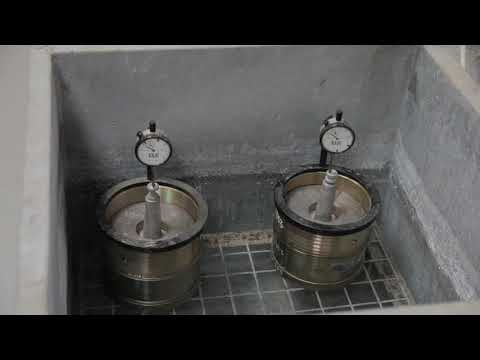
Yes. Cubes made on site by your team or your supplier can be delivered or couriered to the laboratory in Milton Keynes, or collected while we are attending for other work if you tell us when you book. They are cured in a controlled tank and crushed at the ages your specification asks for, usually 7 and 28 days, and the result is reported as soon as the test is done. Coring is a site visit: we cut cores from slabs, walls and hardstandings where cube results are missing or disputed, or where a designer wants the in place strength of an existing floor. Cores go back to the laboratory for preparation and testing. Not every concrete method is on our UKAS schedule yet, so ask about the specific test if accreditation matters.
Do you test working platforms for piling rigs in Nottingham?
Yes. Around Nottingham a piling platform is usually a granular layer over Mercia Mudstone, over Trent valley alluvium, or over made ground on a former industrial plot, and each behaves differently. We run plate bearing tests at the positions the rig will track and stand on, load to the design bearing pressure and report settlement against it, normally to the approach in BRE 470, so the working platform certificate can be signed. Send the platform design, the rig and its loadings before the visit. On the Trent alluvium and on backfilled pits a passing plate result does not prove the soft material below the platform, so we say so in the report, and a DCP profile alongside the plate is worth having.
Can you test a crane hardstanding or outrigger pad in Nottingham?
Yes. Most of the crane work here is mobile crane lifts for steel frames on distribution sheds along the M1 and A453, and tower crane bases and hardstandings on city centre and student accommodation schemes. We plate test each outrigger position to the bearing pressure in the lift plan and report settlement and the pressure achieved at each one. A plate is much smaller than an outrigger mat, so it stresses a shallower depth; on a thin stone layer over wet mudstone or over fill, the plate can pass while the mat loads something softer beneath. Where that is a risk we say so, and a DCP at the position helps. Send the lift plan with the enquiry, and the second set of positions if the crane moves.
Is Hixtra UKAS accredited?
Hixtra holds UKAS accreditation to ISO/IEC 17025 under schedule number 8996. Accreditation is granted method by method, not to the company as a whole, so it applies only to the tests listed on our current schedule. Most of our soil and aggregate tests are accredited. Some concrete tests are still going through the accreditation process. If your specification or your client’s engineer requires accredited results for a particular test, name the test when you enquire and we will confirm whether that method is on the schedule and whether the report will carry the UKAS mark. We would rather you asked than assumed.
What do you need from me before the visit, and how are results reported?
The site postcode and gate location first, because they fix the quote and the route. Then the tests required and the specification clause or design they relate to: plate size, target bearing pressure or settlement limit, target CBR, and the rig or crane loads if the test is for a platform. After that, the number of positions on a marked plan, the surface we will be testing on, access for the reaction machine, working hours and any induction or RAMS requirements. If the site is on former colliery land or a filled gravel pit, say so and send the ground investigation if there is one. Site results are normally reported the same day as a PDF by email. Laboratory results follow when the test finishes, so a 28 day cube result arrives at 28 days.
Do you have an office in Nottingham?
No. Hixtra has one laboratory, in Milton Keynes, and every Nottingham visit is run from there. We do not keep a depot, vehicles or locally based staff in Nottingham, Derby, Leicester or anywhere else in the East Midlands. The 0115 number on this page rings through to the same team as our other numbers. In practice the M1 makes the lack of a local office a small thing: the run is well inside a normal working day, and we can often combine a Nottingham visit with work in Derby, Loughborough or Leicester on the same trip. Send the site postcode and every quote is priced for that address.