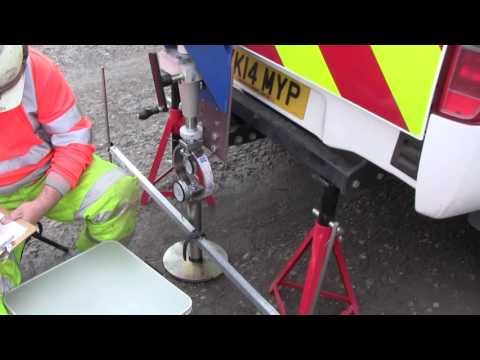
 Watch the film
CBR & plate bearing testing
North East
CBR and plate bearing testing in the North East, from Hull and York to Newcastle and Teesside. Same-day and next-day dates often available.
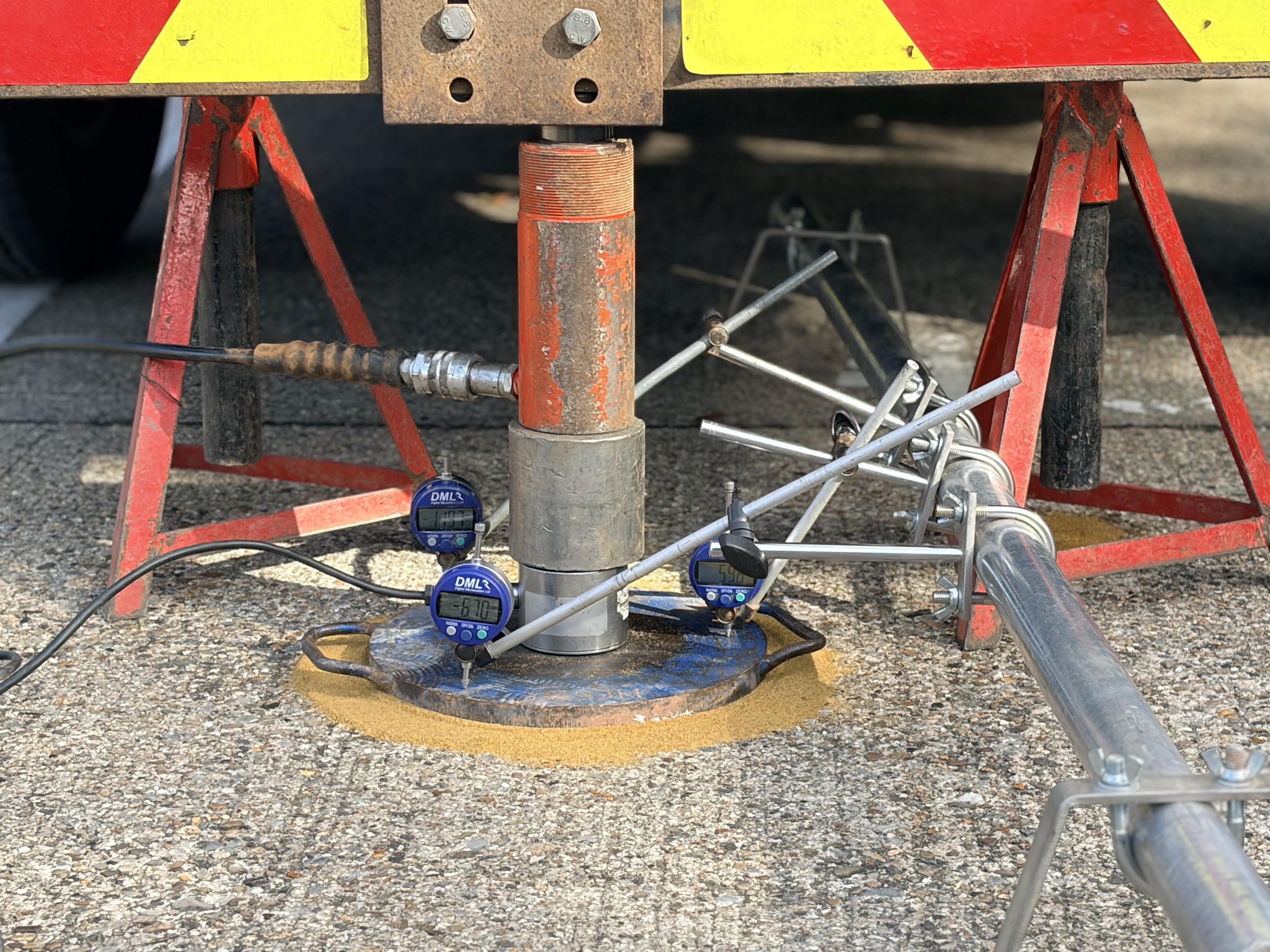
On your site. On your side.
Same-day and next-day testing dates are often available. Call to check dates for your location and test requirements.
Quality, safety & professional standards
Expertise you can check.
UKAS accreditation applies to the tests listed in our accredited schedule.
View our credentials ↗

Experienced people
Technical knowledge, with practical advice.
National coverage
Testing support wherever your project takes you.
A responsive service
Clear arrangements, from enquiry to reporting.
Your regional contact
Local project details.
National testing expertise.
Same-day and next-day testing dates are available. Call your regional number to check dates for your location and test requirements. Site visits are coordinated centrally by Hixtra.
Areas served
Hull, Scarborough, Whitby, Newcastle, York, Middlesbrough and Grimsby
Send your site postcode so we can confirm travel, access and availability. Coverage does not imply a permanent office in each town.
Local projects
The work we are called out to do here.
On the Humber bank and on Teesside the work is heavy. Port, energy and process sites call us to prove hardstandings for component storage, to test crane pads at offshore wind and fabrication yards where the bearing pressures are far higher than on a housing job, and to plate test industrial slabs and storage areas before they are loaded. Working platform testing on soft alluvial ground is the other constant: around Hull, Grimsby, the Vale of York and the Tees lowlands the natural ground is often too weak for a rig, so a platform is specified and must be proved. Across Yorkshire and the north east we also test CBR on estate and highway roads, from York to Newcastle.
Teams travel from Milton Keynes. It is a long run, so we group positions into one visit wherever possible and plan around port and steelworks induction, which is usually site specific and escorted. Same-day and next-day dates are often available, subject to the schedule, and we normally report the same day. Fresh concrete testing, meaning slump, flow and cube making, is only offered within about an hour of the laboratory, so it is not available in the North East. Hardened cube testing and coring are available here, as they are across England and Wales. Ring the number for this region, 0115 786 5656, with a site postcode and we will quote.
Choose the right method
Ground testing that matches your specification.
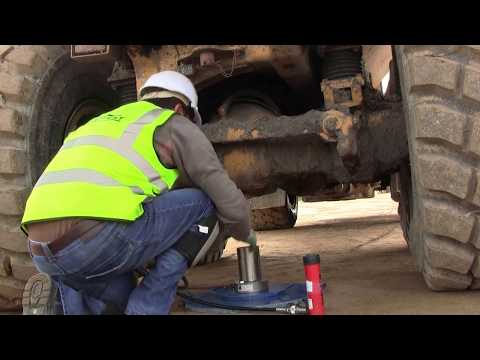
Tell us the site conditions and what your specification requires. We can help you choose between direct CBR, plate bearing and other suitable ground-testing methods.
Plate bearing & derived CBR
Assess ground performance under a loaded plate for pavements, earthworks and working platforms. Where a derived CBR is required, the method and interpretation must be agreed against your project specification.
Plate bearing testing →In-situ CBR, LWD & DCP
Different methods answer different questions. Tell us the specified test, the material and the stage of construction. We can help arrange the appropriate testing package without treating these results as interchangeable.
Explore ground testing →Ground conditions
What the ground here tends to do.
The lowlands are the story here. Around the Humber, across the Vale of York and on the Tees lowlands the ground is alluvium and warp: soft, wet and low bearing. It is why working platforms are specified so often here. A plate test on the natural ground usually returns a modulus far below what a rig or crane needs, so the platform spreads the load and the platform is what we test. Results scatter where the fill thickness varies, and a low position is more often a thin spot than bad stone. Away from the rivers, Holderness and the Vale of York are blanketed by glacial till, in places tens of metres thick, with glaciolacustrine clays in the old lake basins. The till gives fair CBRs when it is protected; the lake clays do not.
Teesside and the Humber bank carry heavy industrial made ground: steel slag, ash, dock fill and chemical works ground. Slag can be very stiff and give high plate results, but the fill is variable, so we test more positions and read the whole settlement curve, not just the end value. The Magnesian Limestone belt running north through Yorkshire into County Durham gives the best natural ground in the region. The Durham and Northumberland coalfield and south Yorkshire sit on Coal Measures with mining legacy and spoil. On the North York Moors and the Whitby and Scarborough coast the Jurassic mudstones, ironstones and sandstones weather to clay, and the cliffs are known for landslip, so coastal positions need care in siting. Specifications here typically call for plate bearing to a stated bearing pressure on hardstandings and platforms, and a minimum CBR on road formations.
Regional coverage, one schedule
Local knowledge. National reach.
Every visit is planned and reported from the Hixtra laboratory in Milton Keynes, so you get the same people, the same methods and the same reporting wherever the site is.
Check availability for your site ↗Before your visit
A little preparation.
A smoother site visit.
Send the specification
Include required methods, test locations, material details and any acceptance criteria set by your engineer.
Confirm access and reaction load
For plate bearing testing, discuss the required reaction load, safe working area and site access before booking.
Agree dates and reporting
We will confirm availability, scope and expected reporting arrangements for the work you need.
Hixtra in action
See the testing in practice.
Your questions
Your questions, answered.
Practical answers on ground conditions, choosing a test and arranging a visit in this region.
Ask us about your project →Which areas does the North East page cover?
This page covers Hull and both sides of the Humber, including Grimsby and Immingham, Teesside around Middlesbrough, Tyneside and Newcastle, York and the Vale of York, and the coast from Scarborough to Whitby. We attend anywhere in England and Wales, so Durham, Sunderland, Darlington, Doncaster and the A1 and M62 corridors are covered from the same schedule, and we go as far north as the Scottish border. We do not attend Scotland or Northern Ireland. The towns are grouped because the work is similar: heavy port, energy and industrial hardstandings on soft alluvium, and estate and highway roads across Yorkshire. If your site is not named here, send the postcode and we will confirm.
How quickly can you attend a site on the Humber or Teesside?
Same-day and next-day dates are often available, subject to the schedule. This is one of the longer runs from our laboratory in Milton Keynes, so a same-day visit depends on where the team already is, and a next-day booking is the realistic ask for Hull, Middlesbrough or Newcastle. Two things can add time here. Port and steelworks sites usually need a site specific induction and escorted access, so tell us at booking and get the passes arranged before the day. Coastal and exposed sites have weather windows, and a plate test in a gale on an open quay is not a good use of anyone’s day. We normally report the same day; that is our usual practice, not a guarantee.
What is the ground like across the North East and Yorkshire, and what should I expect from it?
It changes quickly. The Humber, the Vale of York and the Tees lowlands are alluvium and warp, soft, wet and low bearing, which is why platforms are specified so often. Holderness and the Vale of York sit on glacial till, in places tens of metres thick, with glaciolacustrine clays in the old lake basins. Teesside and the Humber bank carry heavy industrial made ground: steel slag, ash, dock fill and chemical works ground. The Magnesian Limestone belt through Yorkshire into County Durham gives good ground. The Durham and Northumberland coalfield sits on Coal Measures with mining legacy. The Moors and the Whitby and Scarborough coast are Jurassic mudstones, ironstones and sandstones, with landslip along the cliffs. Expect the lowlands to be the problem and the limestone to be easy.
Do you test working platforms for piling rigs on the Humber and Tees alluvium?
Yes, and it is a large part of our work here. On alluvium and warp the natural ground will not carry a rig, so the platform designer specifies a thickness of granular fill, sometimes over a geogrid, and asks for plate bearing results to prove it. We test at positions agreed with the piling contractor, normally with a plate size and target modulus or bearing pressure taken from the platform design, and we can run DCP alongside to check the fill thickness where a plate reads low. On this ground the spread between positions tells you more than the average. Book once the platform is complete and before the rig is delivered, and tell us if the ground has been flooded or heavily trafficked since it was placed.
Plate bearing, CBR, LWD or DCP: which should I ask for on alluvium, slag fill and limestone?
Follow your specification. On alluvium and warp the answer is nearly always plate bearing on the platform or hardstanding, because the question is a bearing pressure or a modulus, not a CBR, and because a CBR on soft wet alluvium is close to meaningless. On steel slag and dock fill plate bearing is again the right test, but at more positions, because the fill is variable. On the Magnesian Limestone and the drier till an in situ CBR on a road formation is straightforward and is what the pavement design needs. LWD is worth having for coverage across a large port yard once plates have calibrated it. DCP is the quick way to find the depth of soft ground under a platform or to check fill thickness.
Can you test crane pads for offshore wind and fabrication yards?
Yes. Crane pads and laydown areas at offshore wind, fabrication and port sites on the Humber and Teesside are tested to far higher bearing pressures than a normal site crane base, because the lifts are heavy and the components sit on the ground for weeks. The lift plan or the temporary works design will state the required pressure and the plate size, and we test to that. The practical points are reaction load, which on a fabrication yard is usually available but needs arranging, and access, since these sites are secure and escorted. Give us the crane supplier’s or designer’s requirement, the position layout and the induction details when you book. Results are normally issued the same day so the lift can be signed off.
Do you test hardstandings on port, energy and process sites, and what does access involve?
Yes. Port hardstandings, heavy storage areas, industrial slabs and process plant laydown areas on the Humber bank and Teesside are a regular call, usually plate bearing to a stated bearing pressure before the area is loaded or handed over. Access is the thing to plan. Ports, steelworks and chemical sites usually require a site specific induction, sometimes a day in advance, and escorted access on the day, and some restrict vehicle movements to set times. Tell us at booking so we can allow for it and arrive with the right paperwork. On existing slabs we also core where a strength or thickness question has come up. Group the positions so one escorted visit covers the lot.
Can you do slump tests and make cubes on my North East site?
No. Fresh concrete testing, meaning slump, flow and cube making, is only available within about an hour’s drive of our laboratory in Milton Keynes. Hull, York, Middlesbrough, Newcastle and the coast are all a long way outside that radius, so we cannot attend a pour on the Humber or Teesside to sample fresh concrete. If your specification needs fresh testing, your readymix supplier or a local sampling technician will need to make the cubes. What we do offer in the North East is the hardened side: compressive strength testing of cubes that someone else has made and sent to us, and coring of hardened concrete on site, both available anywhere in England and Wales.
Do you test hardened concrete cubes and take cores in the North East?
Yes. Hardened concrete work is available across England and Wales. Cubes made on site can be couriered to the laboratory in Milton Keynes for compressive strength testing; we will agree curing and transport arrangements with you when you book, because a cube that has dried out in a van for two days will not give a fair result. Coring is done on site, and in this region that is usually on port slabs, heavy hardstandings, crane pads or process plant bases where a cube result is missing or disputed, or where the specification wants in situ strength or slab thickness confirmed. Cores are tested at the laboratory and reported with density. Tell us the element and what the result needs to show.
Is Hixtra UKAS accredited for the tests I need?
Hixtra holds UKAS accreditation to ISO/IEC 17025 under schedule number 8996. Accreditation is granted method by method, never company wide, so it covers only the tests listed on our current schedule. We hold it for most of the soil and aggregate tests we carry out and are still in the process of obtaining it for some concrete tests. Port operators, energy clients and their engineers in this region often ask for accredited results, so check before you book rather than after. Tell us the tests your specification names and we will confirm which are accredited and which are not. If the report needs to carry the UKAS symbol, say so at the enquiry stage so we can advise.
What do you need from me before the visit?
The site postcode and a plan of the positions. The test type and the value to prove: a bearing pressure and plate size for hardstandings and crane pads, a modulus for a platform, a CBR percentage for a road formation. The number of positions and what each area is for. For ports, steelworks and process sites, the induction requirements, the escort arrangements, the passes we need and any restricted vehicle times; these often take longer to sort out than the testing. What reaction load is available for plate tests, since a heavy pad needs a heavy load. Whether the ground has been flooded or trafficked recently. And who the report goes to.
How are results reported?
We normally issue results the same day as a PDF report emailed to the people you name. That is our usual practice, not a guaranteed service level. The report gives the raw load and settlement readings and the derived modulus or bearing pressure for each plate position, or the CBR at each position, with a position plan and the test conditions recorded. On port and industrial sites the report is often going to a client’s engineer or a crane supplier for sign off, so we set out clearly whether each position meets the stated requirement. If a position fails we say so and suggest what to do next, which on alluvium usually means checking the fill thickness before anything else.
Is there a Hixtra office in the North East, and how do travel and scheduling work?
No. Hixtra has no office, depot, staff or vehicles in Hull, Newcastle, Middlesbrough or anywhere else in the North East. Every team travels from the laboratory in Milton Keynes. It is one of our longer runs, so scheduling matters more than it does closer to home. Group positions into one visit: the platform, the crane pad and the estate road on the same day rather than three trips, and where a port needs an escort, one escorted visit rather than three. Book with a firm ready date. Same-day and next-day dates are often available, subject to the schedule. Send a site postcode for a quote.