November 27, 2026
What a DCP test can and cannot tell you about the ground
A DCP test records penetration rate and layer changes. Any CBR taken from it is an estimate, and it becomes unreliable in made ground and stony fill.

Practical testing. Experienced people. A service built around your project.
A Dynamic Cone Penetrometer (DCP) test comes back from a formation with a California Bearing Ratio (CBR) percentage printed beside the trace. The engineer asks whether that figure can go in the record as a measured CBR.
No. A DCP test gives a penetration rate in millimetres per blow and shows where one layer gives way to another. The CBR beside it is an estimate, worked out through a correlation. It is most useful in homogeneous fine grained soils. In mixed material, made ground or anything with significant stone, it becomes unreliable.
Key takeaways
- The DCP records millimetres per blow from an 8 kg hammer dropping 575 mm onto a 60 degree cone. A smaller figure means a stiffer material.
- Any CBR from it is inferred through a correlation. Treat it as an estimate, not a direct plunger CBR.
- In made ground or anything with significant stone content, the published relationships become unreliable.
- It needs no plant, but it's approximate. Where an in-situ CBR or plate bearing test is possible, those usually carry more weight.
In this guide
- What does a DCP test measure?
- What a DCP result can and cannot tell you
- When a DCP test is not the right test
- Frequently asked questions
- What to have ready before you book
What does a DCP test measure?
An 8 kg hammer dropping 575 mm onto a 60 degree cone is the usual arrangement. The result is a penetration rate in millimetres per blow. Smaller means stiffer.
Plot the readings against depth and you'll get a profile. A clear change in rate marks a boundary between materials of different resistance, such as soft clay over dense gravel. That's the job of DCP testing: investigating changes in penetration resistance through shallow pavement and ground layers.
There's no British Standard for the DCP on soils. Testing usually follows a recognised method such as ASTM D6951, together with the equipment's own procedure.
What a DCP result can and cannot tell you
It shows relative resistance and layer changes well. It gives CBR only as an estimate. And it can't give settlement under a known load.
The penetration rate
Read it as a profile, not a single number. A step in the rate marks a change in the ground. A steady rate means resistance isn't changing with depth. Neither says what the material is. That's for sampling, or a test suited to the material. Acceptance values come from your specification.
Inferred CBR is an estimate
Where a CBR is inferred from the penetration rate, the correlation most often used in this country comes from published TRL research. It's still a correlation. Call the result an estimate. It isn't a measurement.
The CBR testing guide sets out in-situ, laboratory and derived CBR as different methods, not interchangeable options. An inferred value isn't any of these, so don't record it as a direct plunger CBR. Whether it's acceptable depends on the material and the specification.
When the correlation becomes unreliable
The published relationships work best in homogeneous fine grained soils. They become unreliable in mixed material or made ground. Significant stone content does the same.
| What you want to know | What a DCP test gives | Limit | Where next |
|---|---|---|---|
| Where layers change with depth | A clear change in penetration rate marks a boundary | Shows a change, not what the material is | Sampling, or a test suited to the material |
| How stiff the material is | Penetration rate in mm per blow; smaller means stiffer | Relative resistance only | Your specification |
| CBR in homogeneous fine grained soil | An inferred estimate through a correlation | An estimate, not a measurement | In-situ CBR if a measured value is needed |
| CBR in mixed material, made ground or stony fill | No dependable CBR | Published relationships become unreliable | Plate bearing, with an agreed derived calculation where the specification allows |
| Settlement under a sustained known load | Nothing | A DCP doesn't give this | Plate bearing testing |
When a DCP test is not the right test
The DCP is light and quick. It needs no plant. But it gives an approximate assessment rather than a direct measurement, so where an in-situ CBR or plate bearing test is possible, those usually carry more weight.
If the specification needs a measured CBR, ask for in-situ CBR testing. A cylindrical plunger is driven into the prepared surface at a controlled rate, and the force is recorded against depth of penetration. It's best suited to clays, silts, sands and fine gravels.
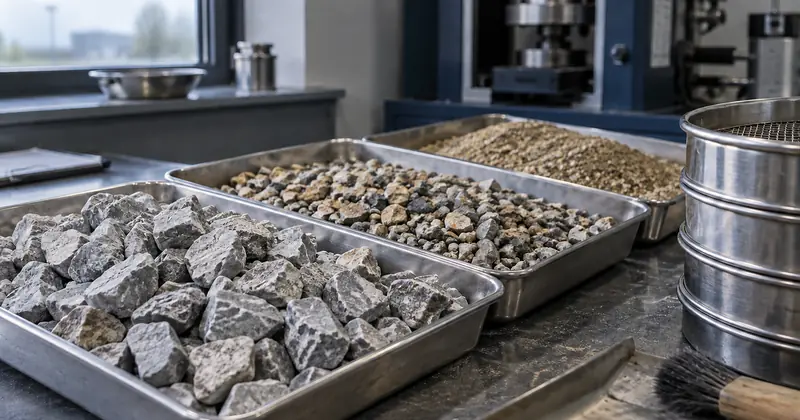
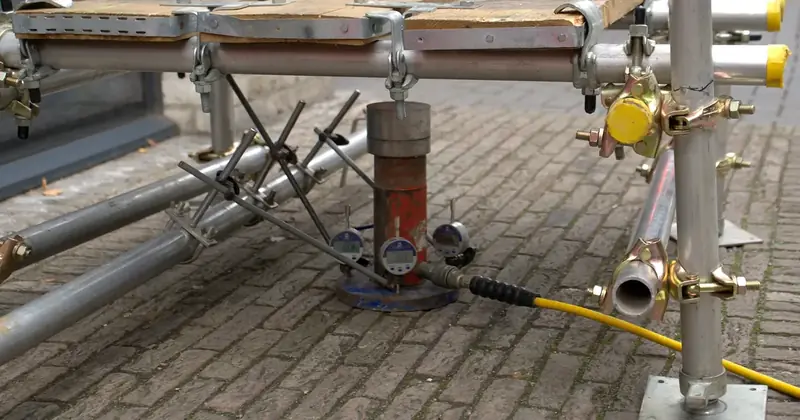
Stone changes the choice. Material containing stone over 20 mm usually rules out a direct plunger CBR, so a plate test with an agreed derived calculation is the sensible route. Plate bearing also measures settlement under a known load. A DCP doesn't. Where appropriate, a derived CBR can be calculated from plate bearing data, and the report should label it as derived.
The Lightweight Deflectometer (LWD) is a different portable method that can support a ground assessment. Whether it suits your layer, or the DCP does, depends on the material and the specification.
Frequently asked questions
Is a DCP test the same as a CBR test?
No. A DCP gives a penetration rate in millimetres per blow. Any CBR taken from it is inferred through a correlation, whereas an in-situ CBR is a direct plunger measurement. Derived and laboratory CBR are different methods again, and they aren't interchangeable.
Can a DCP test give you a CBR value?
Only as an estimate, and only where the ground suits it. The value is inferred from the penetration rate through a correlation, and the published relationships work best in homogeneous fine grained soils. Check first that your specification will accept a correlated value. How it's used depends on the material and the specification.
Is there a British Standard for the DCP test?
Not for soils. Testing usually follows a recognised method such as ASTM D6951 together with the equipment's own procedure. If your specification names a different method, tell us when you enquire. We'll discuss the method with you.
Does a DCP test work in made ground or stony fill?
Not reliably for CBR. The published relationships become unreliable in mixed material, made ground or anything with significant stone content. Where a direct measure is needed, in-situ CBR suits finer material, while stone over 20 mm points to a plate test with an agreed derived calculation.
What to have ready before you book
Have your site postcode, the specification and the test positions to hand. Add the access details, preferred dates, a project contact and any deadline. Tell us whether the specification asks for a CBR percentage and will accept an inferred value, and we'll talk through the method. Not sure which test to choose? Give us a call.
On-site attendance covers England and Wales. UKAS accreditation applies to the particular methods listed in Hixtra’s current schedule, rather than every service. Ask us to confirm the accreditation status of the testing you require.
Send your site postcode so we can confirm travel, access and availability. Call 01908 505833 or tell us what you need.
More from Hixtra.
Practical testing guidance and project updates from our team.
All news & projects →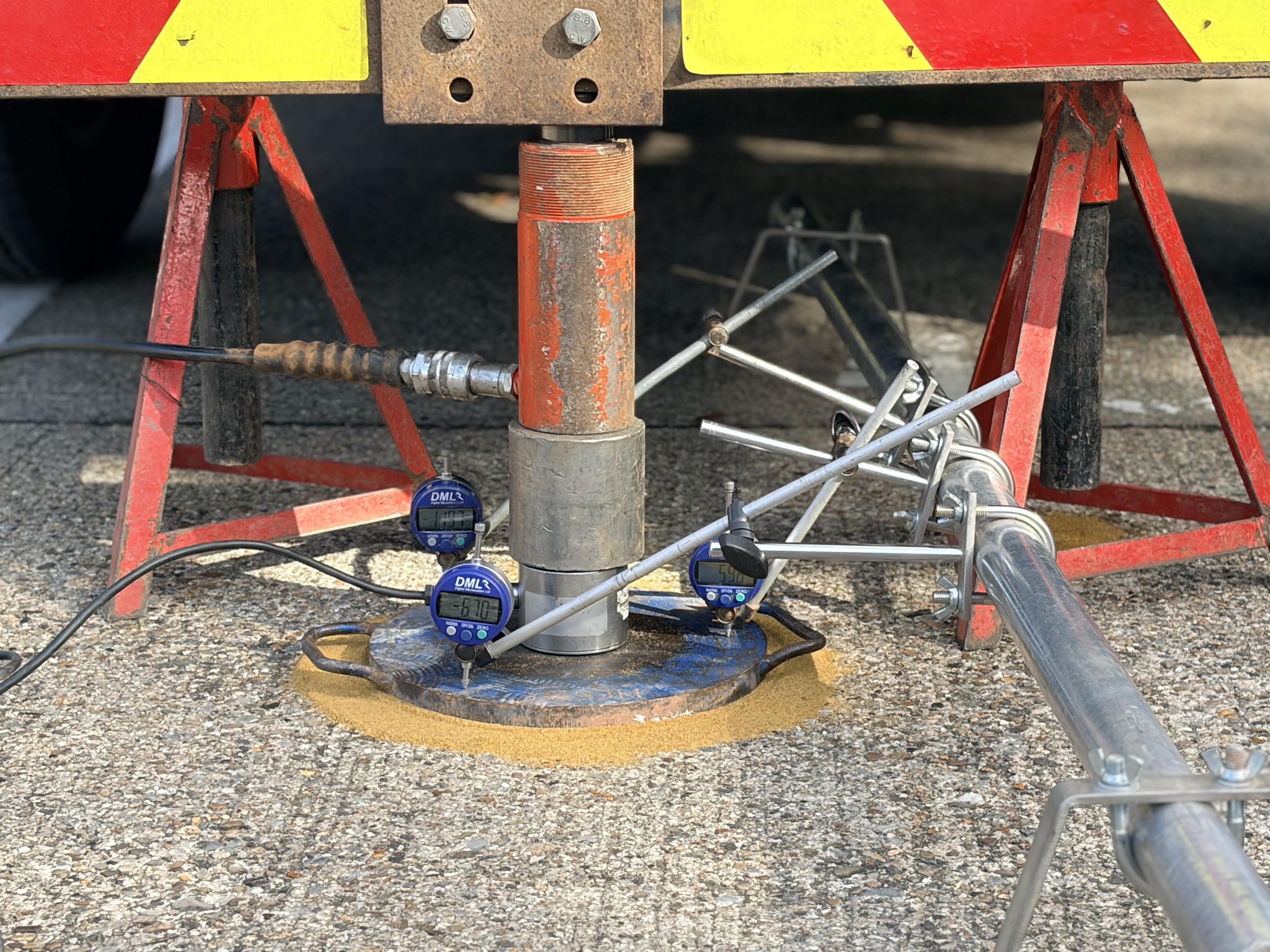
Testing support across England & Wales
Testing arranged around your programme.
Tell us the specification, the number of test positions and your dates. We confirm what is needed and when we can attend before the work is booked.
Check availability for your site →